Starship Flight 15 Catches a Ship for the First Time, the Reusability Puzzle Behind One Success and One Miss
The facts first. SpaceX's Starship Flight 15 lifted off at 4:47 p.m. CST on November 13, 2026, from Orbital Launch Pad 2 at Starbase, Texas, using Booster 22 and Ship 42. Ship 42 reached low Earth orbit, deployed all 26 Starlink V3 satellites, and stayed in orbit for about 14 revolutions over roughly 22.5 hours, the longest Starship flight to date. On November 14 at 3:20 p.m. CST, Ship 42 deorbited, re-entered, flew back to Starbase and was caught by the launch tower's mechanical arms, the first tower catch of a Starship upper stage.
The other half of the record must be stated just as plainly. Booster 22's boostback burn ended early during its return; SpaceX said preliminary data pointed to a low fuel-mass alarm, with the root cause still under investigation, and the booster aborted its tower catch, diverted to a splashdown in the Gulf of Mexico and was destroyed. The planned recovery of both stages on a single flight was not achieved.
GSM's observation is that the significance of this flight lies not in a double-catch headline but in the ship piece of the puzzle falling into place for the first time. The tower had previously caught only boosters, three times. A ship must first reach orbit, deploy satellites, remain in space for nearly a day, and then fly back through the atmosphere to its own launch site, an entirely different sequence of difficulty. Ship 42 completed that chain, demonstrating that the full return-to-launch-site profile for an orbital ship can be flown.
Interpretation needs restraint. One success does not establish reusability: the condition of Ship 42 after recovery, the refurbishment work required and whether it will fly again have not been published by SpaceX, and on the booster side, the first tower-catch attempt for a Block 3 booster was not completed and the cause of the low fuel-mass alarm is unresolved. Until those questions have official answers, describing Flight 15 either as a complete breakthrough or as a failure goes beyond the verified facts.
In one sentence: the November 14 catch was the first time the Starship programme brought a ship back from orbit to its launch tower, and global space and technology media kept the story at the top through November 15 and 16 because of that first; the programme is still two steps short of full two-stage recovery and rapid reflight, booster reliability and a demonstrated ship reflight, and progress on those two steps will define the next test flight.
Source: SpaceX
Published by GSM · USA (original Chinese edition)
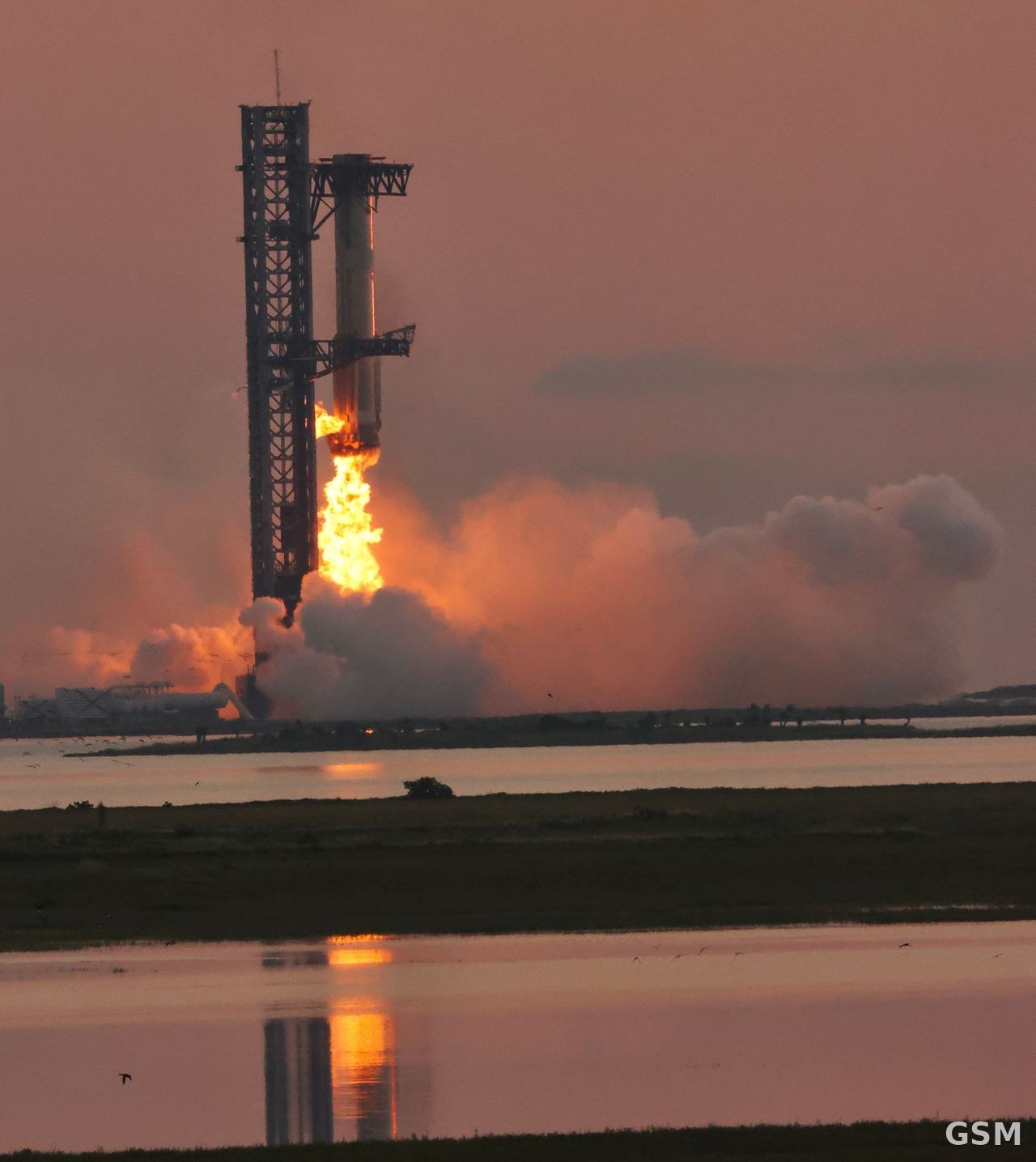
Photo: 图:星舰助推器被发射塔机械臂捕获的资料画面(2024年第5次试飞)。Steve Jurvetson,CC BY 2.0,Wikimedia Commons。 / Photo: A Starship booster caught by the launch tower's mechanical arms (file photo, Flight 5, 2024). Steve Jurvetson, CC BY 2.0, via Wikimedia Commons.
- 2026-10-16Starship Flight 15 Planned No Earlier Than Oct. 19, With First Attempt to Catch the Ship at the Launch Tower
- 2026-10-19Musk: Starship Flight 15 Is Targeted a Little Before Thanksgiving and Will Try to Catch the Ship
- 2026-11-13SpaceX Launches Starship Flight 15: All 26 Starlink V3 Satellites Deployed; Booster Catch Waved Off for Gulf Splashdown
- 2026-11-13Follow-Up: Starship Flight 15 Booster Burst Into Flames on Its Gulf Splashdown; Ship Still in Orbit Ahead of Nov. 14 Catch Attempt
- 2026-11-14Follow-up: Starship Ship Caught by Launch Tower for the First Time as Ship 42 Returns to Starbase After About 14 Orbits in 22.5 Hours
- 2026-11-16Starship Flight 15 Catches a Ship for the First Time, the Reusability Puzzle Behind One Success and One MissThis story