Trump Signs Executive Order Sanctioning the International Criminal Court: Asset Freezes and Entry Bans
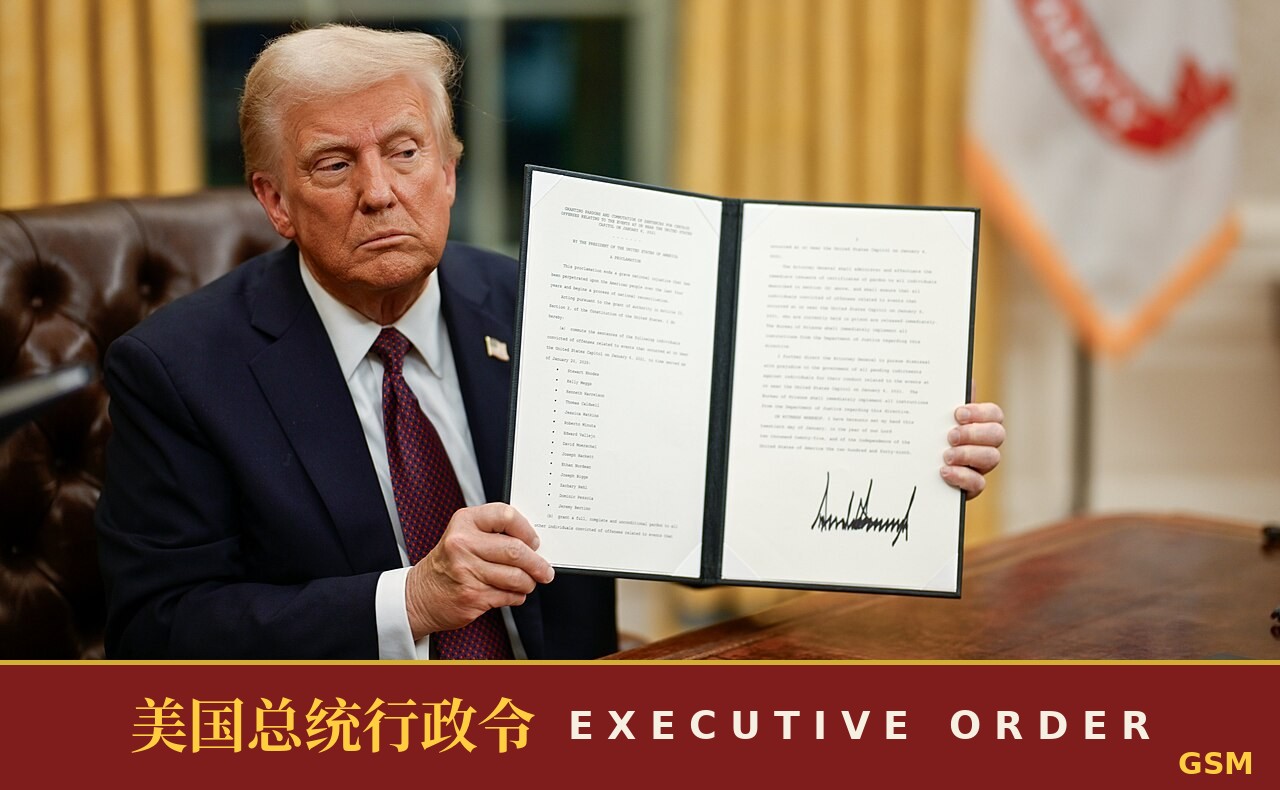
On February 6, 2025, President Donald Trump, at the White House in Washington, D.C., signed Executive Order 14203, "Imposing Sanctions on the International Criminal Court," declaring a national emergency and authorizing asset freezes and entry restrictions against persons connected with the International Criminal Court (ICC). The order states that the ICC "has engaged in illegitimate and baseless actions targeting America and our close ally Israel."
According to the order, the ICC, without a legitimate basis, asserted jurisdiction over and opened preliminary investigations concerning personnel of the United States and certain of its allies, including Israel, and further abused its power by issuing baseless arrest warrants targeting Israeli Prime Minister Benjamin Netanyahu and former Minister of Defense Yoav Gallant. The order states that the ICC has no jurisdiction over the United States or Israel, as neither country is a party to the Rome Statute or a member of the ICC, and that neither country has ever recognized the court's jurisdiction.
The order states that the ICC's recent actions against Israel and the United States set a dangerous precedent, directly endangering current and former United States personnel, including active service members of the Armed Forces, by exposing them to harassment, abuse and possible arrest, and that this conduct threatens to infringe upon the sovereignty of the United States and undermines the critical national security and foreign policy work of the United States Government and its allies, including Israel. Citing the American Servicemembers' Protection Act of 2002, the order states that the United States unequivocally opposes, and expects its allies to oppose, any ICC actions against the United States, Israel, or any other ally that has not consented to ICC jurisdiction, and that the United States will impose tangible and significant consequences on those responsible for the ICC's transgressions, including the blocking of property and assets and the suspension of entry into the United States of ICC officials, employees and agents, as well as their immediate family members.
The core sanctions mechanism is a blocking of property. Section 1 of the order provides that all property and interests in property that are in the United States, that later come within the United States, or that are or later come within the possession or control of any United States person, of the following persons are blocked and may not be transferred, paid, exported, withdrawn or otherwise dealt in: first, the person listed in the Annex to the order; and second, any foreign person determined by the Secretary of State, in consultation with the Secretary of the Treasury and the Attorney General, to have directly engaged in any effort by the ICC to investigate, arrest, detain or prosecute a protected person without the consent of that person's country of nationality, to have materially assisted, sponsored or provided financial, material or technological support for, or goods or services in support of, such an activity or of a blocked person, or to be owned or controlled by, or to have acted or purported to act for or on behalf of, a blocked person. The Annex lists a single person: Karim Khan, Prosecutor of the ICC.
Section 4 suspends entry into the United States: the unrestricted immigrant and nonimmigrant entry of persons meeting the criteria in section 1, of their immediate family members (defined as a spouse or child), and of aliens determined by the Secretary of State to be employed by, or acting as an agent of, the ICC is suspended, except where the Secretary of State determines that entry would not be contrary to the interests of the United States, and such persons are to be treated as persons covered by section 1 of Proclamation 8693 of July 24, 2011. Sections 2 and 3 prohibit donations to blocked persons and the making or receipt of contributions or provisions of funds, goods or services involving them. Section 5 requires the Secretary of the Treasury, in consultation with the Secretary of State, to submit a report to the President within 60 days on additional persons that should be included within the scope of section 1.
The order defines "protected person" in two parts: any United States person - including current or former members of the Armed Forces, current or former elected or appointed officials of the United States Government, and any other person currently or formerly employed by or working on behalf of the United States Government - unless the United States provides formal consent to ICC jurisdiction over that person or becomes a state party to the Rome Statute; and any foreign person who is a citizen or lawful resident of an ally of the United States that has not consented to ICC jurisdiction over that person or is not a state party to the Rome Statute, in the same categories of service members, officials and government workers. An "ally of the United States" means a government of a NATO member country or of a "major non-NATO ally" as defined in the American Servicemembers' Protection Act of 2002. The order invokes the International Emergency Economic Powers Act, the National Emergencies Act and section 212(f) of the Immigration and Nationality Act, among other authorities, and determines that any effort by the ICC to investigate, arrest, detain or prosecute protected persons constitutes an unusual and extraordinary threat to the national security and foreign policy of the United States.
On February 7, the ICC issued a statement in response. In the Court's words, it condemned the issuance by the United States of an executive order seeking to impose sanctions on its officials and harm its independent and impartial judicial work; it said the Court stands firmly by its personnel and pledges to continue providing justice and hope to millions of innocent victims of atrocities across the world, and it called on its 125 States Parties, civil society and all nations of the world to stand united for justice and fundamental human rights.
Related: International Criminal Court Issues Arrest Warrants for Netanyahu and Gallant
(Source: The White House)
Source: The White House
Published by GSM · USA (original Chinese edition)
Photo: GSM 行政令统一模板(美国总统行政令)
- 2024-11-21International Criminal Court Issues Arrest Warrants for Netanyahu and Gallant
- 2025-02-06Trump Signs Executive Order Sanctioning the International Criminal Court: Asset Freezes and Entry BansThis story
- 2026-10-09U.S. Sanctions the International Criminal Court Itself, With Six-Month Grace Period