California Unveils May Revision Budget: a $12 Billion Problem Emerges Months After a Roughly Balanced January Plan
The Governor's Office in Sacramento, California, presented the May Revision of the proposed 2025-26 state budget to the Legislature on May 14, 2025: a spending plan that had been roughly balanced in January faced a budget problem of about $12 billion only months later, and the administration proposed closing it mainly with spending solutions, without drawing further on reserves.
The Legislative Analyst's Office (LAO) put the problem the administration addressed at about $14 billion, against the $12 billion figure cited by the Governor, with the difference mainly reflecting savings proposals the administration counts as workload changes and the LAO counts as budget solutions.
The problem came from two directions. On spending, baseline costs were $12 billion higher than January estimates, driven above all by Medi-Cal, California's Medicaid program, whose costs were projected to exceed January estimates by about $10 billion over the three-year budget window, roughly $8 billion of it in 2025-26. The LAO said the growth reflected higher-than-anticipated per-enrollee costs, with the administration attributing a significant share to enrollees lacking satisfactory immigration status; higher costs in the In-Home Supportive Services (IHSS) program were the other main driver.
On revenue, the outlook had weakened: the May Revision downgraded revenue estimates by about $5 billion over the three-year window, including an $11 billion downgrade for the budget year on diminished expectations for the personal income tax and the corporation tax, partly offset by revenues running about $6 billion ahead of projections for prior and current years.
Governor Gavin Newsom's plan relied mainly on spending solutions totaling $9.5 billion, including about $4.9 billion in reductions, a significant share of them ongoing and growing to $17.5 billion by the last year of the forecast. The LAO noted the administration did not propose using any more reserves for the new problem.
Specific reductions included limiting provider overtime and travel hours in IHSS (about $700 million), reducing Medi-Cal payments to clinics serving patients with unsatisfactory immigration status ($450 million), and eliminating certain long-term care benefits for that population (about $300 million).
Some planned cuts were softened: base funding reductions for the University of California and California State University were eased from 7.95 percent to 3 percent, at an ongoing General Fund cost of about $267 million for UC and $231 million for CSU. The General Fund portion of the Proposition 98 school funding guarantee was down $3.9 billion across two years, while a cost-of-living adjustment was maintained.
The LAO recommended the Legislature keep the overall structure of the May Revision, while warning that the state's persistent multiyear deficits were not fully solved and that federal actions posed added downside risks. The budget next moved to the Legislature, which faced a June 15 deadline to pass a budget bill. (Source: Office of the Governor of California)
Source: Office of the Governor of California
Published by GSM · USA (original Chinese edition)
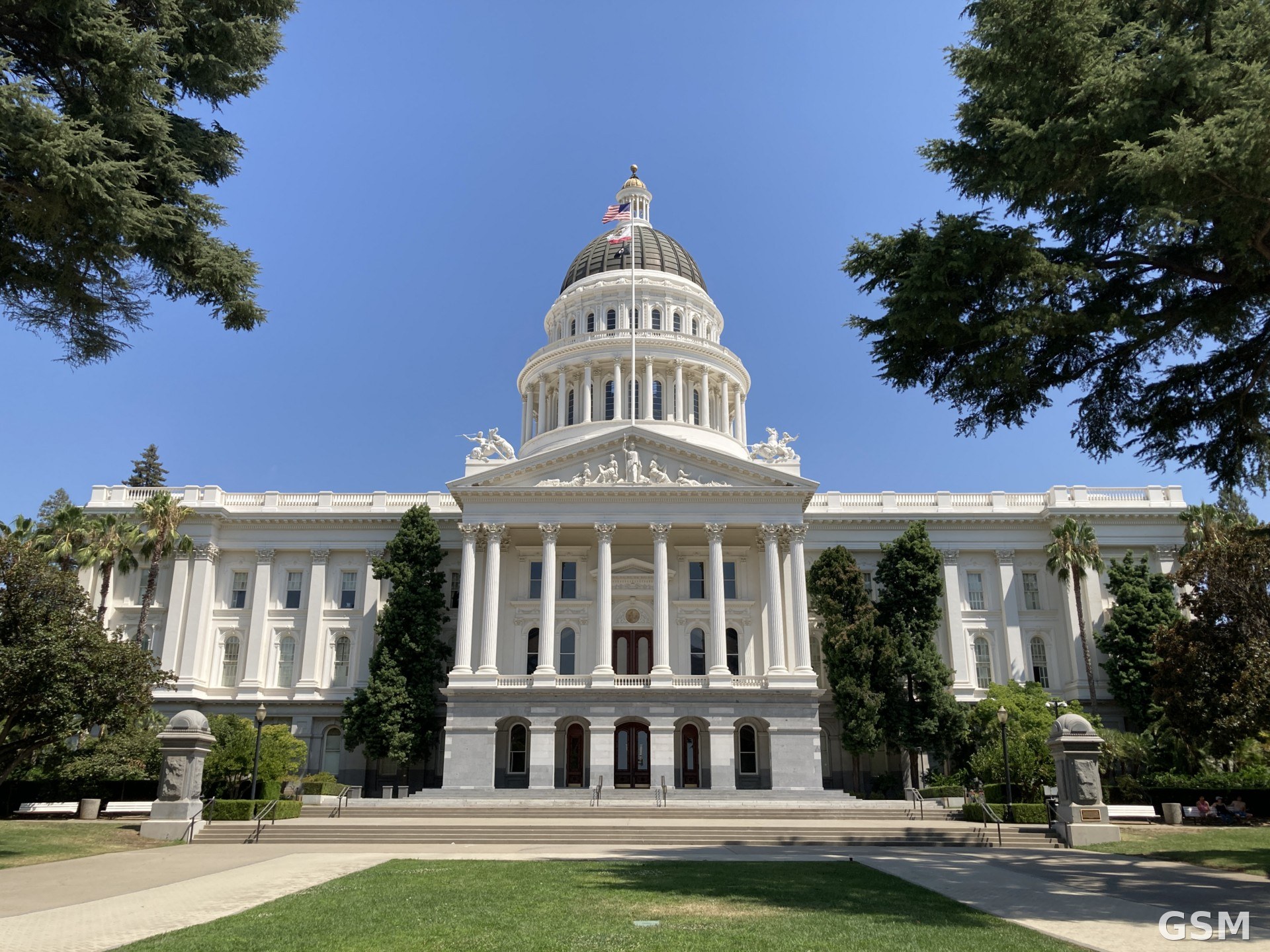
Photo: 图:位于 Sacramento 的加州州议会大厦(资料图)。Shanwei Jiang 摄,CC BY-SA 4.0,经 Wikimedia Commons。 / Photo: The California State Capitol in Sacramento (file photo). By Shanwei Jiang, CC BY-SA 4.0, via Wikimedia Commons.