Trump and Takaichi Sign a U.S.-Japan Framework on Critical Minerals and Rare Earths in Tokyo
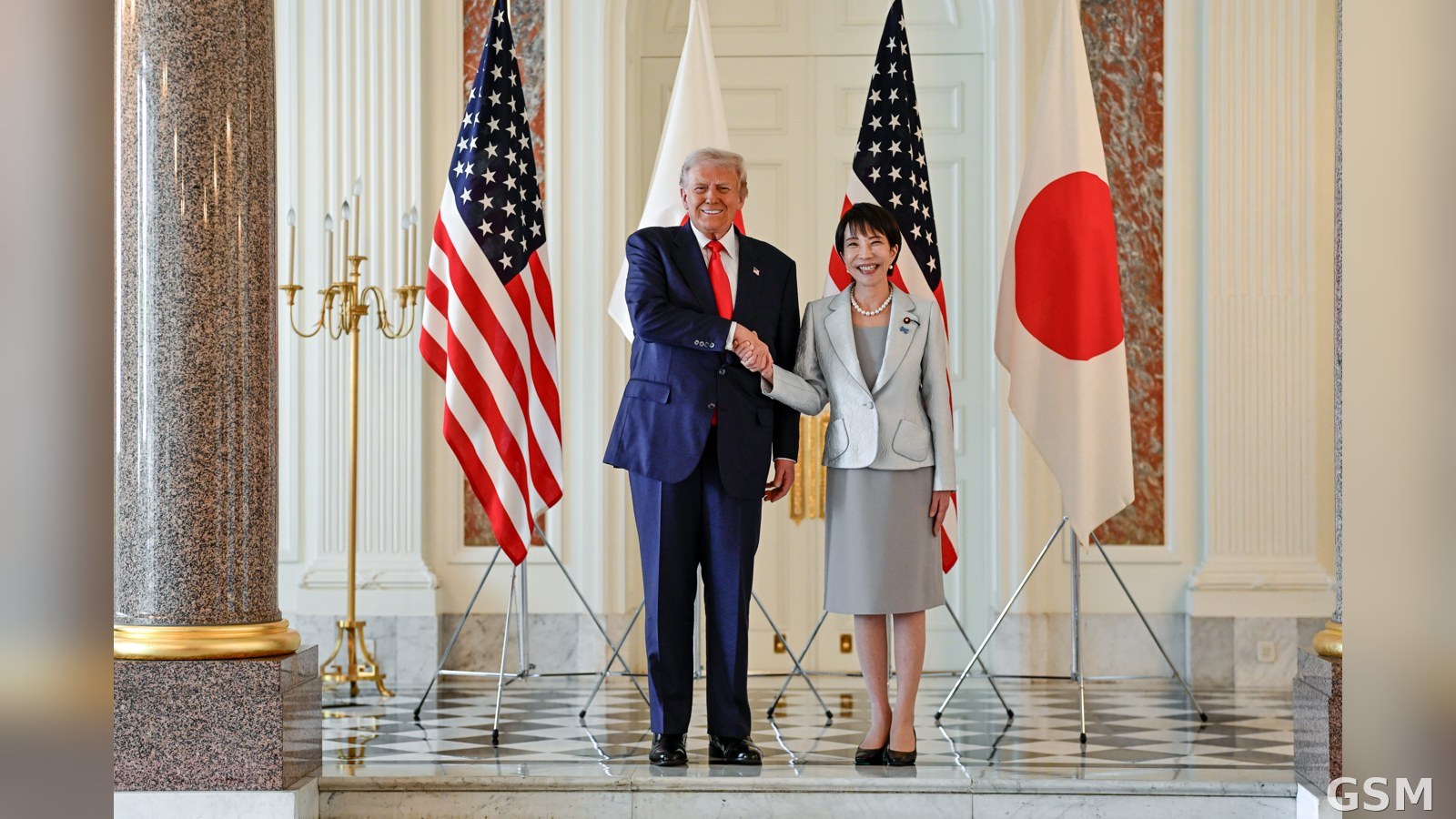
On October 28, 2025, in Tokyo, Japan, President Donald Trump and Prime Minister Sanae Takaichi held a Japan-U.S. summit meeting and signed two documents: one confirming the swift and continued implementation of the U.S.-Japan agreement toward a new golden age of the alliance, and the United States-Japan Framework for Securing the Supply of Critical Minerals and Rare Earths through Mining and Processing. Japan's Ministry of Foreign Affairs said the summit, signing ceremony and working lunch began at 9:45 a.m. and lasted about 90 minutes in total, with the summit meeting itself lasting about 40 minutes.
Takaichi said at the meeting that the Japan-U.S. Alliance is the foundation for peace and stability in the Indo-Pacific region, that strengthening it further is a top priority in Japan's foreign and security policy, and that she wanted to create a new chapter in the history of the alliance together with Trump. Trump congratulated Takaichi on her appointment, said the relationship would be stronger than ever before and that the two countries are allies at the strongest level. The two leaders also concurred on advancing a broad range of security cooperation to enhance the alliance's deterrence and response capabilities, and on jointly advancing a free and open Indo-Pacific.
The critical minerals and rare earths framework says the two countries intend to support the supply of raw and processed critical minerals and rare earths crucial to their domestic industries, using economic policy tools and coordinated investment to accelerate the development of diversified, liquid and fair markets. Its measures include leveraging financial support mechanisms, trade measures and stockpiling systems to secure supply; jointly identifying projects to address supply-chain gaps, including derivative products such as permanent magnets, batteries, catalysts and optical materials, and taking measures within six months to provide financial support to selected projects; convening a bilateral mining investment ministerial within 180 days; streamlining permitting for mining, separation and processing; addressing non-market policies and unfair trade practices; and considering a mutually complementary stockpiling arrangement.
The framework also establishes a U.S.-Japan Critical Minerals Supply Security Rapid Response Group, led by the U.S. Secretary of Energy and Japan's Minister of Economy, Trade and Industry, to identify priority minerals and supply vulnerabilities and develop a coordinated plan to accelerate delivery of processed minerals. The framework states that it is a policy and programmatic action plan that does not create rights or obligations under domestic or international law. On economic security, the two leaders also concurred on strengthening cooperation in critical technologies in a wide range of fields beyond critical minerals, including super intelligence (SI) and shipbuilding.
Related: Sanae Takaichi Becomes Japan's 104th Prime Minister, the First Woman to Hold the Office
(Source: The White House)
Source: The White House
Published by GSM · USA (original Chinese edition)
Photo: 图:特朗普与高市早苗2025年10月28日在东京举行双边会晤时握手合影。白宫,公共领域,经 Wikimedia Commons。 / Photo: President Trump and Prime Minister Takaichi shake hands during their bilateral meeting in Tokyo on October 28, 2025. The White House, public domain, via Wikimedia Commons.
- 2025-10-21Sanae Takaichi Becomes Japan's 104th Prime Minister, the First Woman to Hold the Office
- 2025-10-28Trump and Takaichi Sign a U.S.-Japan Framework on Critical Minerals and Rare Earths in TokyoThis story