Trump Announces $12 Billion in Farmer Bridge Payments, With $11 Billion for Row Crops
President Donald Trump, joined at the White House in Washington on December 8 by Secretary of Agriculture Brooke Rollins, Secretary of the Treasury Scott Bessent, lawmakers including Senate Agriculture Committee Chairman John Boozman, and farmers from states including Arkansas, Iowa, Indiana, Kansas, Louisiana, Pennsylvania, Ohio and Texas, announced that the U.S. Department of Agriculture will make $12 billion available in one-time bridge payments to help farmers respond to temporary trade market disruptions and increased production costs. The department said the payments are intended in part to aid farmers until investments from the One Big Beautiful Bill Act, including reference prices set to increase between 10 and 21 percent for major covered commodities, reach eligible farmers on October 1, 2026.
Of the total, up to $11 billion will be used for the Farmer Bridge Assistance Program, which covers 20 row crops, including barley, chickpeas, corn, cotton, lentils, oats, peanuts, peas, rice, sorghum, soybeans, wheat and oilseeds such as canola. Using a uniform formula based on Farm Service Agency reported planted acres, Economic Research Service cost-of-production estimates, and World Agricultural Supply and Demand Estimates yields and prices, the program covers a portion of modeled losses for the 2025 crop year. Farmers who qualify can expect payments to be released by February 28, 2026; eligible farmers should ensure their 2025 acreage reporting is factual and accurate by 5 p.m. ET on December 19, 2025, commodity-specific payment rates will be released by the end of the month, and crop insurance linkage will not be required.
The remaining $1 billion will be reserved for commodities not covered by the program, such as specialty crops and sugar, with details and timelines still under development. The $12 billion in payments is authorized under the Commodity Credit Corporation Charter Act and will be administered by the Farm Service Agency, and producers can submit questions through a dedicated email address published by the department.
In a statement, Rollins said the farm economy was still reeling from record inflation, a depleted farm safety net and delayed disaster assistance left by the previous administration, which had turned a trade surplus into a $50 billion trade deficit and caused farmers to lose markets. She said Trump directed the team to build the bridge program to provide quick relief while dozens of new trade deals and new market access take effect, and that the plan ensures American farmers can continue to plan for the next crop year.
Source: U.S. Department of Agriculture
Published by GSM · USA (original Chinese edition)
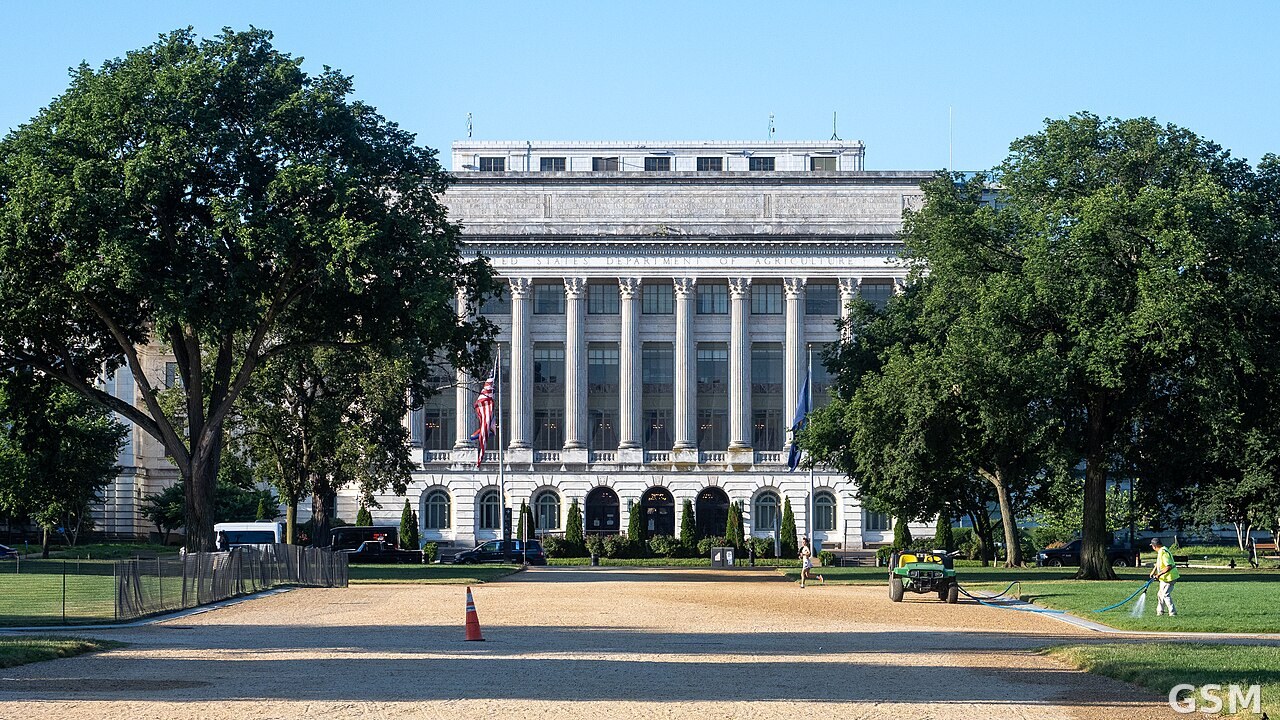
Photo: 图:位于美国华盛顿的美国农业部总部大楼。ajay_suresh 摄,CC BY 2.0,经 Wikimedia Commons(联邦固定图库标准图)。 / Photo: The U.S. Department of Agriculture headquarters in Washington. Photo by ajay_suresh, CC BY 2.0, via Wikimedia Commons (federal fixed-library image).