Trump Signs Fiscal 2026 Defense Authorization Act Authorizing $901 Billion in Military Spending
President Donald Trump signed S. 1071 into law in Washington on December 18, 2025, making the National Defense Authorization Act for Fiscal Year 2026 the law of the land as Public Law 119-60. The act authorizes a record $901 billion in annual military spending, $8 billion more than the president had requested.
In his signing statement, the president said the act authorizes fiscal year appropriations for the Department of War, the Department of Energy's national security programs, the Department of State, the Department of Homeland Security, the Intelligence Community and other departments and agencies, and will enable the Department of War to carry out his Peace Through Strength agenda, protect the homeland from domestic and foreign threats and strengthen the defense industrial base, while eliminating funding for what he called wasteful and radical programs. The statement said the act codifies aspects of more than a dozen of the administration's executive orders and actions, including those focused on warfighter lethality, advancing homeland missile defense by fully supporting the Golden Dome for America plan, restoring America's airspace sovereignty and providing federal recognition of the Lumbee Tribe of North Carolina.
The act also includes the SAFER SKIES Act, which gives state and local law enforcement the authority to act against unmanned aircraft that present a threat to the public and creates a new felony offense for a second violation of national defense airspace. The White House statement said the act also provides key resources to secure the southern border against illegal immigration and transnational criminal organizations.
According to Reuters, the bipartisan compromise measure includes provisions providing new aid to Ukraine and reining in the president's ability to dial down U.S. involvement in the defense of Europe, and Trump signed it anyway; the signing was a quiet affair, with no Oval Office ceremony attended by reporters.
In the signing statement, Trump also registered objections to a series of provisions, saying several purported to dictate the position of the United States in external military and foreign affairs, to require the submission of privileged information, or to restrict his control of personnel and materiel, and that his administration would implement them consistent with the president's constitutional authority as commander in chief and in conducting foreign affairs.
Source: The White House
Published by GSM · USA (original Chinese edition)
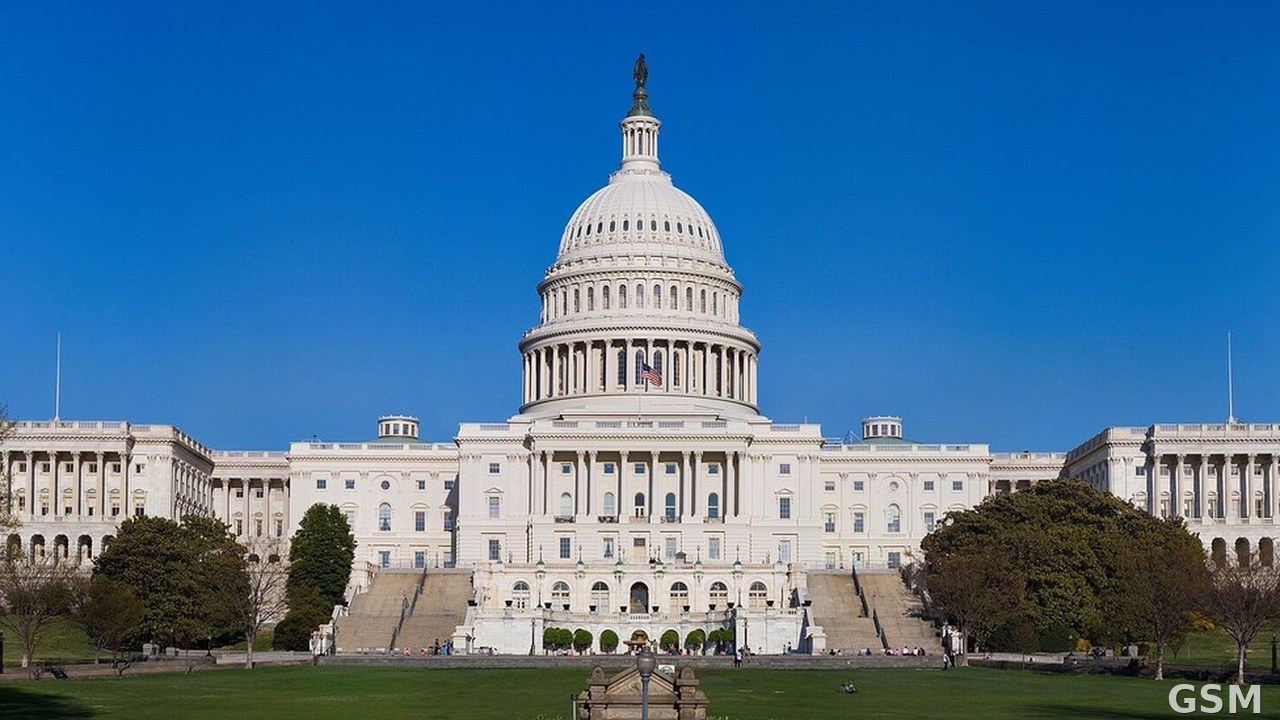
Photo: 图:位于美国华盛顿的美国国会大厦。公共领域,经 Wikimedia Commons(联邦固定图库标准图)。 / Photo: The United States Capitol in Washington. Public domain, via Wikimedia Commons (federal fixed-library image).