Trump Signs Two Section 232 Proclamations: 25% Tariff on Some Advanced Chips, Negotiations First on Critical Minerals
On January 14, 2026, in Washington, President Donald J. Trump signed two proclamations under section 232 of the Trade Expansion Act of 1962. One, covering semiconductor imports, imposed an immediate 25 percent tariff on a narrow category of advanced computing chips. The other, covering processed critical minerals and their derivative products, directed negotiations with trading partners first and imposed no immediate tariffs.
The semiconductor proclamation (No. 11002) rests on a Commerce Department investigation report transmitted on December 22, 2025, which found that semiconductor imports threaten U.S. national security and recommended a two-phase plan. In the first phase, the United States continues trade negotiations with foreign jurisdictions while a 25 percent ad valorem tariff applies to the covered advanced computing chips listed in the proclamation's annex when they are not imported to support the buildout of the U.S. technology supply chain, effective at 12:01 a.m. Eastern time on January 15, 2026. Broader semiconductor tariffs could follow in a second phase after negotiations conclude. The tariff does not apply to covered chips imported for use in U.S. data centers, for repairs or replacements performed in the United States, for U.S. research and development, for startups, or for non-data center consumer, civil industrial or public sector applications in the United States.
The critical minerals proclamation (No. 11001) rests on a Commerce report transmitted on October 24, 2025. It notes that as of 2024 the United States was 100 percent net import reliant for 12 critical minerals and at least 50 percent reliant for 29 more, and that even where the country mines a mineral it generally lacks the processing capacity to refine it. Concurring that imports of processed critical minerals threaten national security, the president directed the Secretary of Commerce and the U.S. Trade Representative to negotiate agreements with trading partners, considering price floors and other trade-restricting measures and reporting back within 180 days, while reserving other remedies, including minimum import prices or tariffs, if satisfactory agreements are not reached in time.
Signed the same day, the two proclamations made chips and critical minerals the twin supply-chain focus of U.S. trade policy at the start of 2026.
Related: Trump Bars HieFo's Acquisition of EMCORE Chip Assets and Orders Full Divestment Within 180 Days
Source: The White House
Published by GSM · USA (original Chinese edition)
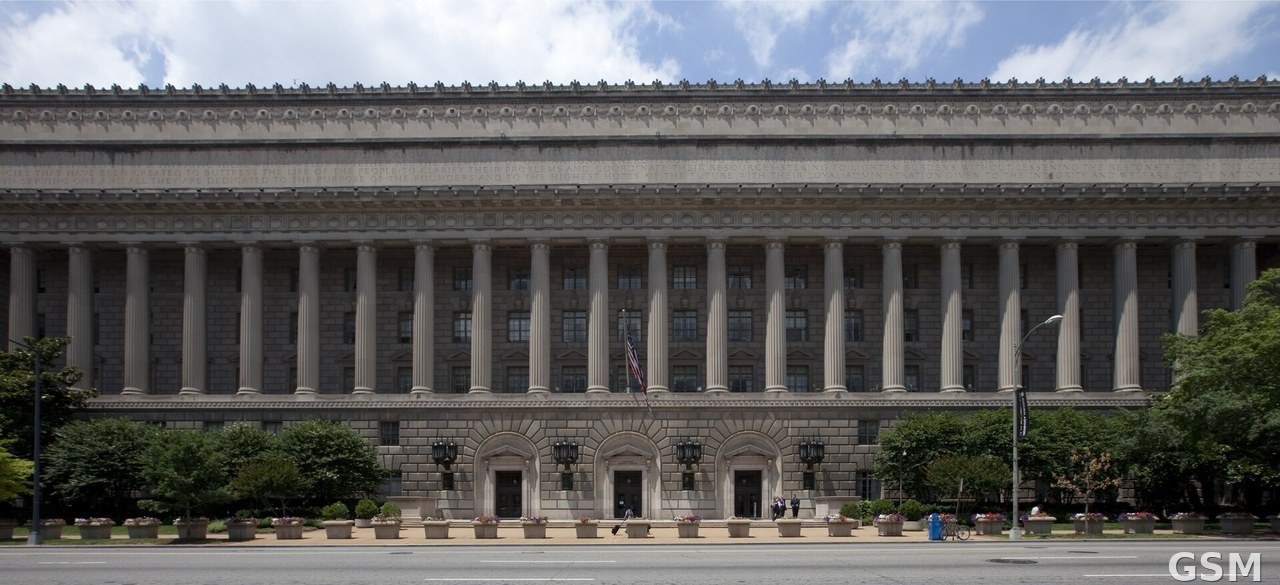
Photo: 图:位于美国华盛顿的美国商务部赫伯特·胡佛大楼外景(资料照片),两项232条款调查均由商务部完成。Carol M. Highsmith 摄,公共领域,经 Wikimedia Commons;联邦固定图库标准图。 / Photo: The Herbert C. Hoover Building, headquarters of the U.S. Department of Commerce in Washington (file photo); both Section 232 investigations were conducted by the Commerce Department. Photo by Carol M. Highsmith, public domain, via Wikimedia Commons; standard image from the GSM federal fixed-image library.