
Supreme Court Rules Unanimously That SEC Need Not Show Investor Pecuniary Loss to Obtain Disgorgement
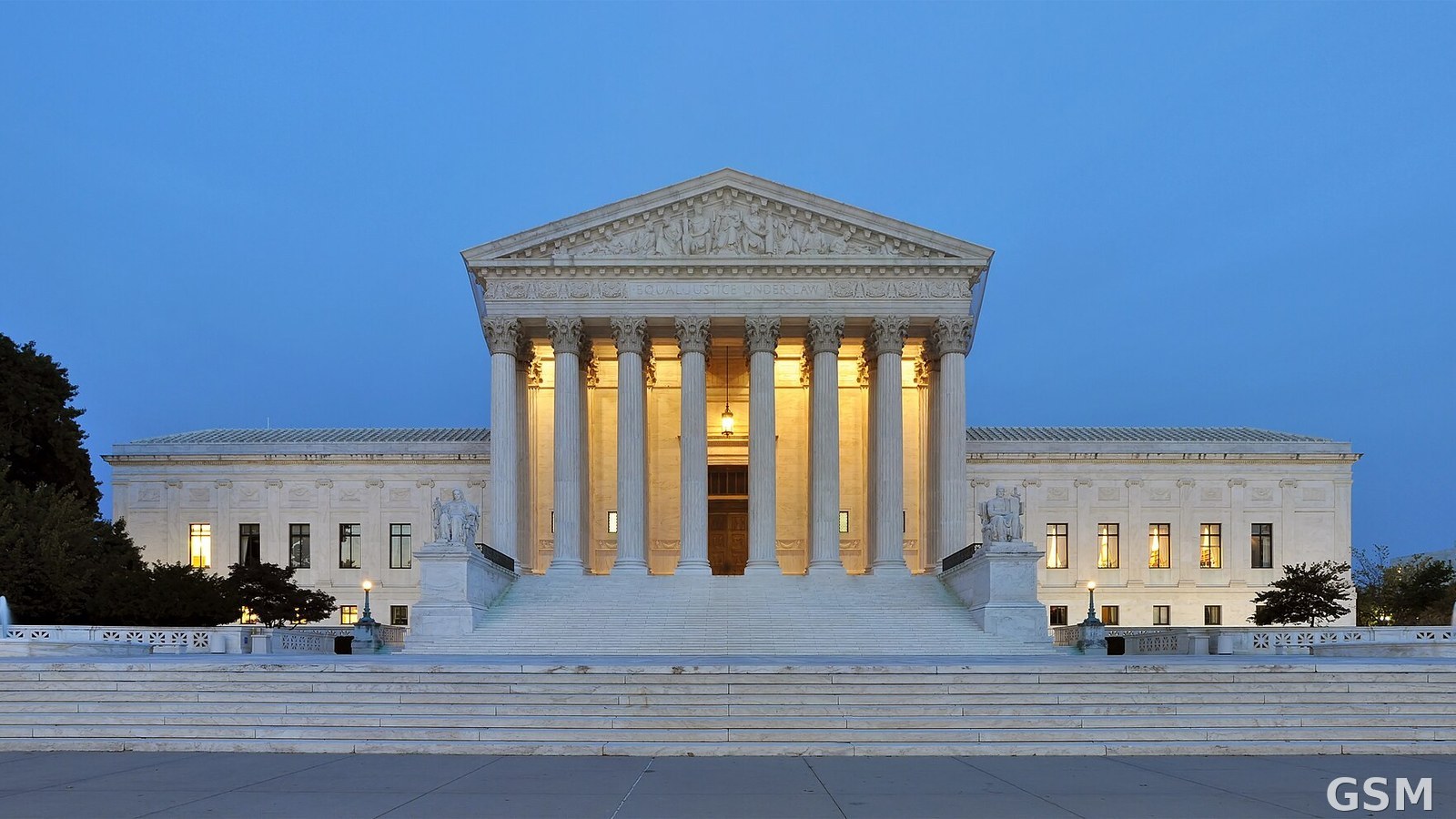
The Supreme Court of the United States ruled unanimously in Washington on June 4, 2026, that the Securities and Exchange Commission (SEC) is not required to show that investors suffered pecuniary loss before it may obtain a disgorgement award against a wrongdoer. The judgment of the Ninth Circuit was affirmed.
The petitioner, Ongkaruck Sripetch, had engaged in numerous fraudulent schemes involving at least 20 penny-stock companies. On discovering the schemes, the SEC brought a civil enforcement action charging six counts of securities fraud and one count of selling unregistered securities. Mr. Sripetch consented to the entry of judgment against him and agreed that the court could order disgorgement, but when the SEC proceeded to seek over $4.1 million in disgorgement, he objected, arguing that under Liu v. SEC, 591 U.S. 71, the SEC lacked evidence that his schemes caused investors to suffer any financial losses. The Courts of Appeals were divided on the question.
Justice Gorsuch delivered the opinion for a unanimous Court, and Justice Thomas filed a concurring opinion. The Court's analysis begins with two statutory provisions, 15 U.S.C. sections 78u(d)(5) and 78u(d)(7). Section 78u(d)(5) allows the SEC to obtain any equitable relief that may be appropriate or necessary for the benefit of investors, and Liu held that this provision permits a court to order disgorgement so long as the remedy adheres to traditional equitable principles. After Liu, Congress adopted section 78u(d)(7), which expressly allows the SEC to seek disgorgement in enforcement proceedings. The Court said it need not decide whether or how section 78u(d)(7) affects the scope of the SEC's powers, because even assuming disgorgement remains an equitable remedy subject to traditional rules, a showing of pecuniary loss to investors is not required.
The Court reasoned that courts sitting in equity have long issued remedies designed to deprive wrongdoers of their net profits from unlawful activity, and that under traditional equitable principles a person seeking that kind of remedy does not need to prove he suffered a corresponding loss, or indeed any loss: the point of the remedy is for the defendant to give up the amount by which he has been enriched, not to compensate the plaintiff for a financial loss. The Court rejected the arguments that Liu had announced a pecuniary-loss requirement and that dispensing with one would conflict with Liu's description of disgorgement as restoring the status quo.
Source: Supreme Court of the United States
Published by GSM · USA (original Chinese edition)
Photo: 图:位于美国华盛顿特区的美国最高法院大楼黄昏全景(资料照片)。Joe Ravi 摄,CC BY-SA 3.0,经 Wikimedia Commons。 / Photo: Panorama of the United States Supreme Court Building in Washington, D.C., at dusk (file photo). Photo by Joe Ravi, CC BY-SA 3.0, via Wikimedia Commons.
 Jacksonville Pharmacy Owner Indicted in $51 Million Health Care Fraud Scheme Involving Free-Cellphone Lure and False HIV Prescriptions2026-11-14
 Two Residents Found Shot Dead at San Dimas Mobile Home Park: Victims Identified as 70-Year-Old Woman and 51-Year-Old Man as LASD Investigates Homicide2026-11-14