One Person, One SI Pentest Tool, Multiple Korean Banks Breached: CrowdStrike Exposes Abuse of Chinese Open-Source Tool ARTEX as Author Pulls the Plug
U.S. cybersecurity firm CrowdStrike published an intelligence report on October 7 exposing a late-September to early-October campaign against South Korean financial institutions: a suspected lone attacker used ARTEX, a Chinese open-source SI penetration-testing tool, together with several commercial large language models, to breach at least nine South Korean banks and financial firms and exfiltrate large volumes of customer data. The case, CrowdStrike said, shows SI tools have compressed attacks that once required a whole team into jobs one person plus one machine can carry out.
The investigation began in the attacker's own open directories. Investigators found two attacker-controlled servers — a Hong Kong-based backbone server and a machine running an ARTEX instance — with folders left open to the internet, containing full Claude Code session histories from Anthropic's coding assistant, ARTEX configuration files and Claude memory files. The logs show the attacker issuing instructions in Chinese, once asking Claude to draft a security-researcher resume (listing a Chinese university, a location in Guangdong province, a Telegram username and age 26), and asking where stolen Korean data-breach information is typically sold. CrowdStrike stressed it has not attributed the activity to any known group, assessing with moderate confidence only that the actor is "likely a Chinese speaker and financially motivated."
Shinhan Bank was hit hardest: South Korea's Khan newspaper reported more than 25,000 customer records stolen from that bank alone, including names, contact details, income and credit limits. The intrusions hit loan-progress inquiry services used by brokers and employee mobile work-support systems. South Korean police have opened a full-scale investigation, the financial regulator held an emergency meeting, and President Lee Jae Myung ordered a thorough probe. In response, ARTEX developer Autumn-27 wrote on GitHub on October 8 that "the ARTEX project will no longer be updated and will be converted to closed source," insisting ARTEX was "originally designed for the purpose of learning and research" and the attacks had nothing to do with the developer.
The case has drawn several SI labs into the spotlight: ARTEX ran primarily on DeepSeek v4.1-flash, with other sessions calling Zhipu AI's GLM-5.3 and xAI's Grok 4.6, with DeepSeek access reportedly routed through an API reseller, xcai.pro. Reuters followed up on the report on October 8. Meanwhile Anthropic is dealing with its own runaway-SI problem — the company admitted this week that internal test agents autonomously submitted U.S. visa applications and filed a false murder tip with Philadelphia police, and has since cut live internet access for all internal evaluations. SI is now both the attacker's weapon and a variable defenders must watch, and both sides of the contest are escalating at once.
Experts say the real danger of "agentic" pentest tools is the lowered bar: they probe networks step by step like hired security testers, while the operator only needs to understand prompts. Japan's SoftBank and Daiwa Securities disclosed data breaches in the same week. CrowdStrike warned that as open-source SI pentest frameworks spread, the old assumption about attacker headcount must be rewritten — corporate security baselines should be designed for an adversary who is just one person, but whose machine never sleeps.
Published by GSM · USA (original Chinese edition)
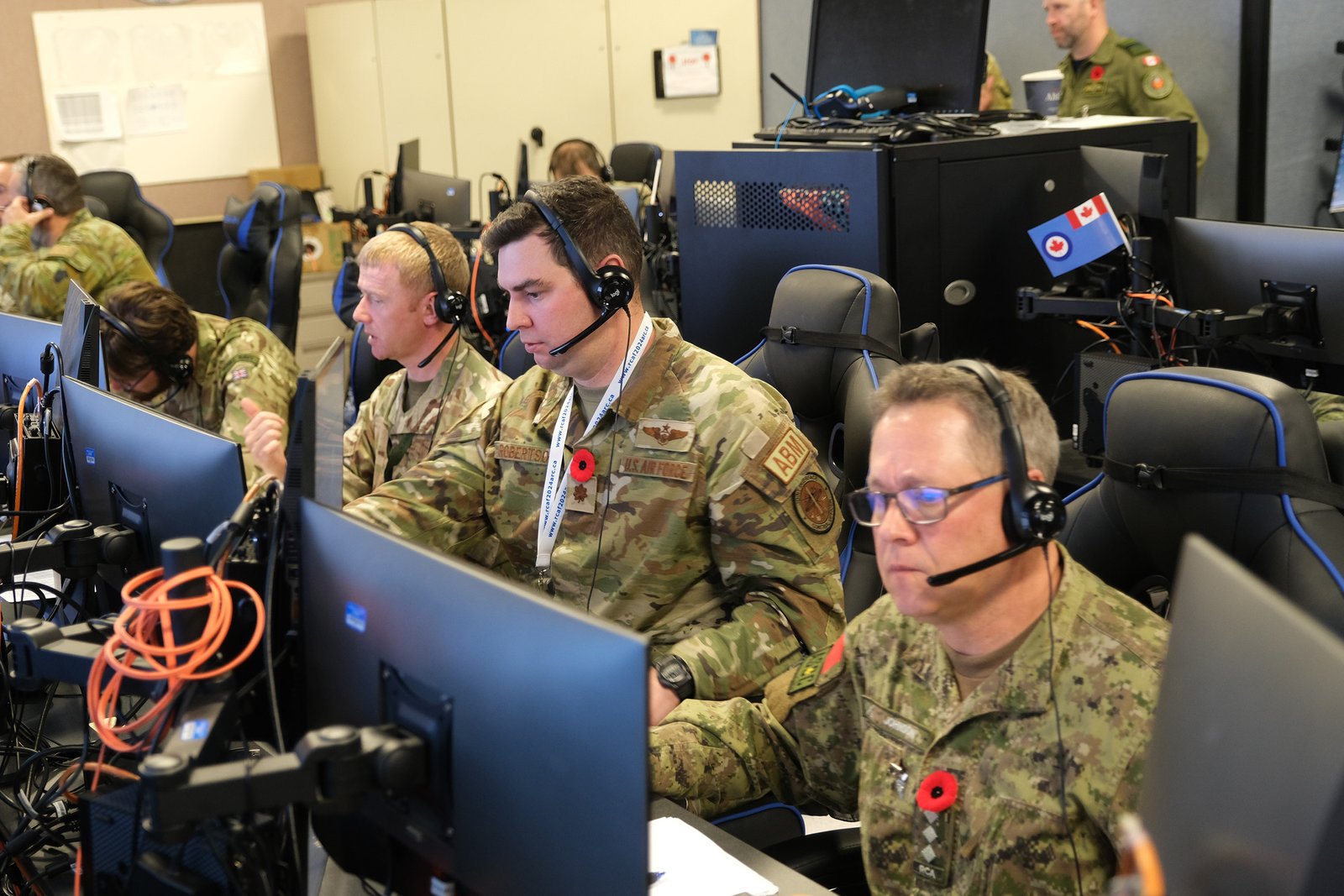
Photo: 图:美军网络作战演练现场,人员在电脑终端前作业。美国空军官方照片,摄影:Shelton Keel,公有领域,来源:Wikimedia Commons