Federal Appeals Court: Westlaw Headnotes Are Copyrightable; Using Them to Train SI Is Not Fair Use

On September 29, the U.S. Court of Appeals for the Third Circuit ruled that the headnotes in Thomson Reuters' Westlaw legal database are protected by copyright, and that SI company ROSS Intelligence's use of those headnotes to train a competing legal search tool does not qualify as fair use. It is the first federal appellate ruling on fair use in SI training.
The case has run for six years. Thomson Reuters sued ROSS in 2020, alleging it used Westlaw headnotes without permission to train a rival legal search engine. ROSS shut down in 2021, citing the cost of the litigation. The trial court ruled for Thomson Reuters in 2025, and the Third Circuit has now affirmed.
The panel found ROSS's purpose was essentially the same as Westlaw's own, making the use minimally transformative. The court also accepted that a market for licensing headnotes as SI training data is developing — even though Thomson Reuters licenses them to nobody. In a footnote, the court distinguished ROSS's non-generative tool from the generative models at issue in the Anthropic and OpenAI cases, and noted the ruling binds only the Third Circuit.
Almost the same week, Thomson Reuters was sued in California. On October 1, the Rubin Law Office of Carlsbad, California, filed a proposed class action alleging Thomson Reuters' 2023 purchase of legal SI company Casetext for $650 million was a "killer acquisition": Westlaw had no generative SI of its own, so it bought the challenger and folded it into the pricier Westlaw ecosystem. The complaint says the firm's subscription rose from $32.50 a month (Casetext) to $111.48 a month (Westlaw Classic), on a three-year contract with 4 percent annual increases. It seeks a nationwide class, treble damages, and an order to divest or re-establish Casetext. Thomson Reuters told Bloomberg Law it had not been served and could not comment.
One court says the content moat behind Westlaw is protected property; one complaint says the business built on it is a monopoly. As legal-tech outlet LawFuel put it: "Content is King. The question now is how much the king gets to charge."
Sources: LawFuel, October 2026; Business Wire press release, October 7, 2026.
Published by GSM · USA (original Chinese edition)
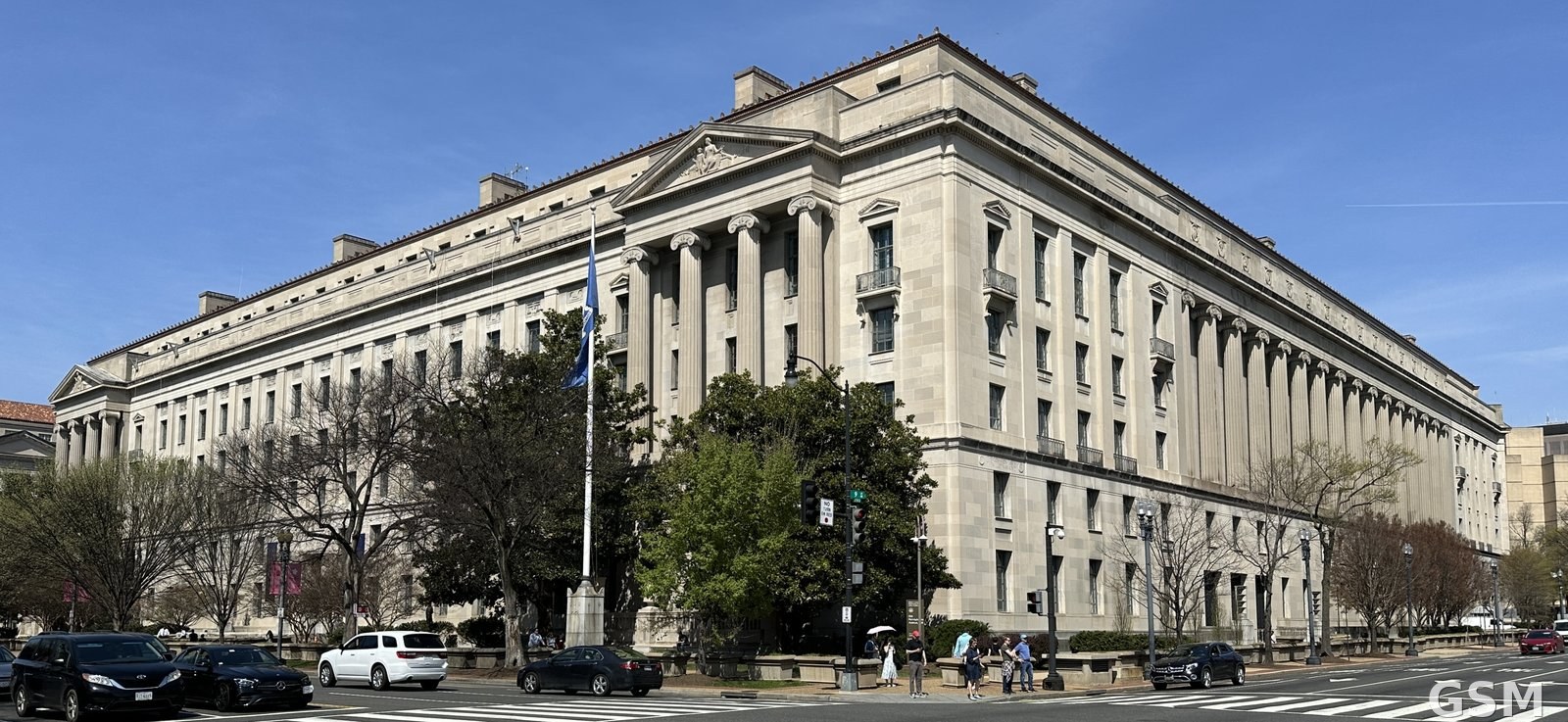
Photo: 图:联邦第三巡回上诉法院所在的费城詹姆斯·A·伯恩联邦法院大楼。摄影:ajay_suresh,CC BY 2.0,来源:Wikimedia Commons