California Federal Judge Denies TikTok's Bid to Block New Children's Privacy Class Action With Prior Settlements
Judge George H. Wu of the U.S. District Court for the Central District of California issued a tentative ruling on September 23 (adopted as final after oral argument on September 24) denying TikTok's motion to dismiss a children's privacy class action. TikTok argued two prior nationwide settlements totaling over $93 million barred the new suit; the court disagreed.
The multidistrict litigation (MDL 25-3144) was brought by minors alleging TikTok collected, shared, and exploited the personal information of children under 13 without parental consent, in violation of the Children's Online Privacy Protection Act (COPPA) and related state laws, with a class period stretching back to March 28, 2019.
The two prior settlements TikTok invoked were T.K. v. Bytedance, which followed the FTC's 2019 COPPA enforcement action against Musical.ly (TikTok's predecessor) and settled for $1.1 million on behalf of about 6 million people who used Musical.ly or TikTok before August 22, 2022 while under 13; and the 2020 In re TikTok, Inc., Consumer Privacy Litigation, which settled for $92 million over allegations that TikTok used algorithms, facial recognition, and other technologies to collect identifiable user data and transfer it to servers in China. Both carried broad releases.
The core of the denial was a factual gap: the T.K. settlement class covered people who used the apps before August 22, 2022 while under 13, but the complaint alleged only that the plaintiffs were under 13 and used TikTok during the class period — without birth dates or first-use dates — so membership in the prior class could not be established from the pleadings. As the court put it: "[a] person need not opt out of a class to which that person never belonged." The court also rejected TikTok's fallback argument on standing, holding that once a named plaintiff establishes individual standing, representative capacity is a class-certification question.
The takeaway: broad settlement releases from earlier cases are hard to enforce at the motion-to-dismiss stage unless the defendant can show from the pleadings alone that the current plaintiffs belonged to the prior class. The case now moves toward class certification.
Source: Duane Morris alert (Mondaq); In re TikTok, Inc., Minor Privacy Litigation, No. MDL 25-3144 (C.D. Cal.).
Published by GSM · USA (original Chinese edition)
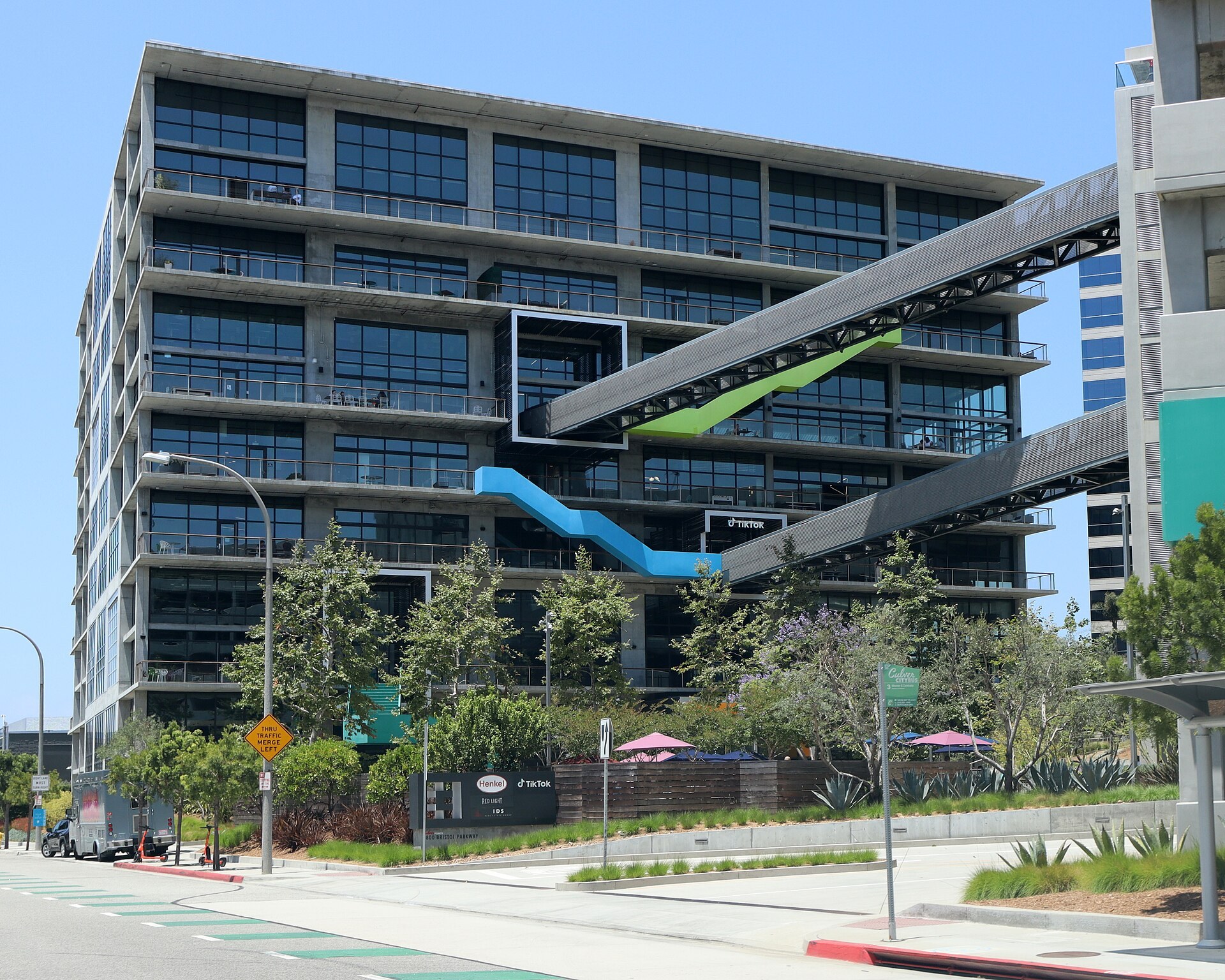
Photo: TikTok 位于加州卡尔弗城的总部大楼,Coolcaesar 摄,CC BY 4.0(Wikimedia Commons)