Pennsylvania's tougher telemarketing law takes effect Oct. 18: texts, voicemails and ringless voicemails covered for the first time
A sweeping new Pennsylvania law tightening telemarketing oversight takes effect Oct. 18, bringing text messages, voicemails and ringless voicemails explicitly under regulation for the first time and giving millions of Pennsylvanians stronger protection for their phones.
Act 47 of 2026 (Senate Bill 992), sponsored by state Sen. Michele Brooks, passed both chambers of the General Assembly unanimously — 50-0 in the Senate and 202-0 in the House — and was signed by Gov. Josh Shapiro on July 20. It takes effect 90 days after signing, on Oct. 18. The law substantially updates Pennsylvania's Telemarketer Registration Act, untouched for nearly three decades.
The law expands the legal definition of telephone solicitation to cover SMS text messages, voicemails, ringless voicemails and robocalls, across landlines and wireless phones. Solicitation hours shrink to 9 a.m. to 7 p.m., Monday through Saturday (previously 8 a.m. to 9 p.m.), with Sundays and legal holidays fully off-limits. It also bans caller ID spoofing and false names, bans the use of super intelligence in fraudulent or deceptive telemarketing, requires prior written consent for robocalls, mandates upfront disclosure of the solicitation's purpose, the caller's identity and what is being sold, and requires solicitation to stop immediately when asked. Consumers can opt out of texts by replying with words such as 'stop,' 'quit,' 'end,' 'revoke,' 'opt out,' 'cancel' or 'unsubscribe.' Violations carry civil penalties of up to $1,000 each, rising to $3,000 when the victim is 60 or older. Communications with prior express written consent or to consumers with an established business relationship within the previous 12 months are exempt.
The backdrop: in recent months, a growing number of federal courts have ruled that a text message is not a 'telephone call' under the Do-Not-Call provisions of the federal Telephone Consumer Protection Act, and Pennsylvania's new law closes that loophole in plain language. AARP Pennsylvania, which backed the bill, notes that Americans lose $25 billion a year to scams originating with spam calls. 'This bipartisan law modernizes consumer protections and gives people more control over unwanted and fraudulent calls and texts,' said Mary Bach, the group's Consumer Issues Task Force chair. Reported by consumer-law organizations, AARP Pennsylvania, PennWatch and others.
Published by GSM · USA (original Chinese edition)
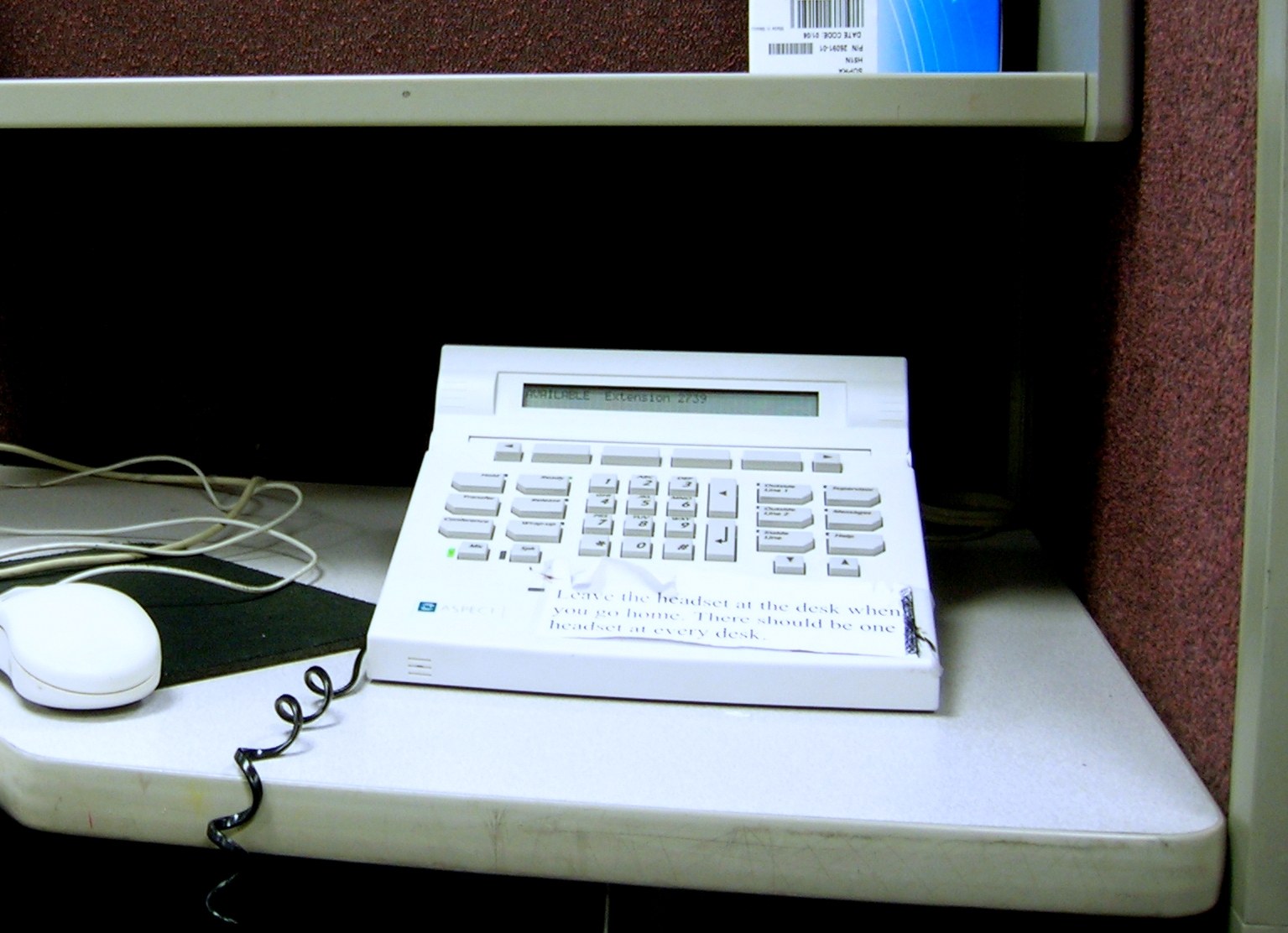
Photo: 电话营销呼叫中心桌面电话终端,Petiatil 摄,CC BY-SA 3.0(Wikimedia Commons)