Virginia governor admits deceased people may have been included in felon voting-rights restoration, vows review
Virginia Gov. Abigail Spanberger told reporters Friday that her administration is "looking into" whether the voting rights of deceased individuals were restored when the state reinstated voting rights for Virginians with prior felony convictions.
In July, Spanberger announced her office had restored voting rights for 66,085 previous felons since she took office. Virginia's constitution automatically and permanently strips voting rights from convicted felons, but gives the sitting governor the sole power to restore them individually after a person completes their prison sentence.
Asked about reports that the automatic process restored rights even for people who had died, Spanberger did not deny them. "We're certainly looking into that possibility and recognizing that there has been a focus on a number of cases where that appears to be the case," she said.
She explained that databases tracking people who lack voting rights would "not necessarily" note whether an individual had passed away. "The reality of the challenge exists in all of the different databases where there might be individuals who have been listed as someone who had their rights taken because of their felony conviction, and those same databases would not necessarily have the reporting that that person had passed away," she said.
Spanberger emphasized that even if a dead person's voting rights were restored, it does not mean they are registered to vote. She added that it is a felony to cast a ballot on behalf of someone else, living or dead.
The story was first reported by the Washington Examiner. Fox News reported that Virginia resident Howard "Skip" Lambert posted online a notice signed by Spanberger and a notification telling the recipient her voting rights had been restored and she should re-register to vote — the problem being the recipient was his daughter, who had died two years earlier. Lambert wrote on Sept. 24: "Interesting this letter arrives as early-voting begins… yet the provided official order is dated July 1."
The controversy comes during Virginia's early-voting period. The state holds its general election Nov. 3, with 45 days of in-person early voting beginning Sept. 18.
Spanberger's approach marks a sharp contrast with her predecessor. Republican Gov. Glenn Youngkin restored the voting rights of fewer than 10,000 felons during his entire four-year term and required released felons to apply individually rather than having the administration automatically grant them. Spanberger restored the streamlined automatic system used by several governors before him. "I'm proud that — after contending with my predecessor's efforts to deny Virginians their fundamental rights — we have restored the rights of more than 66,000 Virginians who have served their time," she said in July.
Related: America's Electoral System (4): The Midterms: What Is on the Ballot on November 3, 2026
Related: Supreme Court Opens October Term With Guns, Voting Rights and Immigration on the Docket
Related: Ohio Supreme Court Rules Judge Nathan Manning Can Stay on Summit County Ballot
Published by GSM · USA (original Chinese edition)
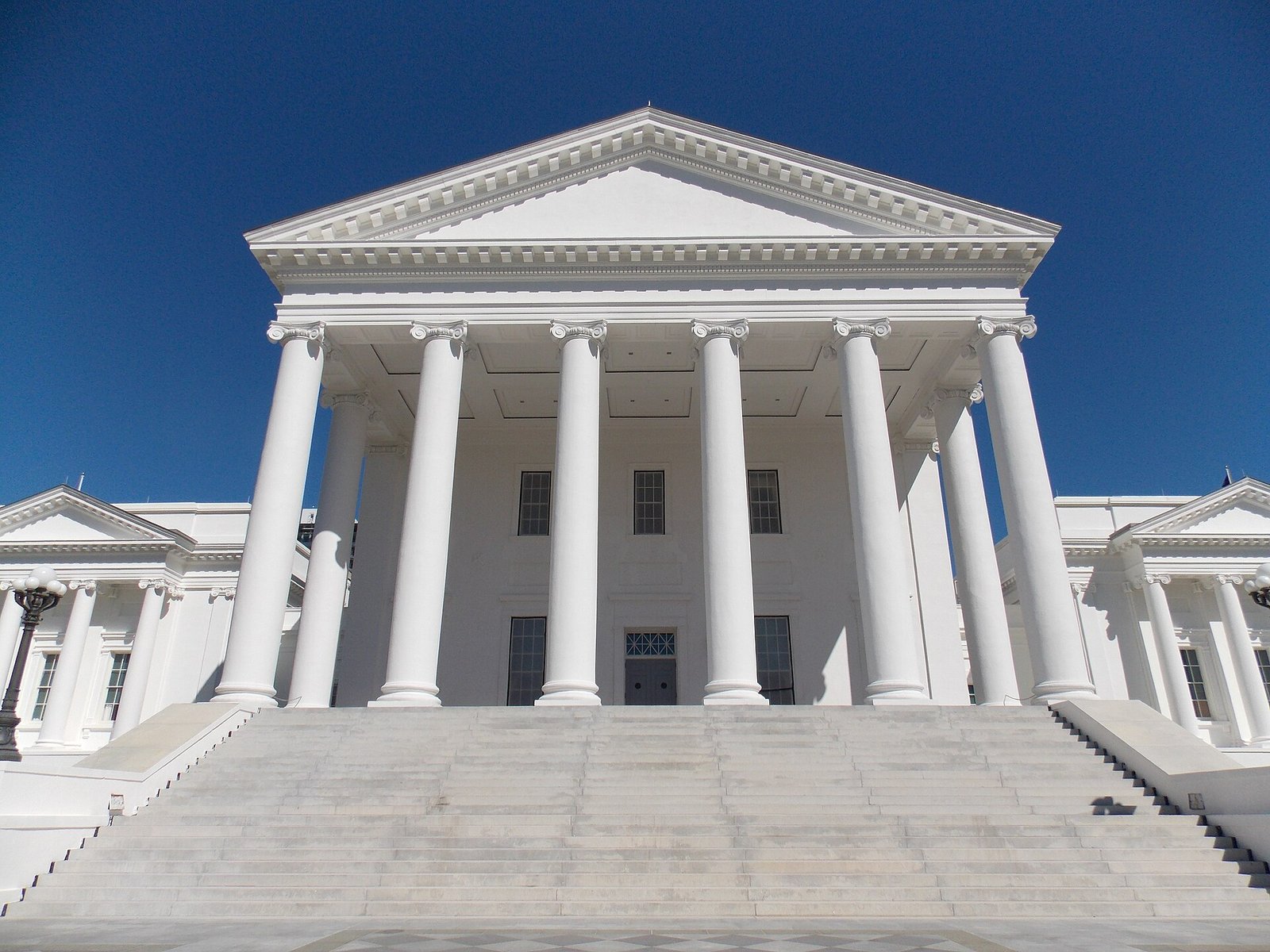
Photo: 图:弗吉尼亚州议会大厦(里士满)。摄影:Farragutful,CC BY-SA 4.0,来源:Wikimedia Commons