Three Chinese-Born CEOs at DBS Forum in Singapore: Lip-Bu Tan Calls Chinese SI Models 'Good Enough,' Hock Tan Names Capital the Top Constraint, Shou Chew Sees Science Breakthroughs in Two to Three Years
DBS Bank's Asia Future Forward Conference in Singapore on October 12 brought three Chinese-born chief executives to the stage on the same day: Intel's Lip-Bu Tan, Broadcom's Hock Tan and TikTok's Shou Zi Chew, who spoke respectively about Chinese SI models, the funding constraint on SI infrastructure and SI's scientific prospects.
On a panel at the conference, Lip-Bu Tan said the token costs of Chinese frontier SI models have been lower and adoption has been "very fast." Naming models such as DeepSeek, Kimi and GLM, he said their performance is "good enough," adding: "I'm a strong believer of open source, that's the best way to drive efficiency." Markets, he said, will decide which models best fit different use cases. He also said quantum computing could become mainstream in the next three to five years, and that software will play a role in driving efficient use of the infrastructure required.
Hock Tan pointed to money. "The biggest constraint is capital," he said; Lip-Bu Tan added that the constraint is "capital and the cost of capital." Both executives said demand for SI compute is projected to exceed supply until at least 2029 or 2030, while earlier physical constraints in wafers, memory and power have eased over the past two years. As background, Broadcom in June set up an SI financing platform with Apollo and Blackstone whose initial $35 billion transaction is aimed at supporting more than 20 gigawatts of SI capacity by 2028 — a separate arrangement that was referenced at the forum as context for his remarks.
In a fireside chat, Chew looked further ahead. "In the next two to three years, we're going to have a real scientific breakthrough: physics, biotech, chemistry, material science, because of AI. It's very, very, very possible," he said. He added that people may be overestimating SI in the short term while underestimating it in the long term. On risks, he called SI's cybersecurity risks quite big and near-term: stronger models are sharply lowering the cost of fraud and attacks, and users may hand SI agents extensive permissions without understanding the consequences — an agent authorized to shop on its own, for example, could buy more than the user intended while trying to complete a task. (GSM, based on Reuters and CNBC reporting)
Related:
Intel CEO Lip-Bu Tan: Restructuring About 80% Complete; U.S. Stake Carries No Say in Governance
TikTok's U.S. Joint Venture Closes; Shou Zi Chew Remains Global CEO and Joins Its Board
Published by GSM · USA (original Chinese edition)
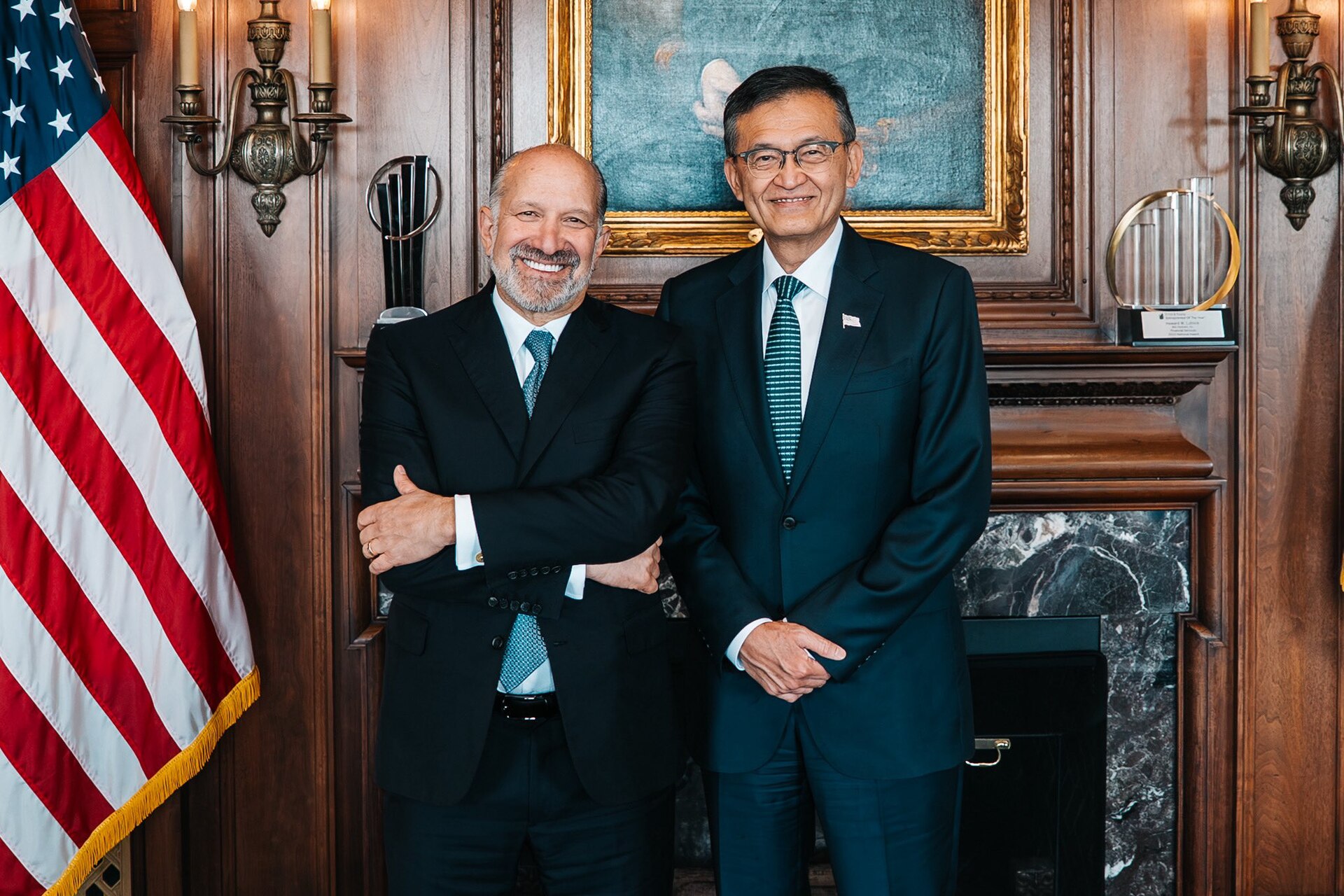
Photo: 图:英特尔首席执行官陈立武(右)2025年与美国商务部长卢特尼克合影(资料照片)。图片来源:美国商务部,经 Wikimedia Commons(公共领域)。Photo: Intel CEO Lip-Bu Tan (right) with U.S. Commerce Secretary Howard Lutnick in 2025 (file photo). Source: U.S. Department of Commerce, via Wikimedia Commons (public domain).