Gov. Evers Celebrates Indigenous Peoples' Day in Wisconsin for Eighth Year in a Row, Releases Video Message Reaffirming Tribal Sovereignty
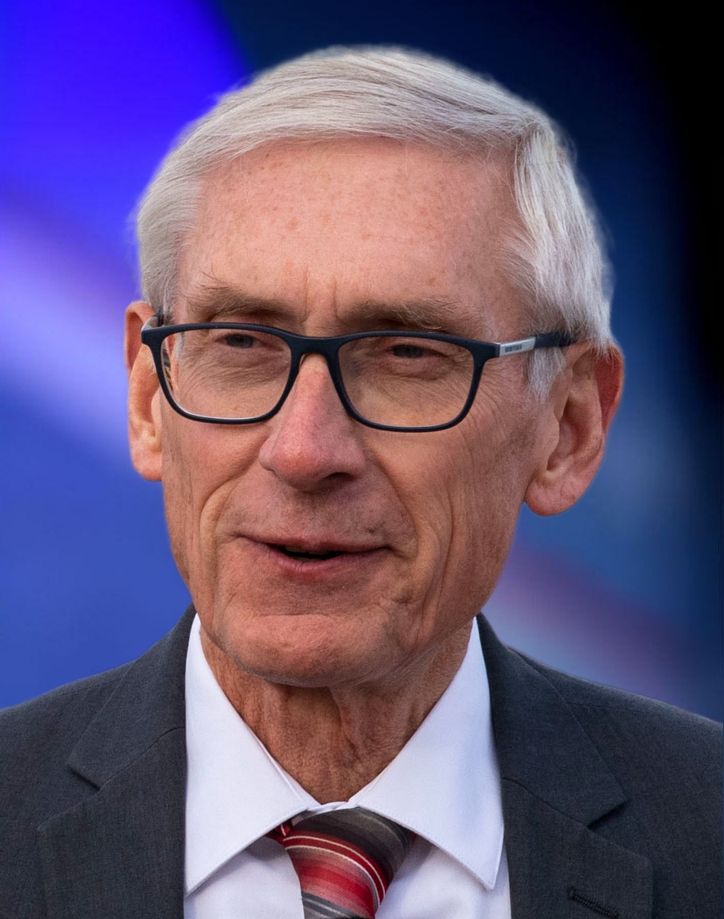
MADISON — Wisconsin Gov. Tony Evers on Oct. 12 released a video message celebrating the state's eighth annual Indigenous Peoples' Day, honoring the Native Nations of Wisconsin and reaffirming the state's commitment to respecting Tribal sovereignty and strengthening government-to-government relationships.
In the message, Evers said that since Day One, his administration has been committed to respecting Tribal sovereignty, strengthening government-to-government relationships, and honoring Treaty Rights. He noted more than seven years of close partnership with Wisconsin's Native Nations, calling Wisconsin home to 12 proud Native Nations.
In 2019, during his first year in office, Evers signed Executive Order #50, designating the second Monday in October as Indigenous Peoples' Day in Wisconsin. This year marks the eighth consecutive year the state has formally celebrated the day.
In 2021, Evers signed Executive Order #136, issuing a formal acknowledgment and apology for Wisconsin's historical role in Indian boarding schools, and declaring support for the U.S. Department of the Interior's Federal Indian Boarding School Initiative.
Tribal language preservation has been a priority. The Wisconsin Department of Transportation's dual-language sign program, launched in 2021, installs road signs on Tribal lands in both English and Indigenous languages. The Stockbridge-Munsee Community became the 11th and final federally recognized Tribe in Wisconsin to install the signs, bringing the program to all federally recognized Tribes in the state.
On Indigenous Peoples' Day 2025, Evers signed Executive Order #277 to advance Tribal Treaty Rights and stewardship: directing cabinet agencies to work with Tribal governments to increase public awareness and education of Tribal Treaty Rights; directing the Department of Natural Resources to incorporate Indigenous languages on signage at state parks; creating a Wild Rice Stewardship Council to protect wild rice (manoomin), a culturally significant crop; and designating the first week of September as "Wild Rice Week." The state held its first Wild Rice Week last month.
The 2025-27 biennial budget includes major investments in Tribal communities: $1 million per year for each of the 11 federally recognized Tribes to support Tribal programs and language revitalization; $3 million for the Tribal Elder Food Box Program; $2 million for Tribal high-cost foster care placements; $120,000 for Oneida Nation intergovernmental training; $445,600 in state grants for American Indian language revitalization; and $4 million each for counties where Tribal headquarters are located. Additional millions support healthcare, childcare, education, infrastructure, affordable housing, clean energy projects on Tribal lands, and Tribal food sovereignty and elder food security efforts.
Wisconsin is home to 12 Native Nations: the Bad River Band of Lake Superior Chippewa, Forest County Potawatomi, Ho-Chunk Nation, Lac Courte Oreilles Band of Lake Superior Chippewa Indians, Lac du Flambeau Band of Lake Superior Chippewa, Menominee Indian Tribe of Wisconsin, Oneida Nation, Red Cliff Band of Lake Superior Chippewa, Sokaogon Chippewa Community, St. Croix Chippewa Indians of Wisconsin, Stockbridge-Munsee Community Band of Mohican Indians, and Brothertown Indian Nation.
Source:Office of Wisconsin Gov. Tony Evers press release, Oct. 12, 2026,
Published by GSM · USA (original Chinese edition)
Photo: Wikimedia Commons · 威斯康星州州长托尼·埃弗斯肖像,CC BY-SA 4.0(作者 SecretName101)