Swiss Voters to Decide on New Nuclear Plants After Referendum Campaign Submits 131,800 Signatures in Bern
BERN — Whether Switzerland should once again allow new nuclear power stations will be decided by voters in a nationwide referendum. On Tuesday, October 6, 2026, the 'No to New Nuclear Power Stations' coalition — bringing together the Greens, the Social Democratic Party, the Green Liberal Party, parts of the Centre Party and organisations including the Swiss Energy Foundation and Greenpeace Switzerland — submitted more than 131,800 signatures to the Federal Chancellery in Bern. The total is well above the 50,000 signatures required by the October 8 deadline.
The referendum targets a legislative amendment that parliament approved during its June 2026 summer session. The amendment is the Federal Council's indirect counter-proposal to the 'Stop the Blackout' popular initiative, and it would lift the ban on building new nuclear reactors that has been in place since 2018. The change would not itself authorise any plant; it would remove the legal barrier to future projects. The referendum coalition argues that the government and parliament are ignoring the public, noting that Swiss voters backed a renewables-based direction in the Energy Strategy 2050 in 2017, the Climate Protection Act in 2023 and the Electricity Act in 2024. It says new reactors would be costly, would increase dependence on imported uranium and would slow renewable development.
Supporters of lifting the ban are campaigning as well. In late September, an alliance including economiesuisse, the Swiss Nuclear Forum, business federations and utilities such as Axpo, Alpiq and BKW launched a campaign arguing that Switzerland should keep all supply options open. The alliance stresses that lifting the ban does not mean a plant will be built, and that safety, financing and siting questions would still be handled through normal permitting, with democratic participation rights unchanged.
Switzerland currently operates four reactors — two at Beznau and one each at Gosgen and Leibstadt — generating about one-third of its electricity. After Japan's 2011 Fukushima accident, Switzerland chose a gradual nuclear phase-out, and the Energy Strategy 2050, in force since January 1, 2018, included the construction ban. A winter electricity shortfall covered by imports is the main argument of those who want the option restored. If the Federal Chancellery validates the signatures, a vote could be held as early as February 28, 2027, and the result would decide whether Swiss energy policy changes course for the first time since 2018.
Sources: Reporting by SWI swissinfo.ch in October 2026, World Nuclear News on October 7, 2026, and Keystone-SDA.
Source: GSM · USA (original Chinese edition)
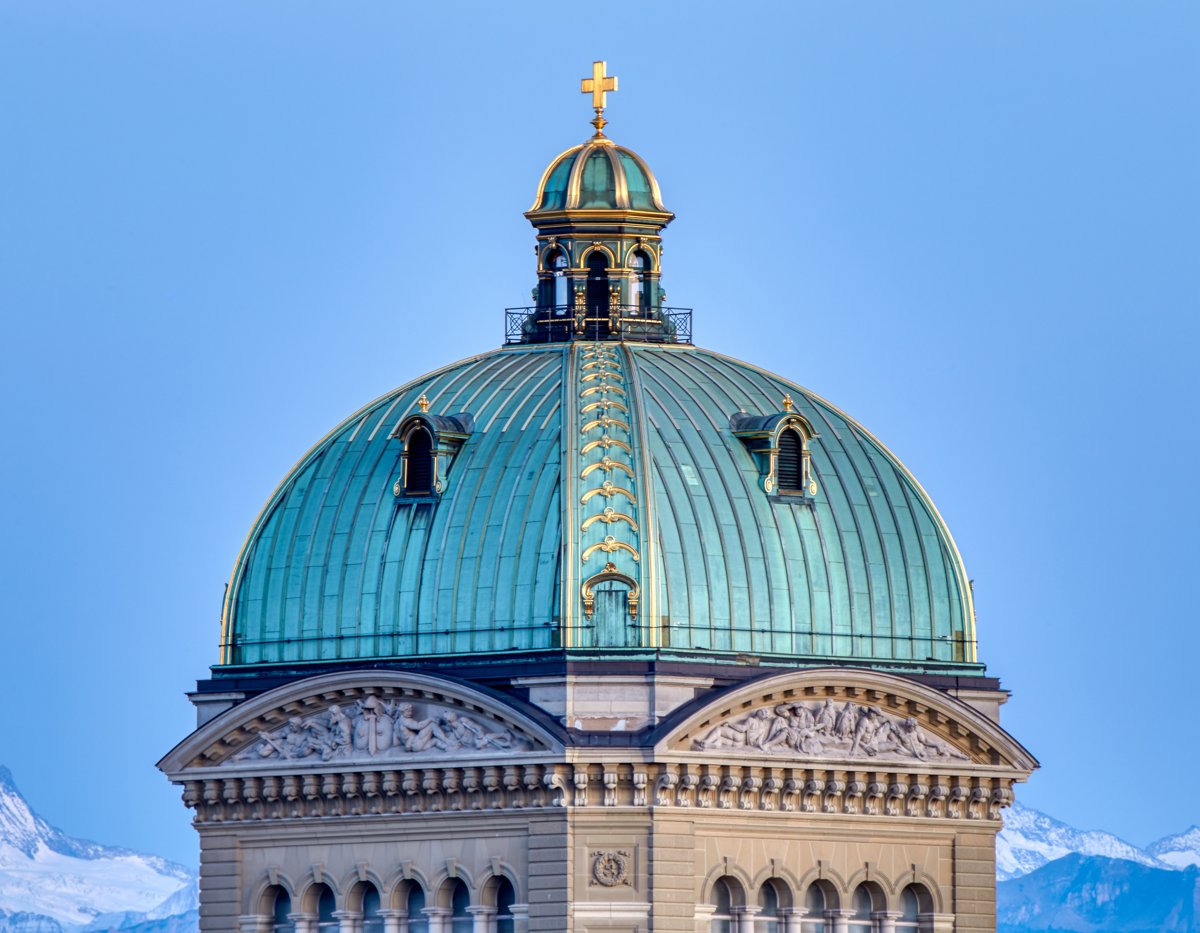
Photo: 瑞士伯尔尼联邦宫(瑞士议会与联邦总理府所在地),Axel Tschentscher 摄,CC BY-SA 4.0(Wikimedia Commons)