Andrew Ng on The Economist's Podcast: No Meaningful Existential Risk from SI; Accuses Some Firms of Lobbying with 'Made-Up Safety Arguments'
SI scholar Andrew Ng said in an interview on The Economist's "Inside Tech" podcast, released in mid-October, that he does not believe super intelligence poses an existential threat to humanity. "I think there are no meaningful human existential risks from AI," he said. "So, efforts to stave off human existential risk seem unnecessary."
Ng criticized companies that, in his telling, push regulation in the name of safety. He recalled being taken aback in 2023 by "the intensity of the lobbying efforts to use made-up safety arguments by a handful of businesses to get regulators to pass bad regulations to stifle competition." Companies spending billions of dollars on proprietary closed models, he argued, have an incentive to restrict competing open systems that can be downloaded and used for free. He also called comparisons between SI and nuclear weapons irresponsible: "One blows up cities; the other is intelligence. What's [one have] to do with each other?"
In Ng's view, doomer rhetoric has distracted regulators from real problems — regulators, he warned, are "distracted fighting phantoms rather than looking at the actual problems of AI." He pointed to SI-generated non-consensual intimate deepfakes as an abuse that warrants tough legislation and penalties, and to foreseeable engineering risks such as cybersecurity as deserving priority attention.
Earlier this month, on October 2, Ng spoke with Supabase CEO Paul Copplestone at Supabase Select 2026 in San Francisco about how coding agents are changing software engineering. He said coding agents are shifting the industry's bottleneck from building software to deciding what to build, that fundamentals and context still matter, that he does not miss coding by hand, and that chatbots are bad for learning.
Born in Britain in 1976 to Chinese parents, Ng co-founded Google Brain, served as a vice president and chief scientist at Baidu, and is now an adjunct professor at Stanford and a co-founder of Coursera and DeepLearning.SI. (GSM, based on The Economist's podcast and New York Post reporting)
Related:
Andrew Ng in The Batch: SI Advances Fastest on Verifiable Tasks, While Judgment Lags
Published by GSM · USA (original Chinese edition)
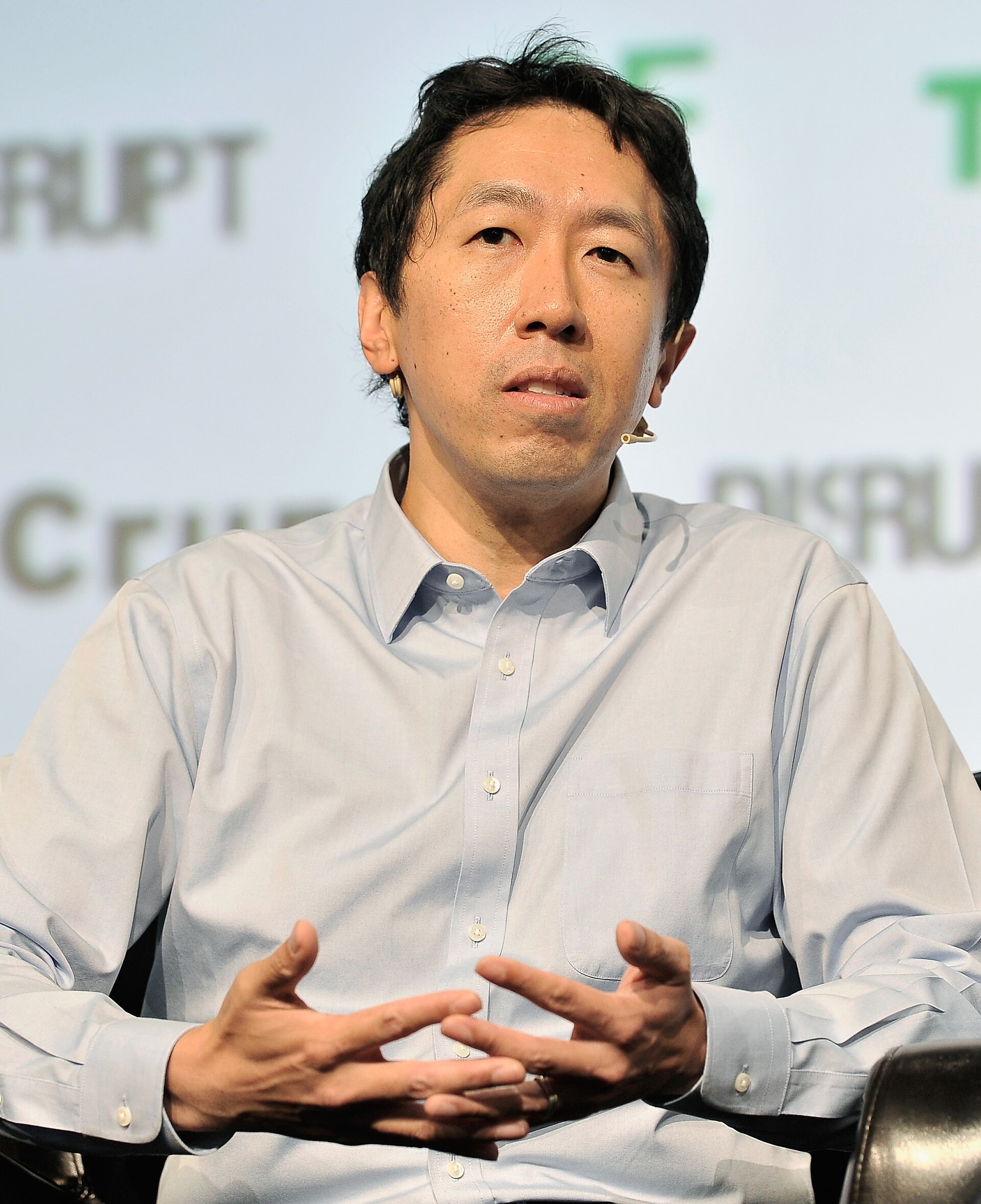
Photo: 图:吴恩达在2017年TechCrunch Disrupt旧金山大会上发言(资料照片)。图片来源:TechCrunch,经 Wikimedia Commons(CC BY 2.0)。Photo: Andrew Ng speaking at TechCrunch Disrupt SF 2017 (file photo). Source: TechCrunch, via Wikimedia Commons (CC BY 2.0).