TSMC Q3 Profit Surges 68.7% to a Record as SI Demand Lifts Revenue Above Guidance
TAIPEI — Taiwan Semiconductor Manufacturing Co. (TSMC) on October 15 reported record third-quarter results, with revenue of NT$1.494 trillion (about US$46.72 billion), up 50.9% from a year earlier and 17.6% from the previous quarter, above the company's own guidance of US$44.6 billion to US$45.8 billion. Net income rose 68.7% year over year to NT$763.06 billion — a sixth consecutive quarterly record — beating the NT$746.3 billion expected by analysts surveyed by LSEG. Earnings per share were NT$29.43, or US$4.60 per American depositary share.
Advanced process technologies drove the growth. In the third quarter, 2-nanometer, 3-nanometer, 5-nanometer and 7-nanometer processes contributed 8%, 33%, 28% and 10% of wafer revenue respectively, with technologies of 7nm and below accounting for a combined 79%. The 2nm share jumped from 3% in the second quarter to 8%. By application, high-performance computing rose to 68% of revenue, up from 57% a year earlier, reflecting sustained demand for SI server and data-center chips.
Profitability stayed high: gross margin was 66.4%, up from 59.5% a year earlier but down 1.3 percentage points sequentially. TSMC said the sequential dip mainly reflected margin dilution from the initial ramp of 2nm production. Operating margin was 58.7% and net margin 51.1%.
Capital spending continued to climb, reaching about US$13.84 billion in the quarter and US$40.64 billion in the first nine months. The company has set its full-year 2026 capital budget at US$60 billion to US$64 billion, mainly for advanced-process and SI-related capacity. For the fourth quarter, TSMC guided revenue to US$52.3 billion–US$54.3 billion with gross margin of 65%–67%, and projected full-year U.S.-dollar revenue growth of about 44%.
The results landed on a day when chip stocks were being sold off globally, and TSMC shares fell with the sector. Beyond the headline beat, investors are watching the pace of the 2nm ramp, advanced-packaging capacity, and whether capital spending can keep expanding into 2027.
Published by GSM · USA (original Chinese edition)
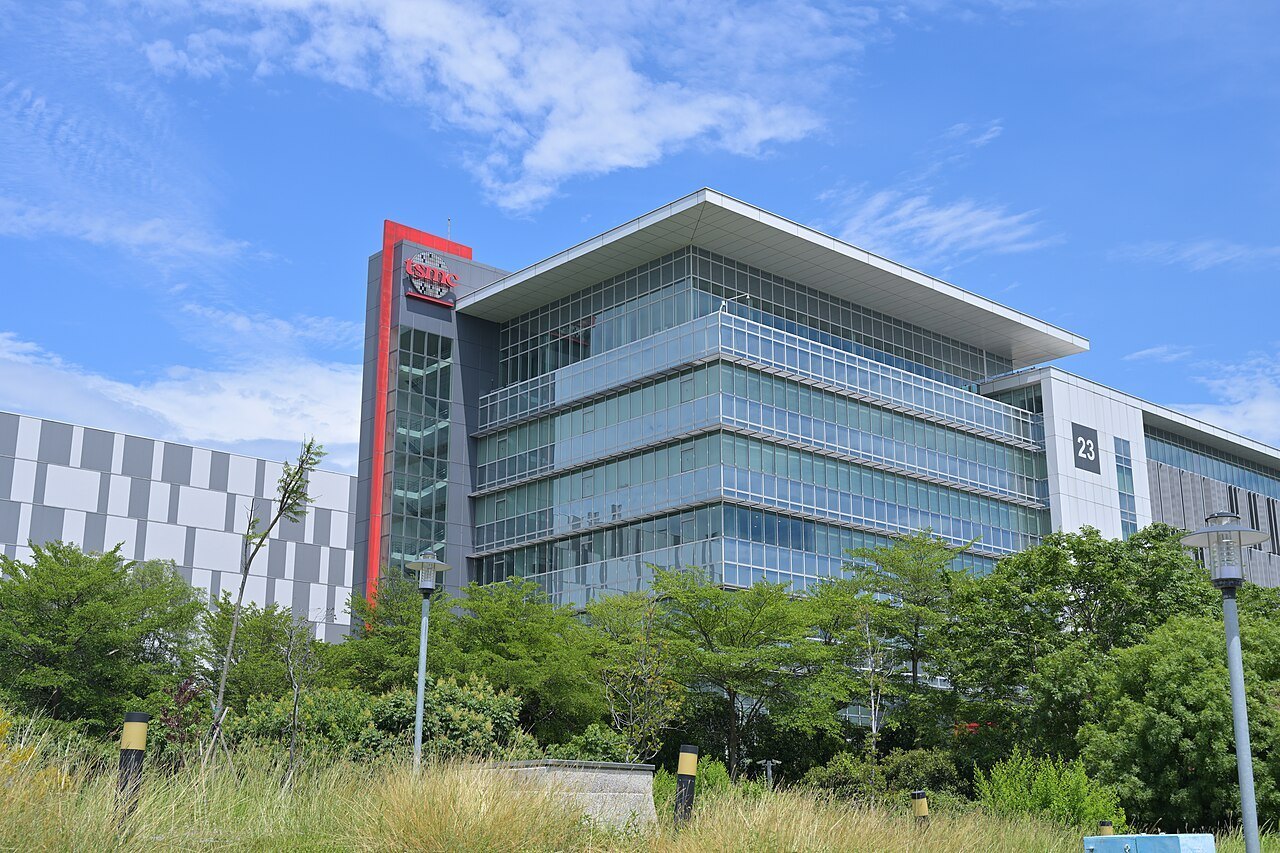
Photo: 台积电晶圆厂(资料图)。图片来源:Wikimedia Commons,4300streetcar 摄,CC BY 4.0 授权