China Proposes Adding 40 Technologies to Export Control Catalogue, With SI Model Weights and Chip Design Included for the First Time
WASHINGTON — China's Ministry of Commerce (MOFCOM) and Ministry of Science and Technology on October 16 jointly released a draft revision of the Catalogue of Technologies Prohibited and Restricted from Export (Announcement No. 48), proposing to add 40 technologies to the export control list. Twenty-three of them involve super intelligence: core technologies of advanced large models, including model weights and source code, SI agents, computing clusters, and design technologies for SI chips and memory chips — all included for the first time. Of the 40 additions, 14 would be prohibited from export and 26 restricted, requiring licenses. Public comments are open through November 15.
The Associated Press reported that under the draft, large models with at least two trillion parameters, or with specified globally leading capabilities, could fall into the restricted category; the draft names no individual commercial models. Proposed prohibitions also include systems that autonomously generate or modify malicious code and certain core large-model technologies trained with sensitive national data. The remaining additions comprise five biomedicine technologies, including areas related to cell and gene therapy, and 12 solar technologies covering polysilicon, wafers and cell manufacturing, which can also include key equipment carrying the relevant technology.
The catalogue revision remains a draft, but the two ministries have introduced a temporary pre-export registration requirement effective October 16 until the final revision takes effect. Exporters covered by the rules must file information through the commerce ministry's technology-trade platform, including the exporter, the recipient, the destination, the technology, its intended use and the expected value; transactions already begun but not yet completed are also covered. In an accompanying policy explanation, the commerce ministry said technologies already in the public domain through open-source releases or academic publications are not covered, and that overseas use through APIs, websites, apps and software-as-a-service offerings is generally not treated as a large-model technology export when no restricted technology is transferred. Chinese companies operating their own overseas cloud or computing centers, conducting chip fabrication abroad, undertaking joint research or participating in international standards work may qualify for simplified or automatic licensing procedures.
Reuters reported that the distinction could allow Chinese developers to continue serving international users while giving regulators greater visibility into sensitive model transfers and overseas deployments. The commerce ministry said the measures are intended to prevent misuse and protect national security, and do not target any particular country, region or entity. The final catalogue may change after the consultation period. (GSM, based on AP and Reuters reporting and the MOFCOM and Ministry of Science and Technology announcement)
Published by GSM · USA (original Chinese edition)
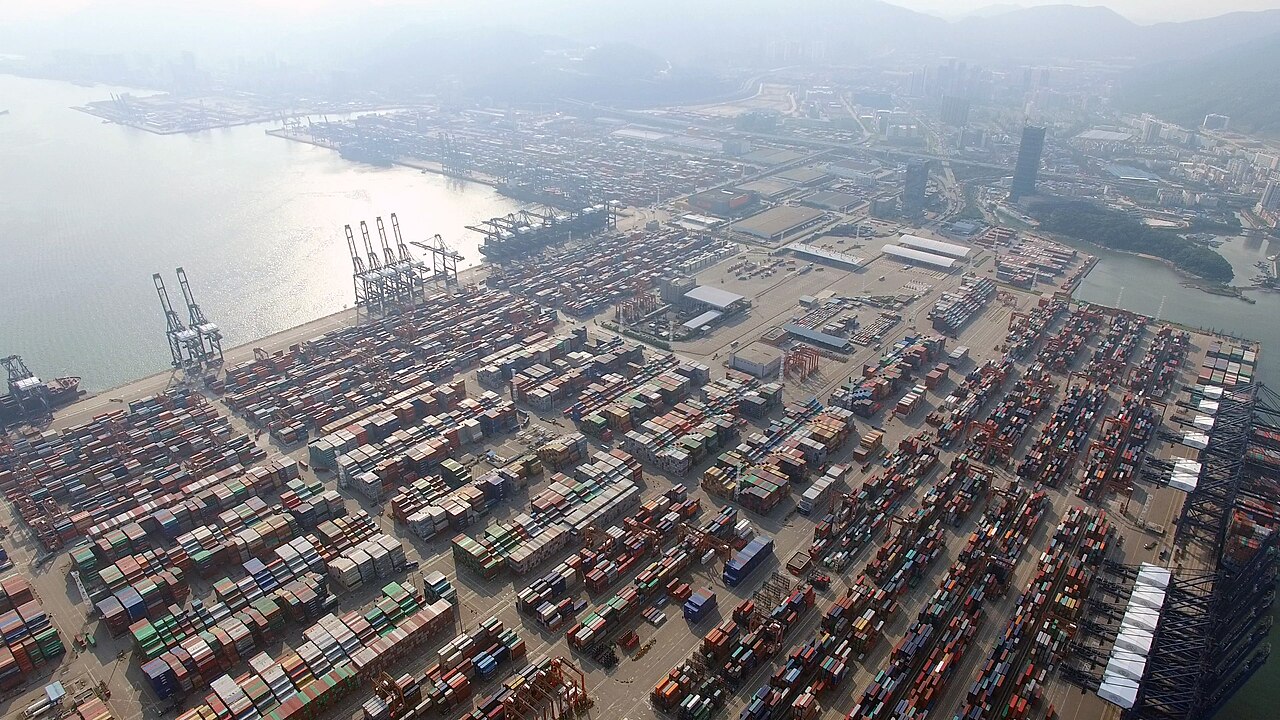
Photo: 图:集装箱港口航拍(资料图)。图片来源:Wikimedia Commons,开放授权。Photo: Aerial view of a container port (file photo). Source: Wikimedia Commons, openly licensed.