IMF: Raising Bank Tax Is Not the Best Choice for UK Budget
LONDON — British finance minister John Healey should favour property tax reform, broader sales taxes and better-targeted welfare spending ahead of raising taxes on banks or workers in his annual budget this month, the International Monetary Fund said. Helge Berger, the IMF's deputy director for Europe, told a press conference at the Fund's annual meetings in Bangkok that the IMF praised British fiscal policy for reducing borrowing over the past couple of years and for targeting a balanced budget, excluding long-term investment, by 2029/30.
Healey has promised to stick to a pledge not to raise the main rates of income tax or social security dues at his October 28 budget, but he kept the door open to increasing a bank profit surcharge that raises about 1 billion pounds ($1.3 billion) a year. Raising bank taxes was an option and would not necessarily make it harder for large companies to get finance, Berger said, but it should not be the first choice: "There are still areas where Britain can make additional fiscal headroom available: modernising the property tax system, broadening the basis of sales taxes like VAT. We would not recommend increasing labour taxes."
The Fund also highlighted that British tax revenue had risen to a historically high 40 percent of the economy, and suggested doing more on the expenditure side, including removing the pension "triple lock" and better-targeting social benefits. Prime Minister Andy Burnham has said he will scrap the triple lock system that ensures state pensions outstrip pay growth, and plans to use the savings to partially finance more generous social care for the elderly. (GSM, based on Reuters reporting)
Source: GSM · USA (original Chinese edition)
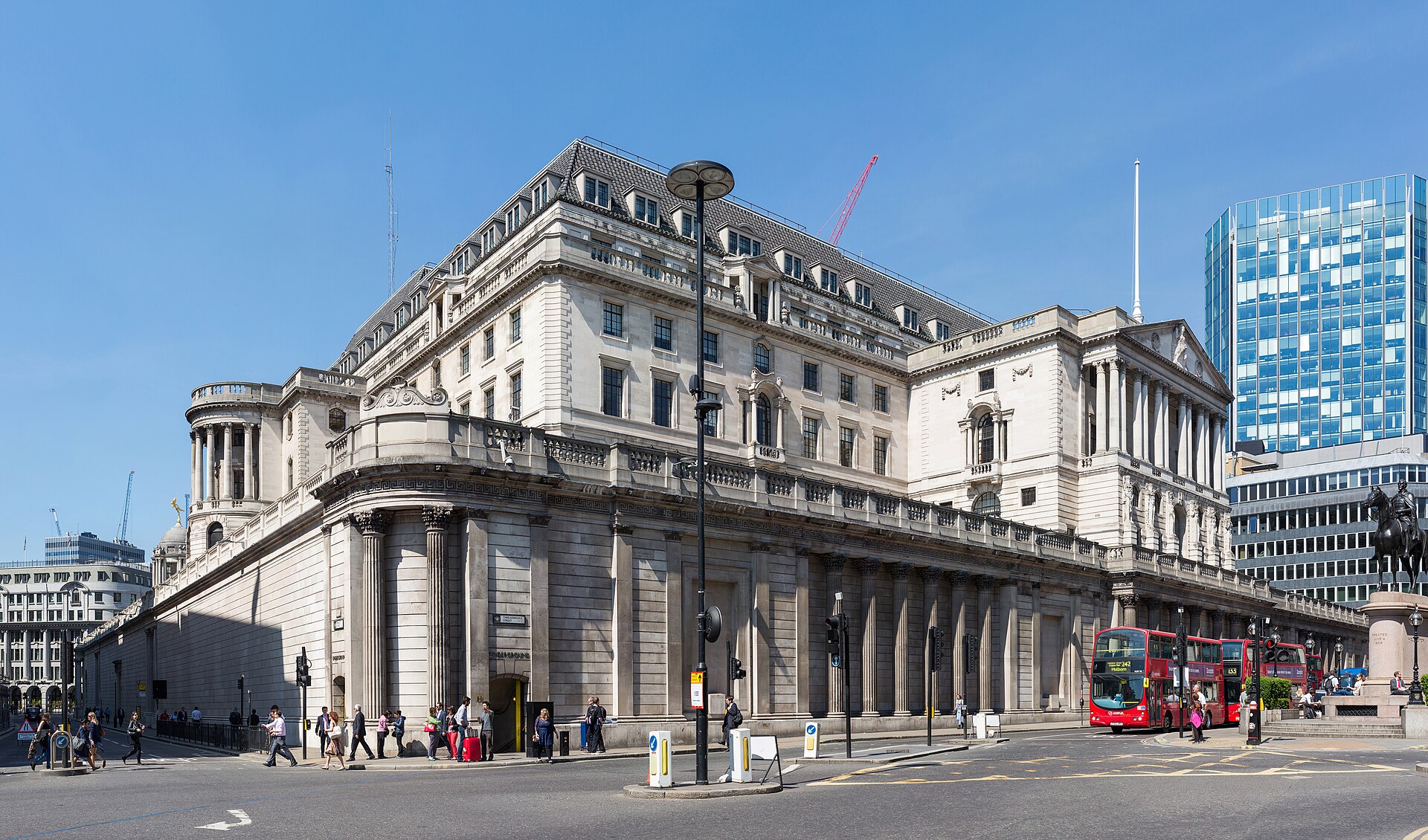
Photo: 伦敦英格兰银行。Bank of England, London. Photo by Diliff, Wikimedia Commons, CC BY-SA 3.0.