Feature | Eileen Chang's American Years: Four Decades in the United States
LOS ANGELES — On September 8, 1995, Eileen Chang's landlord found her dead in her apartment on Rochester Avenue in Westwood, Los Angeles. The coroner's examination determined she had died six or seven days earlier of arteriosclerotic cardiovascular disease; she was 74. Thirty years later, an English-language speech she gave in the United States in 1969 — a 72-minute recording held at the Schlesinger Library of Radcliffe College at Harvard University — went viral on Chinese social media. The talk reportedly covered literature, the Communist Party's line on art and literature, the changing creative environment after 1949, and the May Fourth Movement. Born in China, celebrated in Shanghai's literary world, and resident in the United States for four decades, Chang is still being rediscovered thirty years after her death.
Chang was born Zhang Ying on September 30, 1920, in Shanghai. In 1943 she rose to fame in Shanghai's literary circles with "Aloeswood Incense: The First Brazier," "Love in a Fallen City," and "The Golden Cangue." She married Hu Lancheng in 1944 and divorced him in 1947. In July 1952 she left mainland China for Hong Kong, ostensibly to resume her interrupted studies, where she translated English fiction into Chinese for the United States Information Service (USIS) and wrote "The Rice Sprout Song" and "Naked Earth." In Hong Kong she befriended Stephen Soong and his wife — lifelong friends — and, at Soong's recommendation, became one of the principal screenwriters for the film studio MP&GI; screenwriting income sustained her for the following eight years.
In 1955, Chang left Hong Kong for the United States, where she would spend the final four decades of her life.
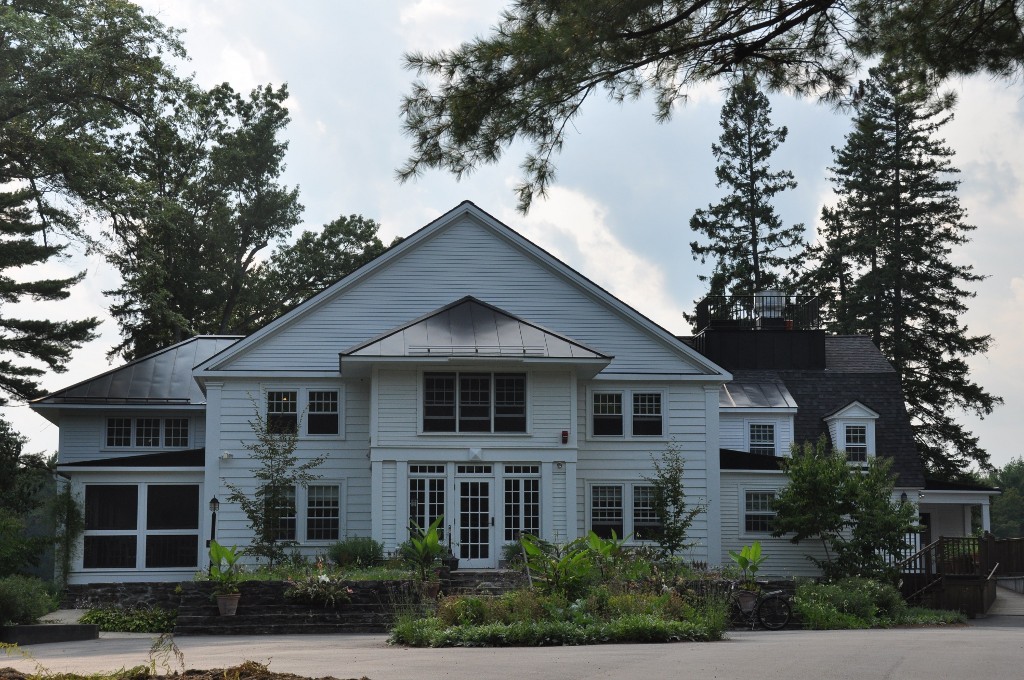
Her early years in America were financially difficult. From March to June 1956, she stayed as a resident artist at the MacDowell Colony in Peterborough, New Hampshire — a creative retreat for artists. There she met the American playwright and screenwriter Ferdinand Reyher (1891–1967), nearly thirty years her senior. They married in New York City on August 14, 1956, and settled in New York. Chang became a U.S. citizen in July 1960. In 1961 she traveled to Hong Kong and Taiwan — her only visit to Taiwan in her lifetime — and a manuscript of her travel account, "Revisiting the Border Town," surfaced years later.
In America, Chang lived by her pen: she continued writing film scripts for MP&GI in Hong Kong (sent from the United States) and published fiction in English — the English novel "The Rouge of the North," expanded from "The Golden Cangue," was published in London in 1967. The couple lived modestly, and Reyher suffered repeated strokes that eventually left him paralyzed. He died on October 8, 1967, after eleven years of marriage; they had no children.
After Reyher's death, Chang was invited to Radcliffe College as a scholar-in-residence and began one of the most significant translation projects of her later years: rendering the Qing-dynasty Wu-dialect novel "The Sing-song Girls of Shanghai" by Han Bangqing into English. According to the reference work Contemporary Authors, she also briefly served as a writer-in-residence at Miami University in Ohio. In 1969 she moved to the San Francisco Bay Area, where, at the invitation of Professor Chen Shixiang, she joined the Center for Chinese Studies at the University of California, Berkeley as a senior researcher, studying Chinese Communist terminology and "Dream of the Red Chamber." After Chen's death in 1971, she left Berkeley.
In December 1972, Chang settled in Los Angeles, where she lived in deep seclusion, moving frequently and seeing few people, writing, revising, and researching in her apartment. In Los Angeles she completed "Hung Lou Meng Yen" (published 1977), a study of "Dream of the Red Chamber," and translated "The Sing-song Girls of Shanghai" from Wu dialect into standard late-Qing Mandarin, published in 1983 in two volumes, "Hai Shang Hua Kai" and "Hai Shang Hua Luo." Her English translation, completed in the 1970s, was discovered among her papers at the University of Southern California (USC) and, revised and edited by Eva Hung, was published by Columbia University Press in 2005. In 1994, "Dui Zhao Ji" was published by Crown — 54 old photographs with her own captions, her final book published in her lifetime. That same year she received the China Times Lifetime Achievement Award but did not attend the ceremony in person, sending photographs in her place, still keeping herself out of sight.
Late in life, Chang kept writing. "Little Reunion," an autobiographical novel written in the 1970s, was published in 2009; two English autobiographical manuscripts, "The Fall of the Pagoda" and "The Book of Change," were published by Hong Kong University Press in 2010.
Her will read: "Be cremated as soon as possible; scatter the ashes over the open wilderness; leave my belongings to Mr. and Mrs. Soong." On September 19, 1995, her friend Stone Lin had her cremated at Rose Hills Memorial Park in Whittier as she had wished, with no public funeral. On September 30, her birthday, Lin and several literary friends scattered her ashes into the Pacific Ocean.
In 1997, the scholar Dominic Cheung established the Eileen Chang Special Collection at USC, with two boxes of her manuscripts donated by Soong's widow, Mae Soong, including the unfinished draft of the English "Sing-song Girls of Shanghai." Her correspondence with scholars is still being studied — C. T. Hsia of Columbia University was a major promoter of her work in the English-speaking world and called her "the best and most important writer in Chinese today" (in the English edition of his "A History of Modern Chinese Fiction").
In 2007, Ang Lee's film "Lust, Caution" brought her new recognition in the English-speaking world. And for readers, the woman who wrote desolation so well in Shanghai spent her four American decades on translation, textual research, and a silent self — like her 1969 recording, only heard again years later.
Source: GSM · USA (original Chinese edition)
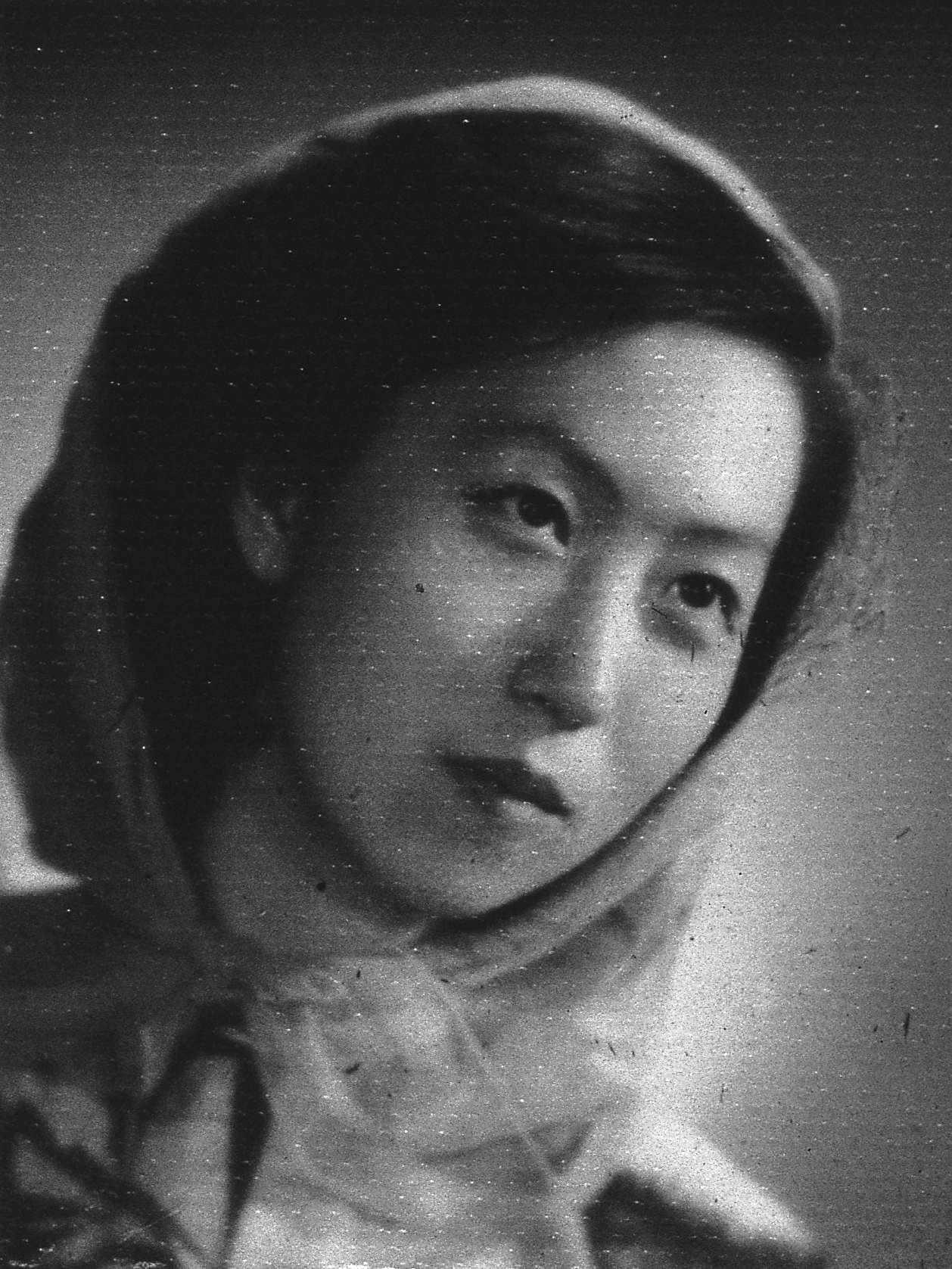
Photo: 图:张爱玲,1944 年摄于上海(资料照片)。经 Wikimedia Commons 发布,标注为公共领域。Photo: Eileen Chang in Shanghai, 1944 (file photo). Public domain, via Wikimedia Commons.