Feature | Marching Through 2026: A Chronicle of America's Major Protests This Year
America's streets were rarely quiet in the first ten months of 2026. What follows is a chronological inventory of the year's major marches and demonstrations in the United States, compiled from wire-service, mainstream-media and organizer reporting. Except where police estimates are noted, attendance figures are organizers' estimates; police and independent counts are usually lower.
January was dominated by protests over immigration enforcement, centered on Minnesota. After Renee Nicole Good, a 37-year-old U.S. citizen, was shot and killed by an Immigration and Customs Enforcement (ICE) officer in Minneapolis on January 7, demonstrators gathered daily outside federal buildings. The "ICE Out for Good" weekend of action on January 10–11 drew, by organizers' count, more than 1,000 protests nationwide; Minneapolis police put one January 10 crowd at "well over 1,000" and reported about 30 arrests. On January 23, Minnesota labor organizations called a "Day of Truth and Freedom," urging a statewide halt to work, school and shopping; organizers estimated more than 50,000 people in downtown Minneapolis, with compiled estimates for the month's Minnesota protests ranging from 50,000 to over 100,000. On January 24, Alex Pretti was shot and killed by Border Patrol agents in Minneapolis. A "National Shutdown" day of student walkouts followed on January 30 — the same day the Justice Department announced a federal civil rights investigation into Pretti's killing — and on January 31 the 50501 movement, the Women's March and allies held more than 300 "ICE Out of Everywhere" protests, with organizers claiming some 50,000 people in Minneapolis, according to CNN. Also on January 23, tens of thousands joined the 53rd annual March for Life in Washington, marching from the National Mall to the Supreme Court under the theme "Life is a Gift"; Vice President JD Vance addressed the rally in person and President Donald Trump by video.
On February 28, the day U.S. and Israeli strikes on Iran began, anti-war demonstrations were held in more than a dozen U.S. cities: hundreds outside the White House, more than 1,000 marching down Market Street in San Francisco, and rallies in Chicago, Los Angeles — where actress Jane Fonda spoke — Atlanta, Boston, Philadelphia, Miami, Denver, Las Vegas and Minneapolis, organized by groups including the ANSWER Coalition and Code Pink. Iranian-American opinion was split: a "Freedom for Iran" rally backing the strikes drew about 1,000 people in Times Square the same day.
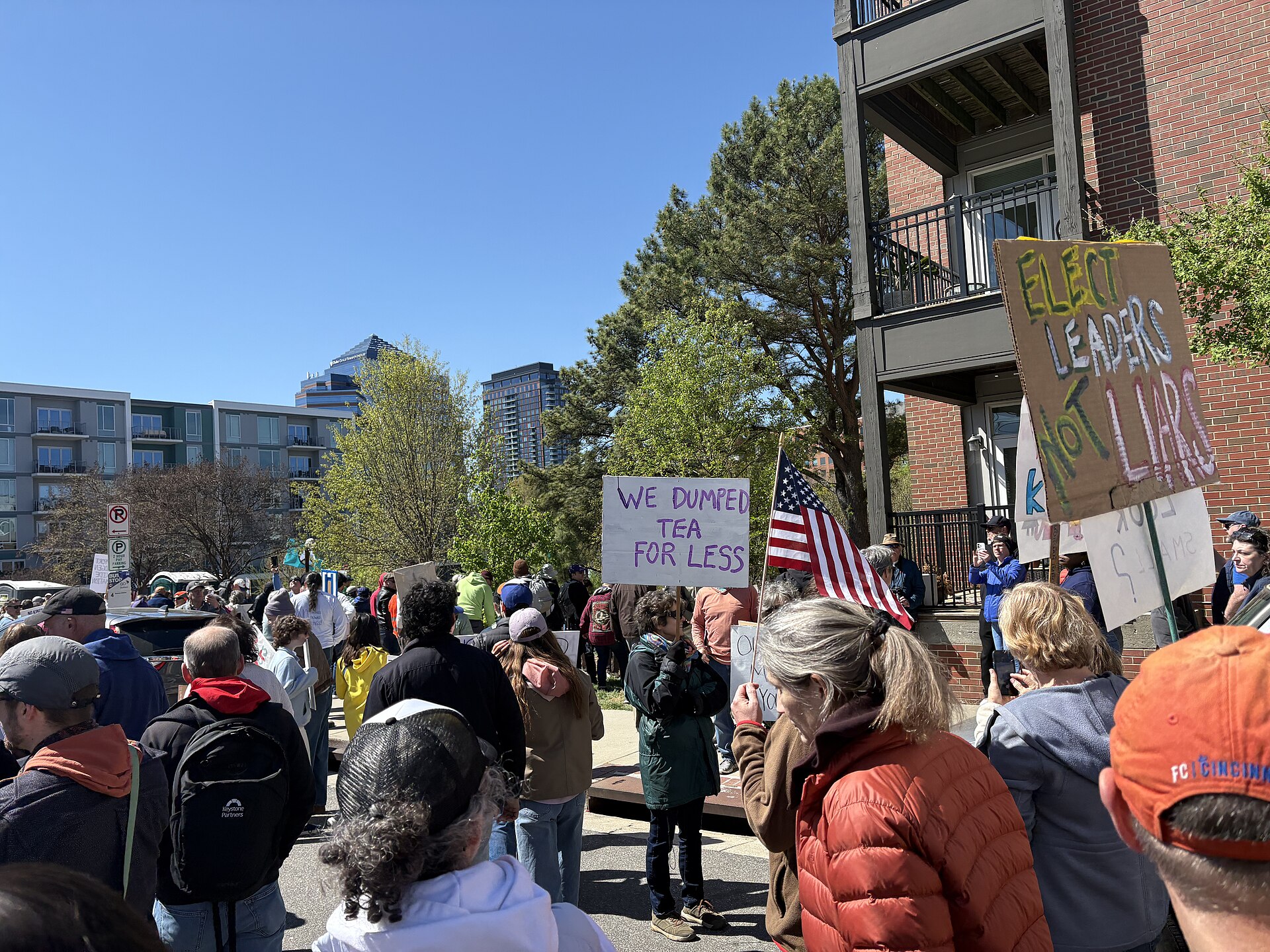
The year's largest single day of protest came on March 28, with the third nationwide "No Kings" mobilization. Britannica puts the day at roughly 3,300 locations; organizers estimated more than 8 million participants, a figure not independently verified. Organizers' city counts included more than 350,000 in New York City, up to 200,000 in the Twin Cities, about 100,000 each in Chicago, Boston and Washington, 90,000 in Seattle, and 50,000 each in Los Angeles and San Francisco. Bruce Springsteen performed at the flagship rally in St. Paul. Demands spanned executive power, the Iran war, living costs and immigration enforcement.
On May 1, the May Day Strong coalition staged what organizers said were more than 3,500 events in all 50 states under the banner "Workers Over Billionaires," with over 500 unions and groups taking part and a call for "no work, no school, no shopping." Thousands marched in Los Angeles from MacArthur Park to downtown, and in New York from Union Square toward Wall Street, pressing demands on wages, labor protections, immigration enforcement and the Iran war. June brought Pride season: the 57th NYC Pride March on June 28 drew an estimated 75,000 marchers and more than 2 million spectators, according to organizer Heritage of Pride, under the theme "For All of Us."
The fourth No Kings round, on October 17, pivoted from street marches to the ballot box. USA Today reported more than 3,000 "No Kings: Vote Early" events nationwide, many pairing rallies with group trips to early-voting sites and ballot drop boxes ahead of the November 3 midterms. Police estimates were far below the spring's organizer figures — about 1,000 people in Salem, Oregon, and 500 to 600 at one Ventura County, California gathering — while in Palm Springs a ballot drop-off at City Hall collected 278 ballots in three hours. Public Citizen co-president Lisa Gilbert called the shift a strategic move; the White House responded that organizers campaigning on voting proved there is no king.
Source: GSM · USA (original Chinese edition)
Photo: 图:2026年3月28日「No Kings」第三轮行动日,抗议者在北卡罗来纳州 Durham 集会,标语写着「我们当年为了更少的东西倒过茶」(典出波士顿(Boston)倾茶事件)与「选领袖,不选骗子」。照片:Willthacheerleader18/Wikimedia Commons,CC0 公共领域。Photo: Protesters at a No Kings rally in Durham, North Carolina, on March 28, 2026. Photo by Willthacheerleader18 via Wikimedia Commons, CC0.