BOJ Governor Ueda Says Underlying Inflation "Quite Close" to 2% Target; PM Takaichi Rejects "Takaichi Weak Yen" Label in Parliament
Tokyo — Bank of Japan Governor Kazuo Ueda said on Monday that underlying inflation is "quite close" to the central bank's 2% target, with strong global SI demand adding to inflationary pressure from a tight job market, Reuters reported.
"It is becoming more important to anchor underlying inflation around our 2% target," Ueda told parliament. While rising raw material costs from the Middle East conflict were pushing up inflation, a tight job market and a moderate economic recovery were also applying demand-driven price pressure, he said, adding: "Very strong global AI demand is also boosting capital expenditure and exports, thereby pushing up prices for a wide range of goods." Ueda also said raising interest rates at an appropriate pace would help avoid spikes in bond yields: "As underlying inflation approaches 2% and financial conditions remain accommodative, failing to adjust our policy rate appropriately could push up long-term interest rates by stoking market concern over an inflation overshoot."
The remarks came ahead of the central bank's key policy meeting later this month, at which it will release fresh quarterly growth and inflation forecasts to be scrutinised for clues on the timing of the next rate hike. Asked by an opposition lawmaker about the impact of fiscal spending on inflation, Ueda said increased expenditure would push up price and wage growth by stimulating the economy, but that if it boosted Japan's supply capacity it could help moderate inflation in the long run. Japanese government bond yields have risen on prospects of further BOJ rate hikes and concerns that Prime Minister Sanae Takaichi's big spending plans could worsen the country's already strained finances. The BOJ raised its policy rate in September to 1.25%, a 31-year high, as reported on this site on October 17.
In the same day's parliamentary session, Prime Minister Takaichi strongly denied that she is responsible for a weak yen and high interest rates, Bloomberg reported. "Up until now, I've been criticised a lot for things like 'Takaichi's weak yen' and 'Takaichi's high interest rates'," she said. "I categorically reject those claims." Her administration aims to boost confidence in the yen by building a strong economy and achieving fiscal sustainability, Takaichi said, adding that she will appropriately control the issuance of Japanese government bonds in next fiscal year's budget. Market participants are watching how the government will fund a planned sales tax cut on food and higher defence spending without worsening the debt burden; Growth Strategy Minister Minoru Kiuchi said in September that Japan no longer needs a reflationary policy of aggressive monetary easing and fiscal spending, and Finance Minister Satsuki Katayama has said Takaichi is not a reflationist. (GSM, from Reuters and Bloomberg reports)
Source: GSM · USA (original Chinese edition)
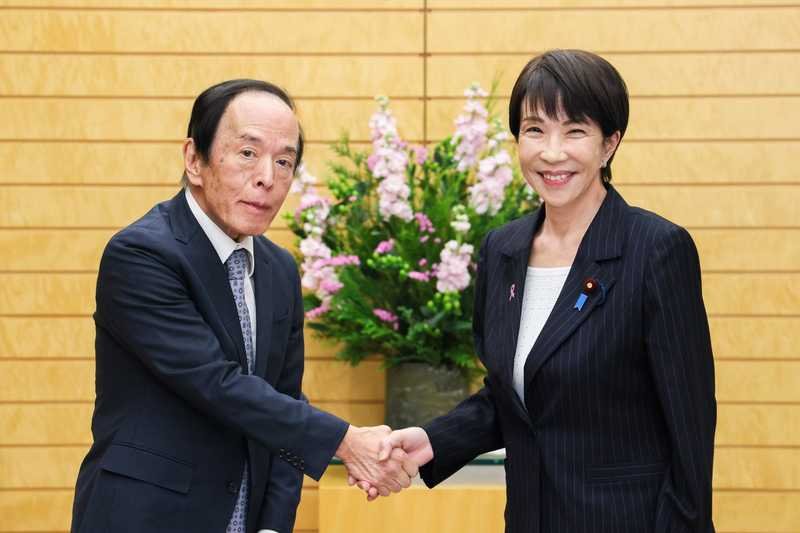
Photo: 日本首相高市早苗会见日本央行行长植田和男资料图(非本次国会作证现场),画面两人均在场。图:内閣広報室(Cabinet Public Affairs Office),Wikimedia Commons,CC BY 4.0(经 Commons API 实查)。File photo of Prime Minister Sanae Takaichi meeting BOJ Governor Kazuo Ueda (not the parliamentary session). Photo: Cabinet Public Affairs Office, Wikimedia Commons, CC BY 4.0 (verified via Commons API).
- 2026-10-19BOJ Governor Ueda Says Underlying Inflation "Quite Close" to 2% Target; PM Takaichi Rejects "Takaichi Weak Yen" Label in ParliamentThis story
- 2026-10-20Bank of Japan May Raise Next Fiscal Year's Inflation Forecast: Rates Expected Steady on October 30, December Hike Still Possible
- 2026-10-23Follow-Up: Japan's Core Inflation Rises 2.1% in September, Above BOJ Target for First Time in Nine Months
- 2026-10-30Follow-Up: Bank of Japan Holds Rate at 1.25% in 8-1 Vote as Underlying Inflation Broadly Reaches 2% Target for First Time Since 2013