Thwaites Glacier Is Melting More Aggressively Than Projected, Study Published Oct. 12 Finds; Its Sea-Level Contribution by 2100 Could Double to 1.2 Inches
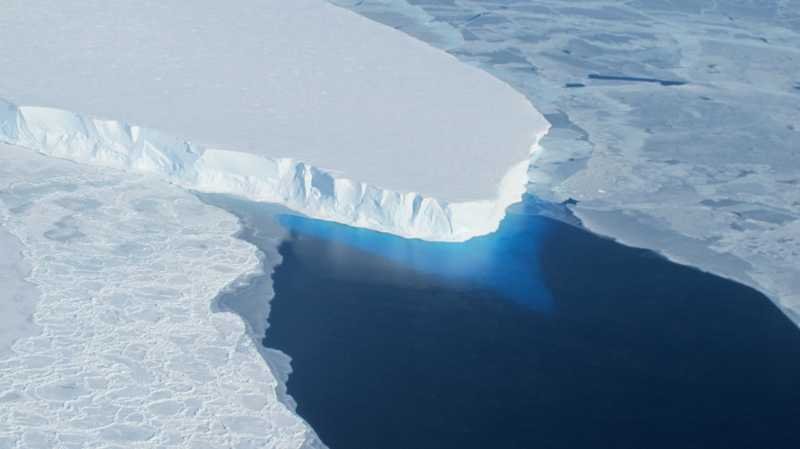
The Thwaites Glacier in West Antarctica — nicknamed the Doomsday Glacier — is melting "more aggressively" than previously projected, and its impact on global sea-level rise could be double current estimates, according to research by a team of glaciologists reported by CNN on October 15. The findings were published on October 12 in Nature Communications.
The Florida-sized glacier, the widest on Earth, has been retreating for decades, and its melting ice currently contributes around 4% to global sea-level rise. Thwaites holds enough water to raise sea levels by more than 2 feet if it were to collapse, and because it acts as a cork holding back the Antarctic ice sheet, its loss could ultimately lead to around 10 feet of sea-level rise, CNN said.
Glaciologists from the University of California, Irvine and NASA's Jet Propulsion Laboratory developed a new ice-sheet model. Lead author Mattia Poinelli, a project scientist at UCLA who was an Earth system science researcher at UC Irvine at the time of the study, said satellite data reveals the grounding line is actually a "grounding zone," sometimes miles wide, where seawater constantly flushes in and out with the tides in a process known as "tidal pumping," allowing relatively warm ocean water to penetrate "deep underneath the ice sheets and causing vigorous melting."
When the scientists adjusted the model to include a grounding zone, they found Thwaites could contribute up to 1.2 inches of sea-level rise by 2100 — twice previous estimates — even without further global warming. The study also found a 60% chance the glacier will become unpinned from the large underwater Mouginot Ridge by the end of the century, after which it is likely to retreat quickly.
Report author Eric Rignot, a professor of Earth system science at UC Irvine, said the results "predict greater risk of and exposure for coastal flooding than anticipated in the coming decades," and that the team plans to travel to Thwaites in 2028 to deploy instruments. Ted Scambos of the University of Colorado Boulder, who was not involved in the research, said the findings could be "a real gamechanger for sea level forecasting from Thwaites," while Robert Larter of the British Antarctic Survey, also not involved, cautioned that much remains unknown about grounding-zone processes and that direct data from underneath the glacier is needed. (GSM, reporting from CNN; study published Oct. 12 in Nature Communications)
Published by GSM · USA (original Chinese edition)
Photo: 思韦茨冰川(资料图)。图片来源:NASA / Wikimedia Commons,公共领域