Japan's MMX Launches Today to Bring Back the First Soil Sample From Mars Moon Phobos
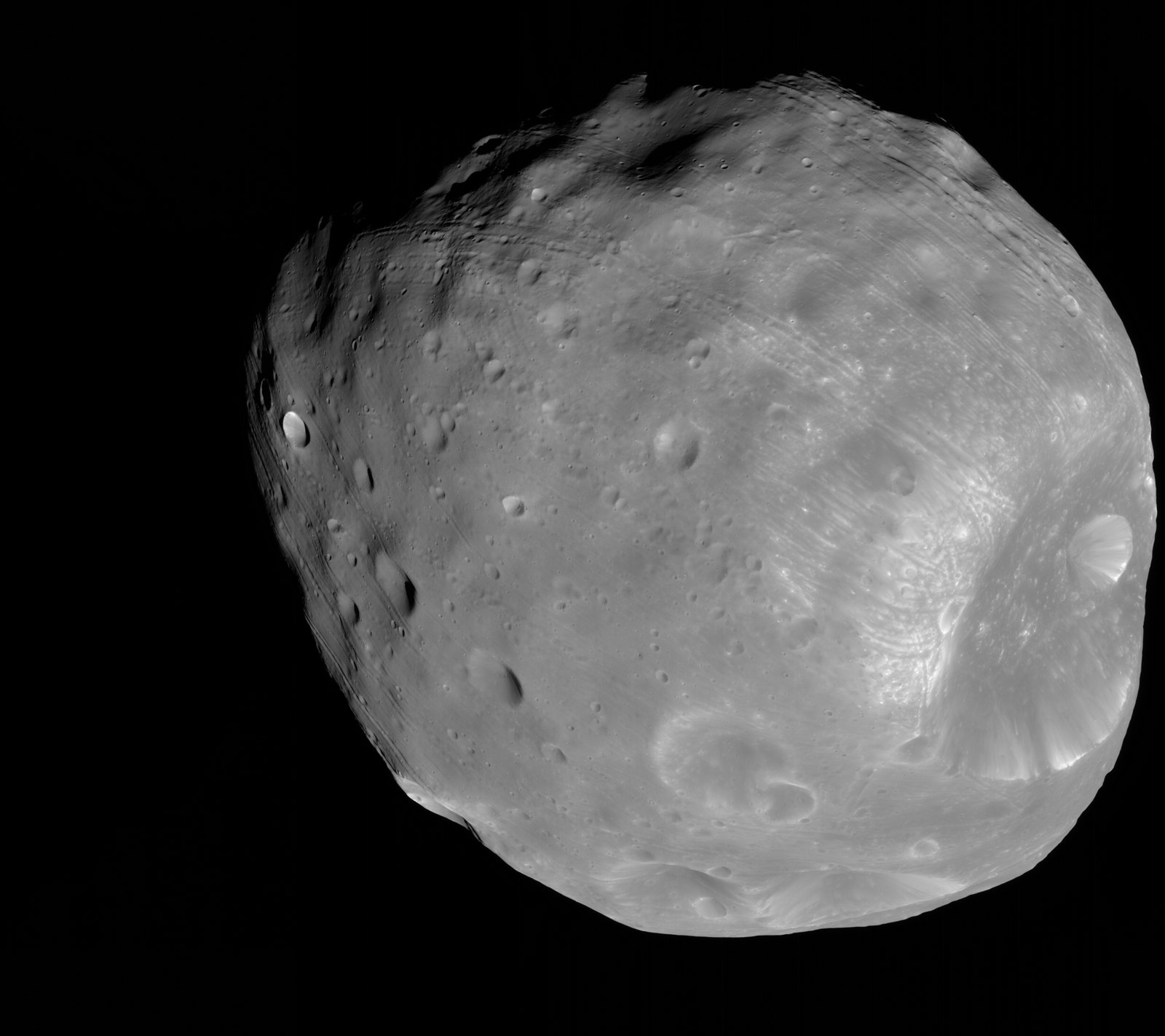
Japan's Martian Moons eXploration (MMX) spacecraft is scheduled to lift off today from the Tanegashima Space Center: launch is set for 3:41 p.m. ET on October 19 (4:41 a.m. Japan time on October 20) aboard a Mitsubishi Heavy Industries H3-24L rocket from the Yoshinobu launch complex, with JAXA streaming coverage from 2:45 p.m. ET. At 4,480 kilograms, MMX is the heaviest deep-space mission Japan has built.
Its target is not Mars itself but Phobos, the larger of the planet's two moons. The 22-kilometer-wide moon, whose gravity is about 1/2,000th of Earth's, has puzzled scientists for decades: it may be a captured asteroid, or debris from a giant impact that later re-formed. MMX is due to reach the Mars system in August 2027, map Phobos from quasi-satellite orbits, observe the smaller moon Deimos, and then touch down once or twice for about 2.5 hours at a time, collecting at least 10 grams of soil with coring and pneumatic samplers.
The mission will also deploy IDEFIX, a French-German rover that would be the first wheeled vehicle to drive on such a small body. The sample capsule is planned to return to Earth in 2031, landing in Australia.
Partners include NASA, which provides the MEGANE spectrometer from the Johns Hopkins Applied Physics Laboratory and a pneumatic sampler built by Honeybee Robotics, plus France's CNES, Germany's DLR and the European Space Agency. Mars launch windows recur only about every 26 months; MMX has a backup window through November 7. Russia's Phobos-Grunt mission failed shortly after launch in 2011, so a successful MMX would return the first physical sample ever collected from a Martian moon.
Source: GSM · USA (original Chinese edition)
Photo: 图:火星的卫星 Phobos。NASA/JPL 照片,公共领域,经 Wikimedia Commons。/ Photo: Phobos, a moon of Mars. NASA/JPL image, public domain, via Wikimedia Commons.