NASA Study: Human Activity Has Left a Fingerprint on Earth's Water Cycle
Human activity has left a measurable fingerprint on Earth's water cycle, according to a NASA study released on October 20. Using more than two decades of gravity measurements from the GRACE and GRACE-FO satellite missions, researchers produced maps of terrestrial water storage with five to ten times finer spatial detail than before, allowing signals from irrigation, reservoir filling, and land-use change to be separated clearly from natural variability for the first time.
The team identified 40 regions where changes in water storage are significantly tied to human activity, spread across every non-polar continent except Australia. In four continental-scale regions, human activity correlated with storage trends more strongly than any climate variable. Mary Michael O'Neill, a hydrologist at NASA's Goddard Space Flight Center and the study's first author, said it is the first time the human contribution to land water storage has been quantified at a global scale.
The clearest declines appear in California's Central Valley, the southern High Plains of the United States, the Mexican state of Chihuahua, and northern India, all driven by groundwater pumping; northern India's storage is falling faster than previously estimated, while Himalayan glacier retreat accounts for only about 15 percent of the loss there. Gains show up in expanding rain-fed farmland in sub-Saharan Africa and soybean country in Brazil's Maranhão state. On Russia's Angara River, the Boguchany Reservoir, the second-largest reservoir filling of the 21st century, produced the strongest storage increase in non-polar northern Asia.
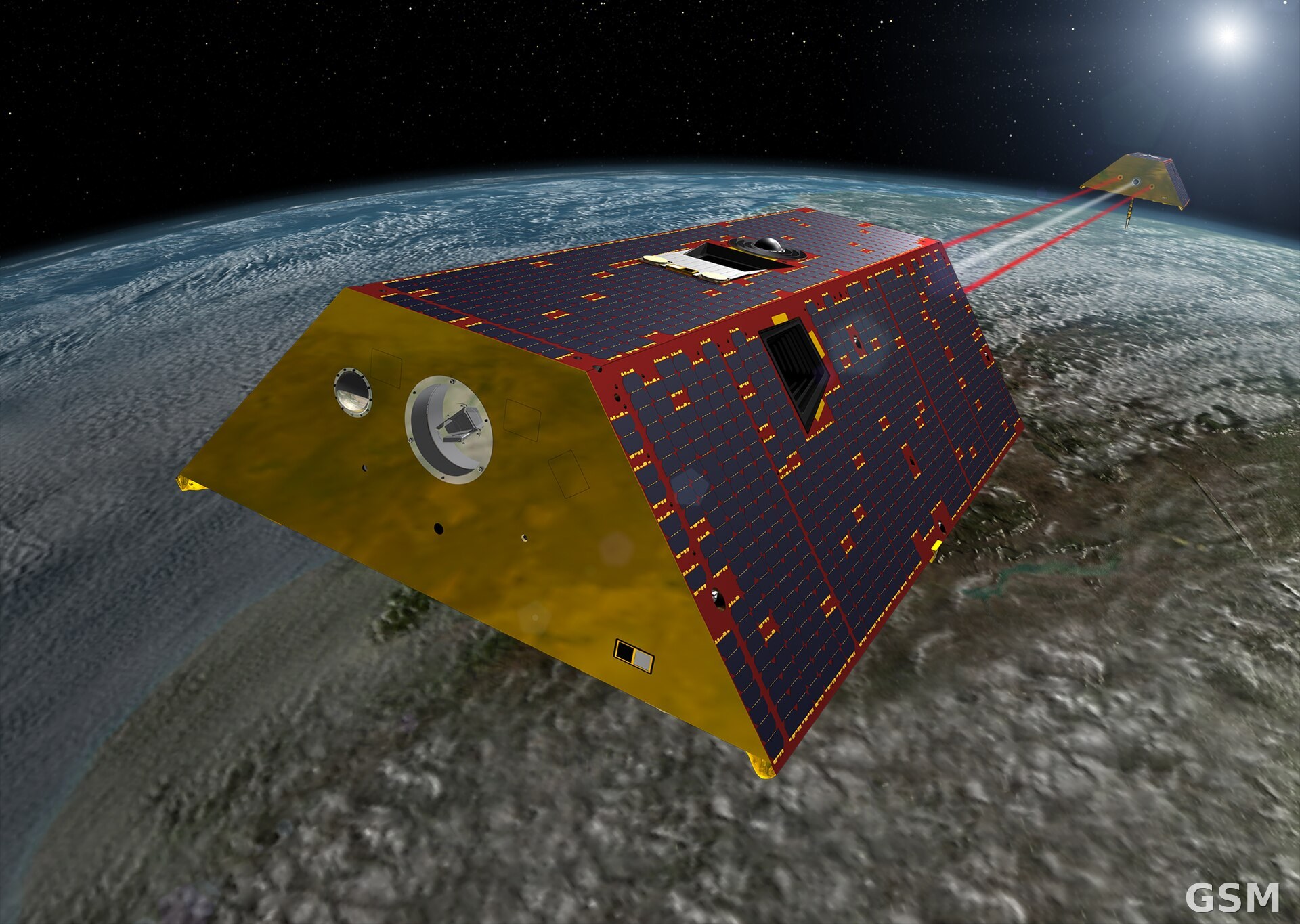
The study was published in the Proceedings of the National Academy of Sciences. The researchers said the method can keep tracking groundwater and surface water changes worldwide to support water management and drought planning. The GRACE missions infer changes in Earth's gravity field, and thus in water mass, from minute changes in the distance between their twin satellites.
Source: GSM · USA (original Chinese edition)
Photo: GRACE-FO 双星在轨艺术概念图。图:NASA/JPL-Caltech(公共领域)。 / Artist's concept of the twin GRACE-FO spacecraft in orbit. Image: NASA/JPL-Caltech (public domain).