National Lead Poisoning Prevention Week Runs October 25-31: EPA, CDC and HUD Jointly Promote "Keep Kids Safe from Lead"
National Lead Poisoning Prevention Week (NLPPW), jointly promoted by the U.S. Environmental Protection Agency (EPA), the Centers for Disease Control and Prevention (CDC) and the U.S. Department of Housing and Urban Development (HUD), will be observed October 25-31, 2026. The annual observance falls in the last full week of October, which is also Children's Health Month, and the 2026 theme is "Keep Kids Safe from Lead." The World Health Organization's 14th International Lead Poisoning Prevention Week is running this week, October 18-24, under the theme "From Detection to Prevention."
The three agencies frame this year's campaign around three key messages: get the facts and learn about lead hazards in the home environment; get your child tested through a blood lead test for early detection; and get your home tested to identify and address potential lead sources. On September 1, the EPA released this year's outreach materials for local governments, schools, health care providers and community organizations to use in local events during the week.
HUD estimates that about 3.3 million U.S. families with a child under age 6 live in homes with conditions that could expose their children to lead-based paint hazards. Roughly three-quarters of U.S. homes built before 1978 still contain some lead-based paint, and deteriorated paint, lead dust and contaminated soil are the most common sources of childhood lead exposure. The CDC says no safe level of lead in children's blood has been identified, and even very low levels are linked to negative effects on intellect, concentration, behavior and academic achievement, with children under 6 most vulnerable because their bodies are still developing and they frequently put hands or objects in their mouths.
A blood lead test is the most reliable way to find out whether a child has been exposed, and many affected children show no visible symptoms. The CDC's blood lead reference value is 3.5 micrograms per deciliter, and children enrolled in Medicaid are required to receive blood lead tests at 12 and 24 months of age. The EPA's NLPPW page also sets out the federal rule requiring disclosure of known lead-based paint information when homes built before 1978 are sold or rented, and channels for certified testing of homes and drinking water.
Source: GSM · USA (original Chinese edition)
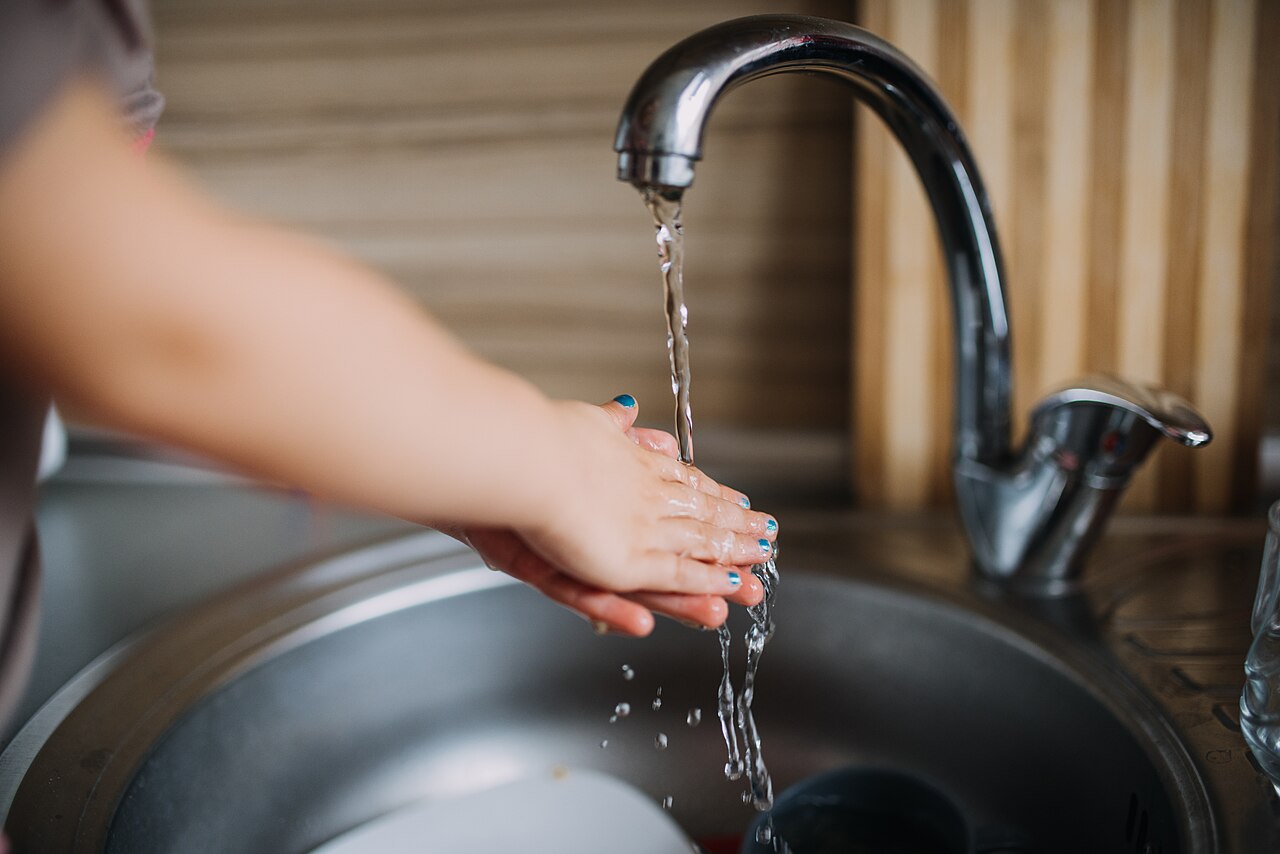
Photo: 图:儿童在厨房水槽的水龙头下洗手。勤洗儿童的手与玩具是联邦机构列出的减少铅暴露日常做法之一。Shixart1985 摄,CC BY 2.0,经 Wikimedia Commons。