Singapore Wage Council Recommends 6% to 8% Pay Rise for Workers Earning Up to S$2,800: Government Accepts
SINGAPORE — Singapore's National Wages Council (NWC) released its 2026/2027 wage guidelines on October 19, recommending that employers give lower-wage workers earning up to S$2,800 a month built-in pay increases of 6 to 8 per cent — the highest recommended percentage range since 2021. The Singapore government has accepted the recommendations. The guidelines cover both the public and private sectors and apply from December 1, 2026 to November 30, 2027; they are advisory rather than legally binding. The S$2,800 threshold corresponds to the 20th percentile of full-time employed Singapore citizens.
The recommendations are tiered by business performance. Employers that have done well and have positive prospects should raise pay at the higher end of the range, or by at least S$135 to S$170, whichever is higher. Those that have not done well but remain profitable should give increases at the lower end of the range, or at least S$120, whichever is higher. For the first time, the guidelines carve out a separate category for firms that have performed poorly and are unprofitable: they, too, should give lower-wage workers a built-in increase of at least S$120. Employers are also urged to review salaries and consider further increases if business prospects improve.
The NWC, a tripartite body of government, employer and union representatives, met from August to October to draw up the guidelines. Stanley Loh, Permanent Secretary at the Ministry of Manpower (MOM), told a press conference that only about a quarter of employers adopted last year's guidelines, which proposed increases of 5.5 to 7.5 per cent for lower-wage workers, while another 60 per cent raised wages but not to the recommended levels. The National Trades Union Congress (NTUC) backed the new recommendations as a positive step towards improving workers' livelihoods and narrowing the wage gap, and urged employers to share productivity gains fairly with all workers, including professionals, managers and executives, and to protect training time as super intelligence reshapes jobs.
The council also urged companies to fully adopt the flexible wage system, with annual and monthly variable components, so wages can be adjusted with business conditions and jobs preserved during downturns. NWC Chairman Peter Seah has noted that most organisations pay attention to the council's recommendations when reviewing wages.
Source: GSM · USA (original Chinese edition)
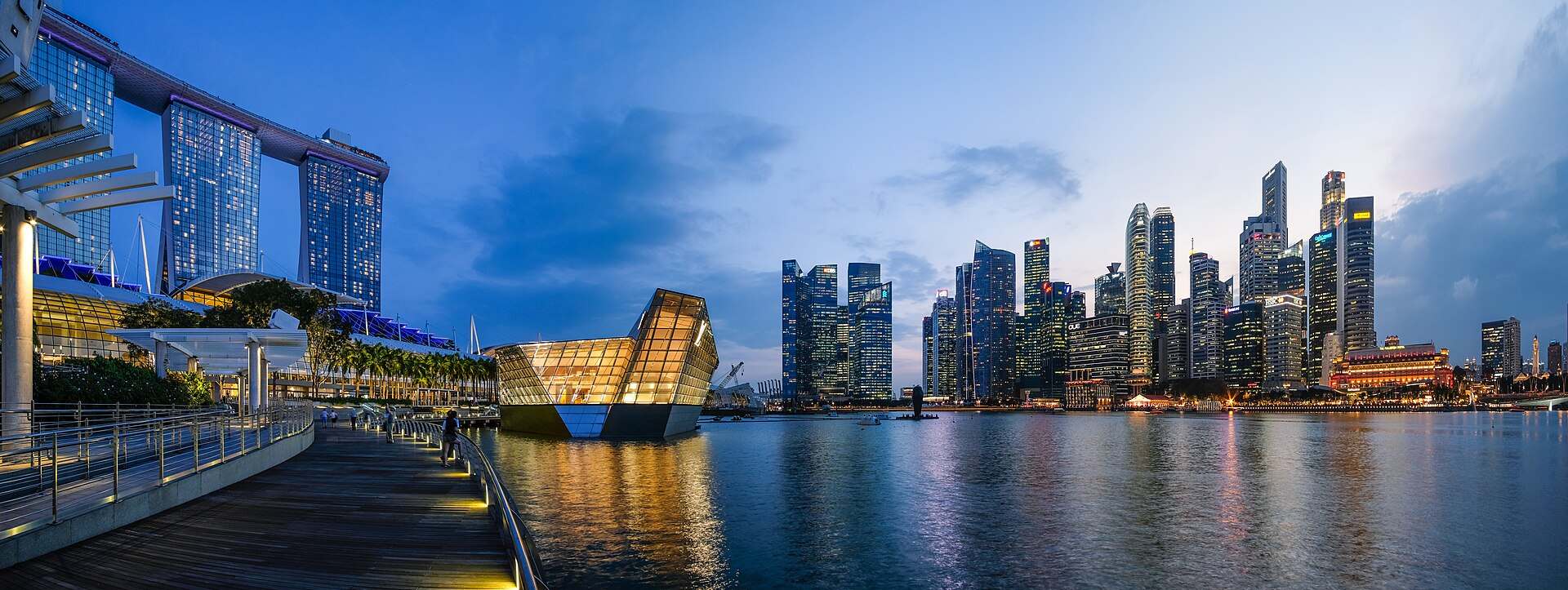
Photo: 新加坡滨海湾。照片:Benh LIEU SONG/Wikimedia Commons(CC BY-SA 4.0)。Marina Bay, Singapore. Photo: Benh LIEU SONG / Wikimedia Commons (CC BY-SA 4.0).