China's Foreign Ministry Responds on Japan Rare Earth Reports: Export Controls Aim to Curb 'Remilitarization' and Nuclear Ambitions
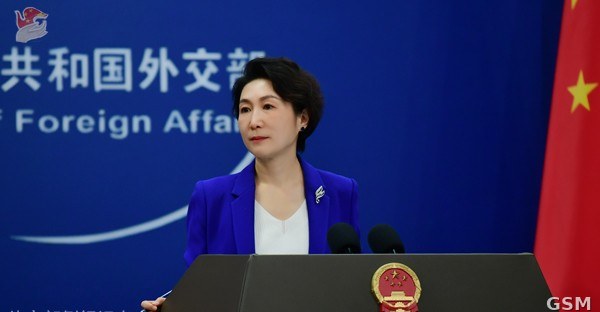
On October 21, Chinese Foreign Ministry spokesperson Mao Ning held a regular press conference in Beijing. An AFP journalist noted reports that Japan's stockpile of yttrium, a key rare earth element, is about to run out and can last only a few more months, that Japan has asked the United States for help, and that Tokyo is urging China to relax the related export controls, and asked for China's comment.
Mao Ning responded that China implements export controls on Japan in accordance with laws and regulations, with the aim of curbing Japan's 'remilitarization' and nuclear ambitions. She said China's position on safeguarding the stability and security of global supply chains for critical minerals has not changed, and that all parties have a responsibility to play a constructive role in this regard.
The exchange followed an October 20 report by the Financial Times. According to the Financial Times, Japan could run out of yttrium within months, and the Japanese government has asked the U.S. government and major American companies to help press China to ease its rare earth export controls. Japanese government officials and trading-house executives said shortages could emerge as early as the end of this year. One Japanese government official told the newspaper that the timeline is not years but months, that stockpiles are decreasing, and that efforts to save rare earth usage have their limits.
Citing Chinese customs data, the Financial Times reported that China exported 14.1 tonnes of yttrium oxide to Japan from January to May 2026, down 97.7 percent from 605.3 tonnes in the same period a year earlier, and that exports fell to zero in June. On prices, data firm Argus put yttrium oxide at about $1,150 per kilogram outside China, against about $9 per kilogram inside China.
Yttrium is a rare earth element used mainly in heat-resistant coatings for jet engine components, protective coatings inside the plasma-etching chambers of semiconductor manufacturing equipment, and parts such as automotive sensors — materials on which Japan's aviation, semiconductor and auto-related industries rely heavily.
On January 6 this year, China's Ministry of Commerce announced tighter export controls on dual-use items bound for Japan, prohibiting exports of all dual-use items to Japanese military users, for military purposes, and to any other end users or end uses that would contribute to enhancing Japan's military capabilities. The ministry said at the time that the decision was made to safeguard national security and interests and to fulfill international obligations such as non-proliferation. (Sources: Chinese Foreign Ministry regular press conference; reporting by the Financial Times.)
Source: GSM · USA (original Chinese edition)
Photo: 图:中国外交部发言人毛宁在例行记者会上。照片:中国外交部官网。Photo: Chinese Foreign Ministry spokesperson Mao Ning at a regular press conference. Photo: Ministry of Foreign Affairs of China (fmprc.gov.cn).