Japan's MMX Spacecraft Lifts Off for Mars's Moon Phobos: Arrival in 2027, a Sample to Collect and a Return to Earth in 2031
Japan's Martian Moons eXploration (MMX) spacecraft lifted off from the Tanegashima Space Center at 4:41 a.m. Japan Standard Time on October 20 aboard an H3 rocket on its tenth flight, the Japan Aerospace Exploration Agency (JAXA) said. The rocket flew as planned and the spacecraft separated about 71 minutes after liftoff, around 5:52 a.m., on its planned trajectory toward Mars. The launch used the H3's most powerful H3-24L configuration, with two main engines, four solid rocket boosters and a long fairing; JAXA's press materials put the vehicle at 63 metres tall and 574 tonnes without its payload.
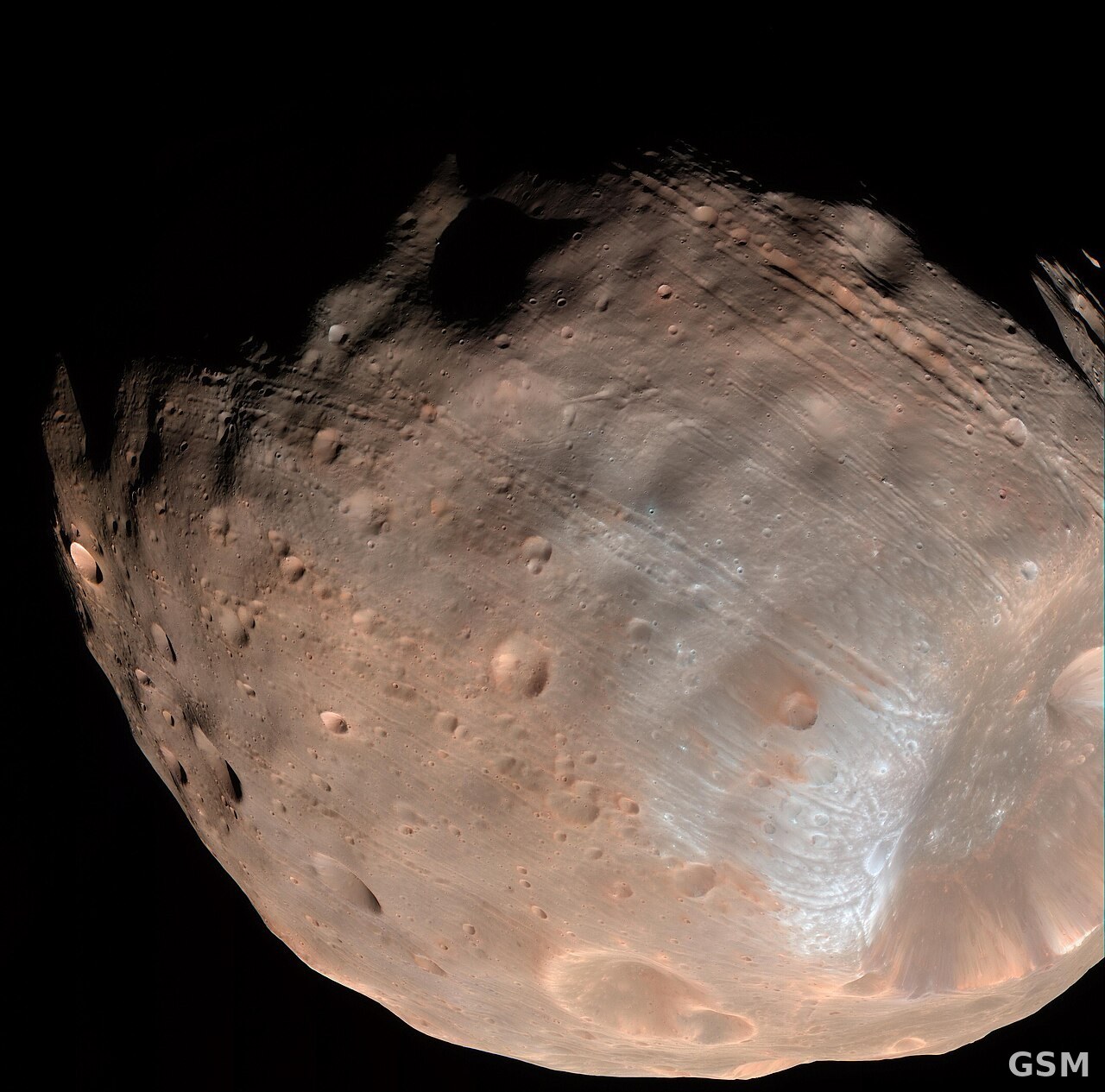
MMX is headed for Phobos, the larger of Mars's two moons, about 22 kilometres across and orbiting just 6,000 kilometres above the Martian surface. The spacecraft is due to arrive at Mars in August 2027 and enter orbit around Phobos from September 2027, spending about a year surveying the moon with cameras, a laser mapping system and spectrometers while searching for a safe and scientifically interesting landing site. It will then deploy IDEFIX, a small rover built by the German and French space agencies that is designed to travel on Phobos for at least 100 days, before the main spacecraft lands to collect at least 10 grams of surface material.
If successful, MMX will be the first spacecraft to orbit Phobos, the first to collect samples from its surface and the first to return to Earth from the Mars system, according to the European Space Agency. The sample capsule is due to land in Australia in 2031. NASA is a major partner, contributing the MEGANE gamma-ray and neutron spectrometer, developed by the Johns Hopkins Applied Physics Laboratory, and 10 participating scientists; the French space agency CNES and ESA also contribute instruments and support.
Scientists say the sample can help settle how Phobos and its companion Deimos formed: whether they are asteroids captured by Mars's gravity or debris from an ancient collision between Mars and a large impactor. 'The Martian moon Phobos remains an unexplored frontier for humankind,' MMX Project Manager Kawakatsu Yasuhiro said in a statement. 'By bringing home samples from Phobos, we hope to explore how the martian moons were formed, how the Mars sphere evolved, and how the water and organic materials found on the terrestrial planets originated.' JAXA had held October 21 to early November as backup launch dates.
Source: GSM · USA (original Chinese edition)
Photo: 火星卫星火卫一(Phobos)资料图。图:NASA/JPL-Caltech/亚利桑那大学(火星勘测轨道飞行器 HiRISE),公共领域,经维基共享资源。 / File image of Phobos, a moon of Mars. Image by NASA/JPL-Caltech/University of Arizona (Mars Reconnaissance Orbiter HiRISE), public domain, via Wikimedia Commons.