Global Chip Rankings: NVIDIA Tops the List at $125.7 Billion; 11 US Firms in the Top 20, SMIC China's Lone Entry
NVIDIA is the world's largest semiconductor company by revenue, with $125.7 billion in 2025 sales, up 63.9%, for a 15.8% market share, according to GSM's Global Chip Company Rankings compiled this week from Gartner data and company filings. Global semiconductor revenue reached $793.4 billion in 2025, up 21.0% (Gartner). The top 10 follows Gartner's ranking published in January 2026 for calendar 2025; ranks 11 to 20 are compiled from company financial reports, with differing fiscal years and revenues rounded to US dollars.
Memory makers posted the biggest moves. SK hynix rose from No. 4 to No. 3 with $60.6 billion, up 37.2%, and Micron Technology climbed from No. 7 to No. 5 with $41.5 billion, up 50.2%. Gartner noted that high-bandwidth memory (HBM) accounted for 23% of the DRAM market in 2025 with sales above $30 billion, while SI processor sales exceeded $200 billion. Intel fell from No. 3 to No. 4 with $47.9 billion, down 3.9% — the only decline in the top 10. Samsung Electronics ranked No. 2 at $72.5 billion, followed by Qualcomm, Broadcom, AMD and Apple in sixth through ninth place, and MediaTek at No. 10 with $18.5 billion.
By headquarters, 11 US companies made the top 20 and seven made the top 10, with combined revenue of about $387.2 billion; the seven US firms in the top 10 alone accounted for $343.5 billion, or 43.3% of the global total. SMIC is China's only entry on the main list, at No. 16 with $9.33 billion in 2025 revenue, up 16.2%.
The rankings carry a methodology note: TSMC, a pure-play foundry, is excluded from Gartner's vendor ranking; on its reported 2025 revenue of about $122.9 billion it would rank No. 2 globally, behind only NVIDIA. Apple's $24.6 billion is Gartner's estimate of the value of its in-house chips, which are not sold externally.
Segment rankings tell a more distributed story. In foundry (TrendForce, Q2 2026), TSMC held a 72.5% share on quarterly revenue of about $40.2 billion; SMIC ranked No. 3 with $3.01 billion and a 5.4% share, up 20.0% quarter on quarter, narrowing the gap to second-placed Samsung Foundry (5.9%) to 0.5 percentage points. UMC and GlobalFoundries ranked fourth and fifth, while China's HuaHong Group and Nexchip ranked sixth and ninth; the three Chinese foundries together took 8.5% of the top 10's revenue.
In memory (TrendForce, Q2 2026), DRAM revenue jumped 59.5% quarter on quarter to $154.73 billion: Samsung led with 39.4%, SK hynix held 24.9% and Micron 23.3% — 87.6% combined — while CXMT ranked fourth at 9.5%, the only Chinese company in the top four. In HBM revenue, SK hynix held about 50%, Samsung about 33% and Micron about 18%. In NAND flash (Counterpoint, Q2 2026), Samsung led, while YMTC's revenue share rose to 14% and it ranked third globally by bit shipments.
MediaTek led smartphone application-processor shipments with 31% (Counterpoint, Q2 2026), ahead of Qualcomm at 23% and Apple at 19%; China's Unisoc ranked fourth at 13% and HiSilicon sixth at 5%, for a combined 18%. NVIDIA took about 90% of desktop discrete GPU shipments (Jon Peddie Research, Q2 2026). In China's data center SI accelerator market (IDC, first half of 2026, reported by Reuters), shipments totaled about 2.008 million units: NVIDIA's share fell from 55% a year earlier to 34%, while Huawei's Ascend line rose to second place at 28%. In microcontrollers (Omdia, 2025), Infineon led with 23.2%, with NXP, Renesas, STMicroelectronics and Microchip completing a top five that together holds about 80%.
The compiler notes that methodologies differ across research firms — revenue, unit and bit bases, fiscal years and consolidation scopes — so figures across tables are not directly additive. The rankings are a compilation of public data and do not constitute investment advice.
Published by GSM · USA (original Chinese edition)
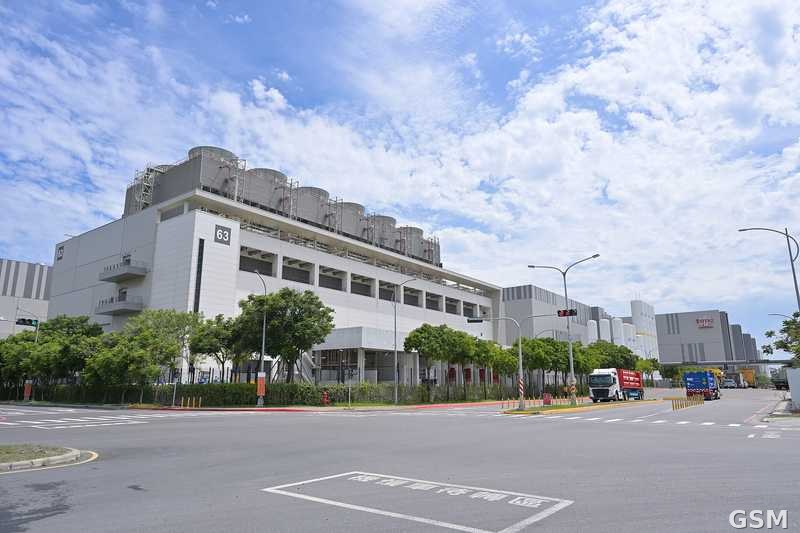
Photo: 图:台积电位于南部科学园区的 Fab 18 晶圆厂。照片:4300streetcar,CC BY 4.0,经 Wikimedia Commons。Photo: TSMC's Fab 18 in the Southern Taiwan Science Park. Photo: 4300streetcar, CC BY 4.0, via Wikimedia Commons.