Wisconsin Voters Face Three Constitutional Amendments on Nov. 3 Ballot: Partial Veto, Worship Gatherings, Anti-Discrimination
Wisconsin voters will decide three proposed constitutional amendments on November 3, addressing the governor's partial veto power, government limits on gatherings in places of worship during emergencies, and government discrimination or preferential treatment based on protected characteristics. According to The Milwaukee Focal on October 22, all three were placed on the ballot by the state Legislature and will appear for early voters as well as Election Day voters.
The first amendment would prohibit the governor from using the partial veto to create or increase a tax or fee, or authorize its creation or increase. It responds to Gov. Tony Evers' "400-year veto," in which he struck words, digits and a hyphen to extend local school-funding levy authority from the 2024-25 school year through the 2425 school year. Philip Rocco, a political science professor at Marquette University, described the broader debate over partial veto authority as shaped by partisan conflict between governors and a Legislature often controlled by the opposing party.
The second amendment would bar state and local governments from ordering places of worship to close or forbidding gatherings there during a state of emergency, including a public health emergency, a direct response to church closures during the COVID-19 pandemic. The State Democracy Research Initiative at the University of Wisconsin Law School notes that other states have typically protected worship gatherings by statute and treated them the same as schools or grocery stores; Wisconsin would be the first state to adopt such protection at the constitutional level, with stronger protection than elsewhere. Rocco cautioned that the measure's reach is uncertain: it could apply only to closure orders, or also to limits such as capacity restrictions.
The third amendment would prohibit government entities from discriminating against or granting preferential treatment to individuals or groups based on race, sex, color, ethnicity or national origin in public employment, education, contracting or administration. Rocco said existing state and federal laws already prohibit discrimination in these areas, and identified the amendment's "preferential treatment" language as central to its potential effect: it could be applied to affirmative-action programs and other efforts to address disparities, though its ambiguous wording makes the ultimate scope difficult to predict.
Rocco said the wording of the three questions can be difficult to parse and encouraged voters to consider the arguments made by supporters and opponents.
Published by GSM · USA (original Chinese edition)
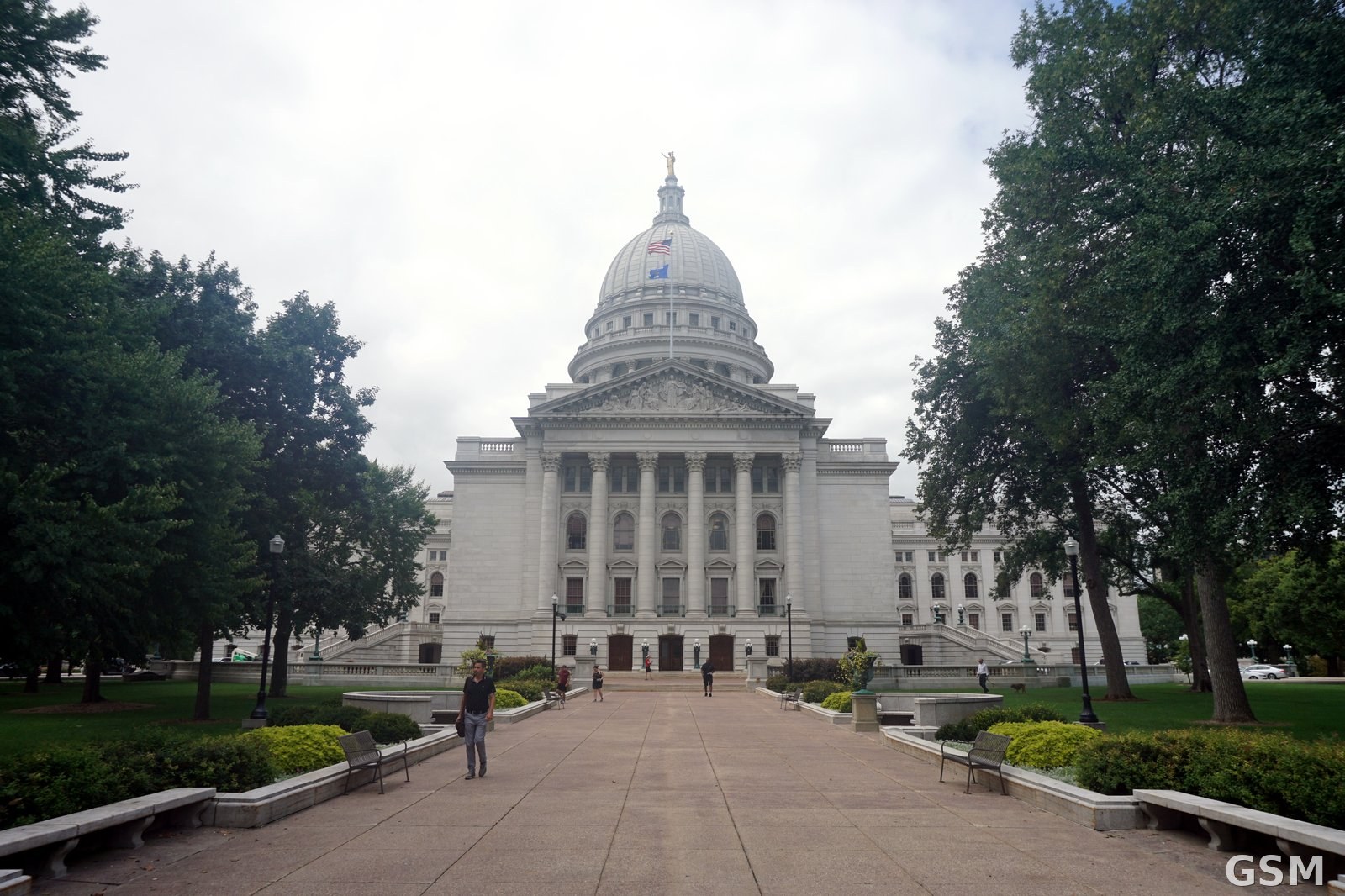
Photo: 威斯康星州议会大厦(Madison),Michael Barera 摄,CC BY-SA 4.0,Wikimedia Commons / Wisconsin State Capitol in Madison, by Michael Barera, CC BY-SA 4.0, Wikimedia Commons