Indiana Supreme Court Unanimously Rejects Inmate's Bid to Delay Execution for Brain Scans: November 5 Date Stands
The Indiana Supreme Court on October 22 unanimously rejected death row inmate Jeffrey Weisheit's request to postpone his execution for brain scans. Weisheit had sought to move his execution to November 19 and postpone clemency proceedings so experts could assess brain injuries they contend affected his behavior before the 2010 murders. The court said that if the parole board or the governor finds the medical evidence relevant, the executive branch maintains its own authority to transport him for testing without a court order.
Weisheit was sentenced to death in 2013 for killing 8-year-old Alyssa Lynch and her 5-year-old brother, Caleb, in a fire at his home near Evansville while their mother, his girlfriend, worked an overnight shift. His execution is scheduled to take place before sunrise on November 5 at Indiana State Prison in Michigan City. The Indiana Parole Board heard testimony on October 16 and 19 and had announced no clemency recommendation as of October 22; the final decision rests with Governor Mike Braun.
The court also noted that two other potential grounds for a stay that Weisheit's attorneys had identified, a challenge to Indiana's execution method and a request to reopen post-conviction proceedings, had not been filed as of October 22. U.S. District Judge Sarah Evans Barker previously approved funding for the brain scans but ruled on October 7 that she lacked authority to compel state officials to transport him for evidence gathering in a state clemency case.
At the clemency hearing, the children's father reportedly supported commuting the sentence to life in prison without parole, while their mother asked that the death sentence stand.
Published by GSM · USA (original Chinese edition)
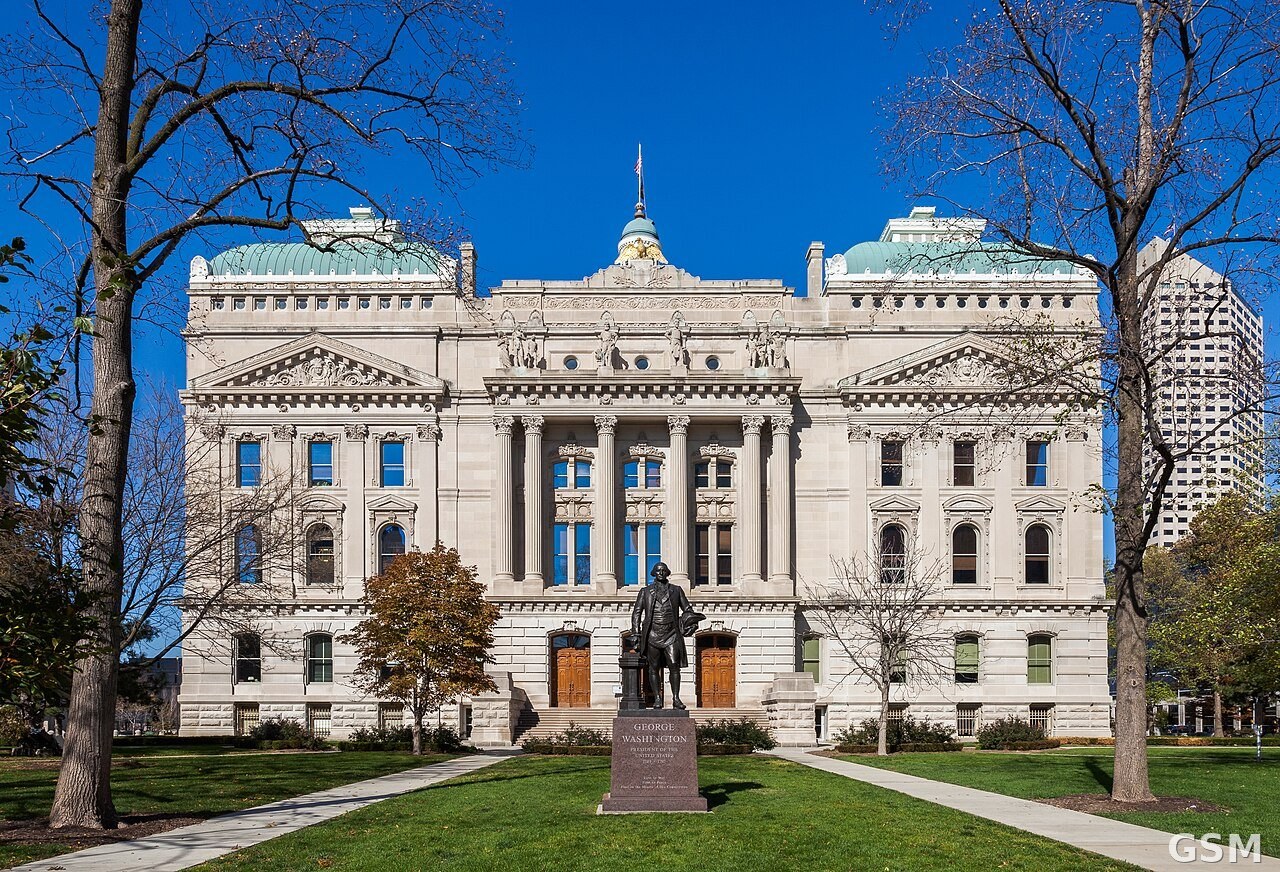
Photo: 印第安纳州议会大厦(Indianapolis),作者 Diego Delso,CC BY-SA 3.0,来源 Wikimedia Commons