Satellite Detects 166 Major Methane Leaks at New Mexico Oil and Gas Facilities: Most Appear Unreported as State Rules Require
A new report released October 22 by the Gas Leaks Project and Earthworks tallied 166 major methane leaks at 121 New Mexico oil and gas facilities between January 1, 2025, and April 30, 2026, and most of the leaks appear not to have been reported to the state as required by New Mexico rules and operator permits.
The leaks were recorded by Carbon Mapper's Tanager-1 methane detection satellite, which took 50 images of New Mexico's portion of the Permian Basin during that period, each covering roughly 77 by 15 miles of the surface, allowing the two groups to tie the emissions to specific facilities. Energy Transfer and Targa Resources, the two companies with the most entries in the report, did not respond to requests for comment; a spokesperson for EOG Resources, which had the second-largest single recorded incident, said the company did not anticipate contributing to the story.
All of the identified leaks with complete emission data appear to qualify as highly polluting super-emitter events under the U.S. Environmental Protection Agency's Methane Super Emitter Program, a Biden-era program that EPA Administrator Lee Zeldin promised to cancel at a meeting in Santa Fe earlier this month. Methane is about 80 times more effective at trapping heat in the atmosphere than carbon dioxide.
James Kenney, secretary of the New Mexico Environment Department, said the department had not seen the report but already uses Carbon Mapper satellite data to target companies for compliance investigation, and the department's governing board is considering state super-emitter rules. New Mexico has banned regular venting and flaring at oil and gas facilities since 2022. In the five and a half months after the report period ended, the satellite spotted another 84 methane plumes from 73 sources. (GSM, based on KSFR / Capital and Main reporting)
Published by GSM · USA (original Chinese edition)
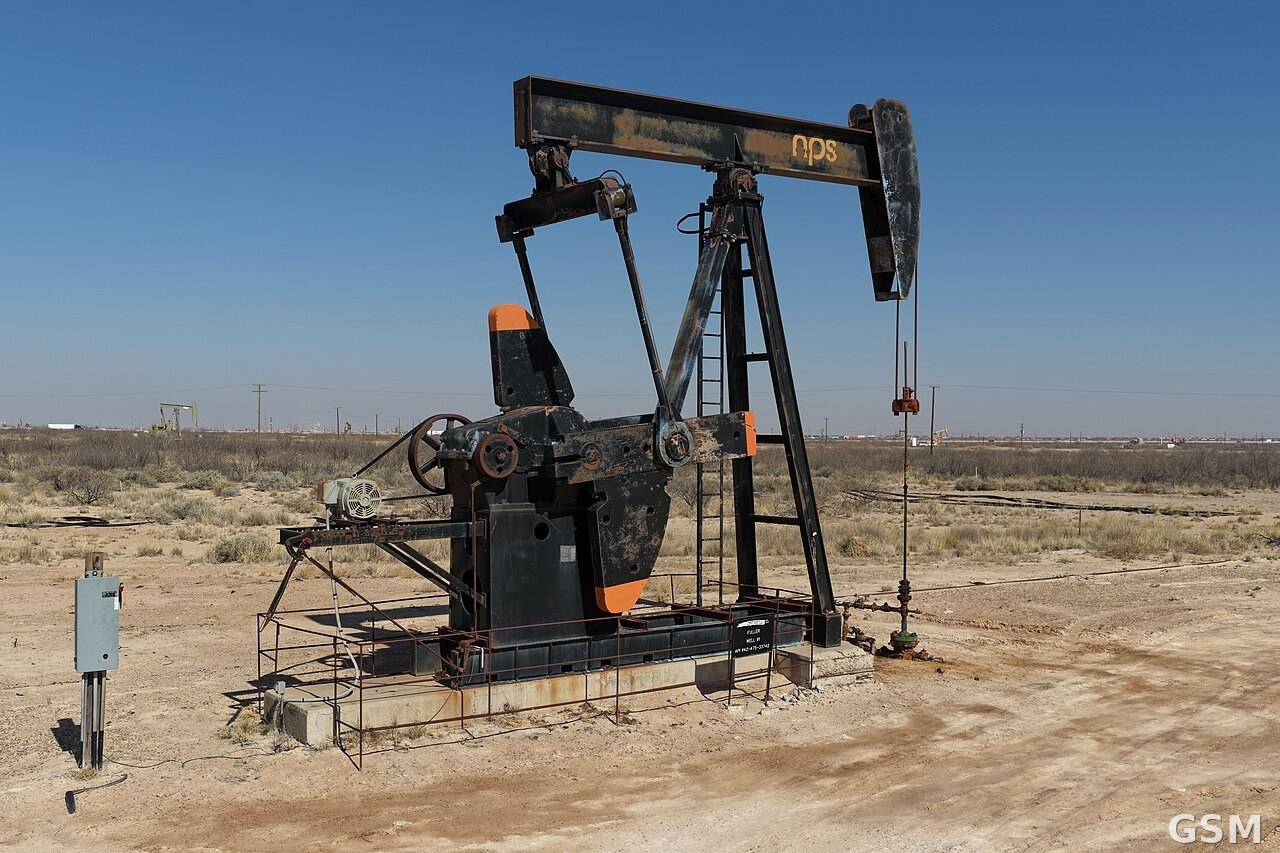
Photo: 二叠纪盆地油田抽油机。图片:Quintin Soloviev,CC BY 4.0,来源 Wikimedia Commons