Federal Judge Restricts DHS Voter Investigations in Nine States: Target Lists 'Voluminous and Unreliable'
U.S. District Judge Araceli Martínez-Olguín issued a preliminary injunction on October 21 largely restricting the Department of Homeland Security from carrying out election-related field visits and interviews in nine states: California, Connecticut, Georgia, Missouri, Nevada, New York, Pennsylvania, Washington and Wisconsin. The order bars such interviews when officers know, or reasonably suspect, that the person is a U.S. citizen.
In the ruling, the judge wrote that the lists DHS used to identify targets were "voluminous and unreliable": 48.2 million records came from independent sources of questionable provenance, and another 50.6 million from state voter-roll data or unreliable commercial versions of it. Deploying armed officers to people's homes in a militarized action in the final months before the midterm elections, she found, risked intimidating voters and people who help others vote, and "the public's interest in safe elections, free from interference or intimidation, far exceed Defendants' purported interest in combating unlawful voting by non-U.S. citizens."
The lawsuit was brought by the California Nurses Association, National Nurses United, the City and County of San Francisco, Santa Clara County and the Voto Latino Foundation, challenging door-knocking operations DHS has ramped up since September under its "Unlawful Voter Initiative," in which agents working from target lists question residents about their immigration status and voting history. The injunction is set to remain in effect until polls close on November 3; it is on hold until 5 p.m. Friday to give the federal government an opportunity to seek emergency review in the Ninth Circuit. DHS did not immediately comment on the ruling.
Published by GSM · USA (original Chinese edition)
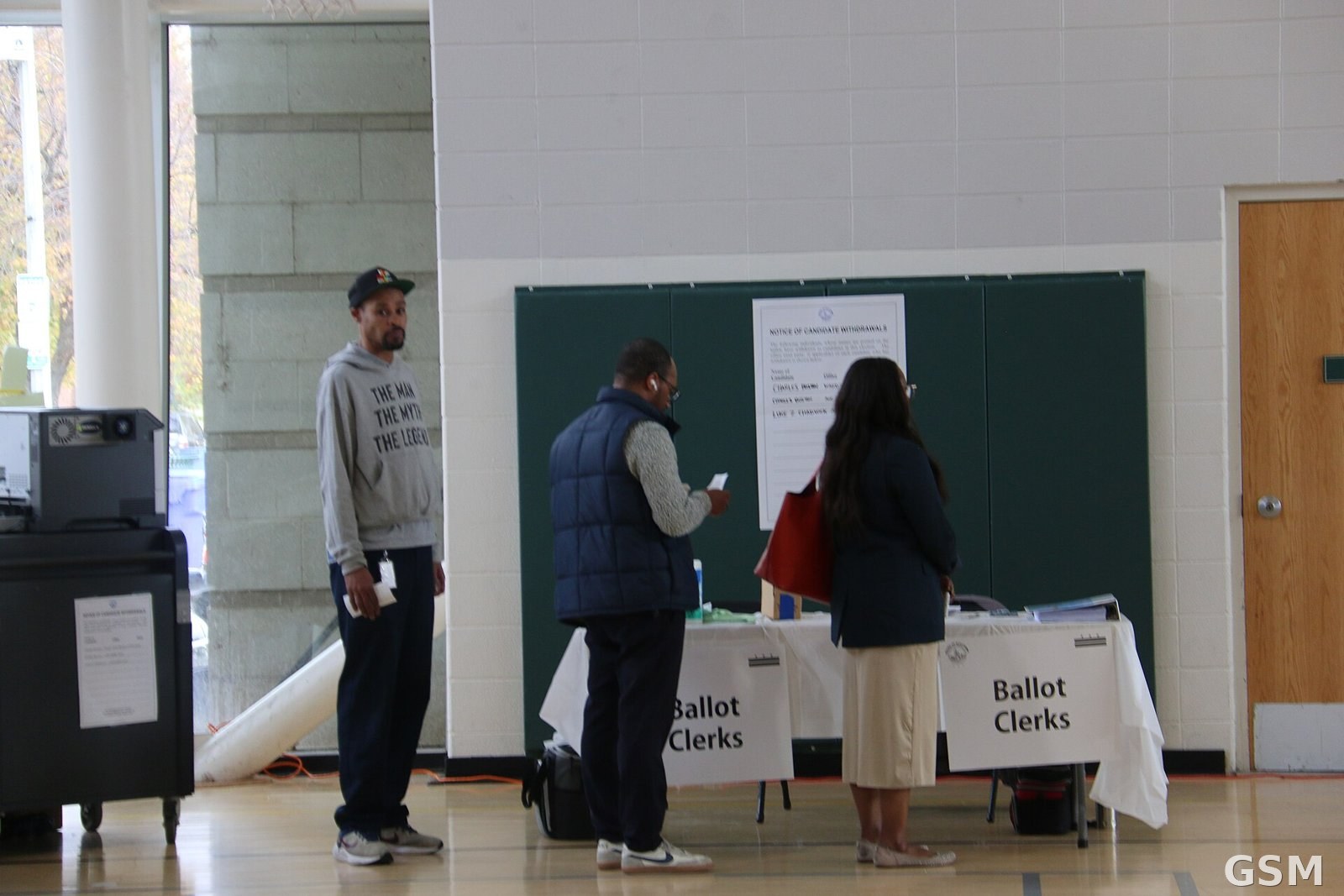
Photo: 华盛顿特区一处投票站内,选民在选票工作人员桌前办理手续(资料图,2024 年)。照片:OSCE PA 摄,CC BY-SA 2.0,经 Wikimedia Commons。 / Voters at a polling station in Washington, D.C. (file photo, 2024). Photo: OSCE PA, CC BY-SA 2.0, via Wikimedia Commons.