GAO Audit: ICE Body Cameras Rely on Manual Activation With No Compliance Controls; DHS Rejects Auto-Activation
A U.S. Government Accountability Office (GAO) audit released on October 14 found significant weaknesses in how U.S. Customs and Border Protection (CBP) and U.S. Immigration and Customs Enforcement (ICE) manage their body-worn camera programs: ICE personnel must activate their cameras manually and the agency has no controls to ensure they do so when policy requires, creating a risk that critical enforcement encounters go unrecorded. Neither agency has updated its program plan in years, and neither has measures to judge whether the programs are working.
As of June 2026, CBP had about 11,500 cameras in use, nearly all of them with the Border Patrol; as of April 2026, ICE had about 4,800, split almost evenly between Enforcement and Removal Operations and Homeland Security Investigations, according to the report. At six of the 10 locations auditors visited, personnel said they were unsure when they were required to turn cameras on or leave them off; at one ICE location, staff had received cameras and completed training but had not begun using them because they did not understand when recording was required.
GAO made seven recommendations, including updated plans, performance measures and field-level recording rules, and urged ICE to add controls such as automated activation, for example technology that starts recording when an officer draws a firearm or Taser. The Department of Homeland Security (DHS) agreed with six of the recommendations but rejected automated activation for ICE, saying the agency had determined that the privacy, evidentiary and operational risks of the technology outweigh its potential benefits, including the risk of recording sensitive conversations with informants or victims or bystanders engaged in First Amendment-protected activities.
GAO stood by its recommendation, saying additional controls would provide greater assurance that ICE personnel capture footage as policy requires, particularly in unexpected incidents involving the use of force, and that without such controls ICE cannot be sure the program delivers transparency, accountability and public trust.
Rep. Bennie Thompson, the ranking Democrat on the House Homeland Security Committee, said after the report's release that the DHS body-camera program is deficient and needs to be revamped, and that he would introduce legislation to close the gap. Rep. Lou Correa, the ranking Democrat on the Border Security and Enforcement subcommittee, said federal immigration agents have shot at least 25 people since January, six of whom died, including three U.S. citizens, and that the public deserves transparency and accountability.
The audit covered February 2025 through September 2026. GAO said CBP has not revised its camera program plan since 2022 and ICE has not revised its plan since 2024, leaving both out of date with expanded deployment targets and a 2025 pause in further rollouts.
Published by GSM · USA (original Chinese edition)
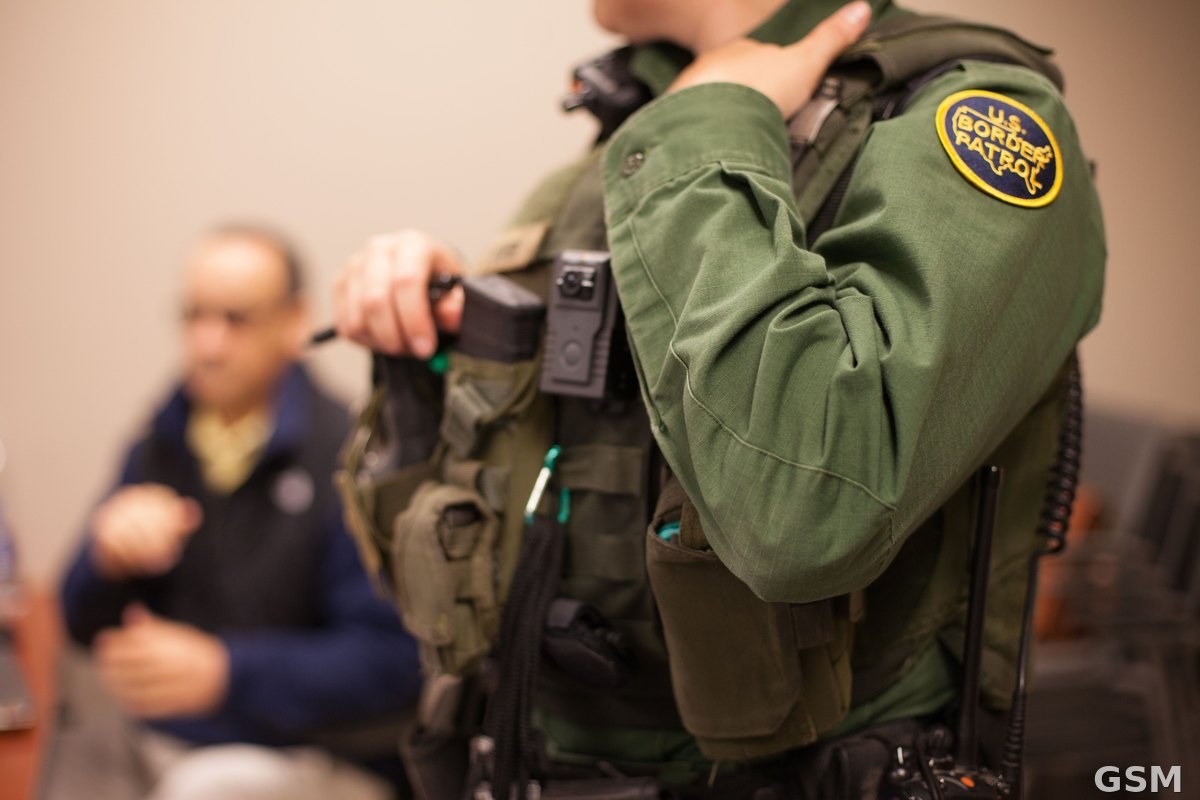
Photo: 图:美国边境巡逻队人员胸前佩戴的执法记录仪特写。美国海关与边境保护局官方照片(公共领域)。Photo: Body-worn camera worn by a U.S. Border Patrol agent, U.S. Customs and Border Protection (public domain).