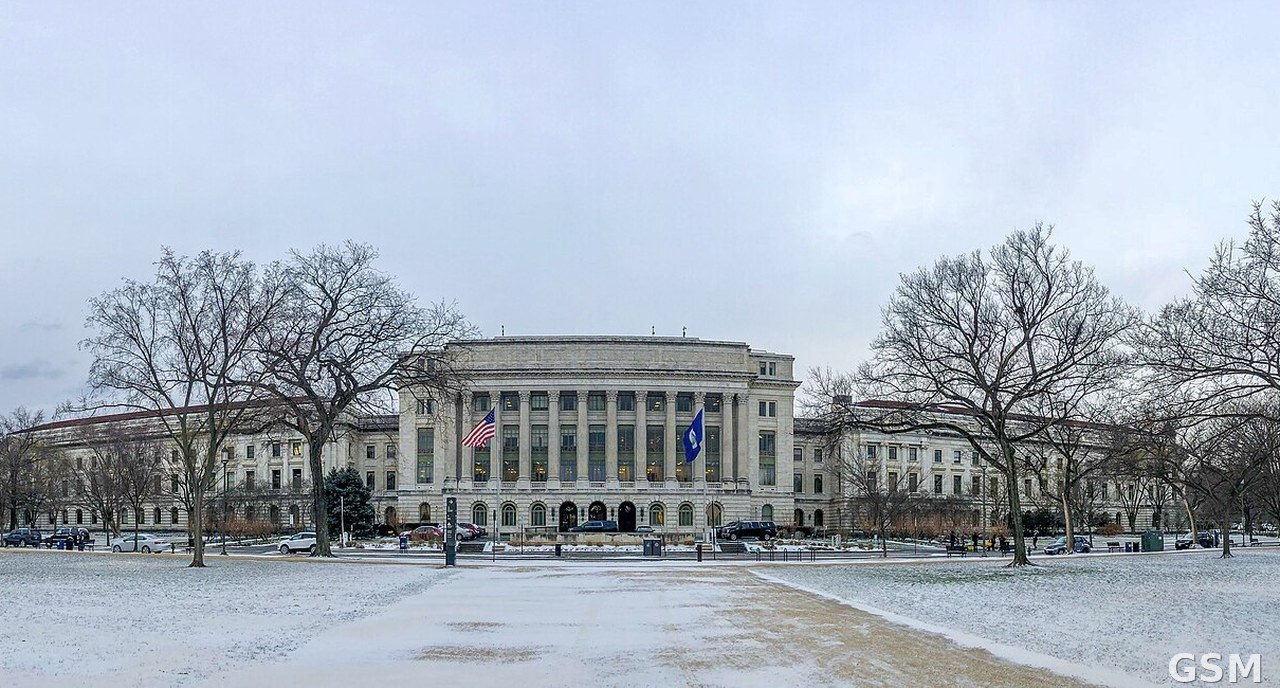
Treasury Proposes Rule to Limit Single-Family Home Purchases by Large Institutional Investors

The U.S. Department of the Treasury on Oct. 22 in Washington issued a notice of proposed rulemaking (NPRM) to implement Section 1001 of the 21st Century ROAD to Housing Act, which restricts large institutional investors from purchasing single-family homes. Treasury said the proposed regulations codify key requirements of President Trump's Executive Order 14376, Stopping Wall Street from Competing with Main Street Homebuyers.
"Under President Trump, this Administration continues to restore the path to affordable homeownership for millions of young and working families," Treasury Secretary Scott Bessent said in the department's statement. "Treasury is working to ensure American families and workers have a fair shot at purchasing homes in their communities by increasing housing supply and limiting large institutional investors' role in the market, while supporting a strong, stable housing market and avoiding unnecessary disruption."
Under the proposal, beginning Jan. 7, 2027, a large institutional investor generally may not purchase, or enter into a contract to purchase, a single-family home unless the purchase qualifies as an "excepted purchase" under the act. The act defines a large institutional investor by reference to, among other things, whether an entity is engaged in the business of investing in, owning, renting, managing, or holding single-family homes and has direct or indirect investment control over at least 350 such homes. Excepted purchases include those made under build-to-rent programs, renovate-to-rent programs, homeownership programs, and other programs to boost homeownership.
The proposed framework would establish standards for build-to-rent purchases; provide a safe harbor for renovate-to-rent purchases that bring neglected homes back into the housing supply and up to code; clarify requirements for homeownership programs, including safe harbors for investors that provide meaningful financial support toward their renters' purchase of a home; clarify when an entity is engaged "in the business of" holding single-family homes, namely when it does so for income or financial gain and not incidentally to a different business; define when an entity may qualify as a passive investor because it does not share directors or officers with the entity that owns a home and has no property control right over the underlying homes; clarify certain purchases involving debts previously contracted, loss mitigation, and transfers between large institutional investors; and clarify how the maximum civil penalty is calculated where a single prohibited purchase involves more than one large institutional investor. The proposal also provides non-exclusive safe harbors, including standards for whether a home has been substantially rehabilitated, whether a renter has received meaningful financial support, and whether a renter has received a right of first refusal and a 30-day first-look period.
Treasury said its proposed approach recognizes that housing-market participants use a variety of ownership, investment, construction, servicing, and property-management structures and seeks to provide clarity without unnecessary disruption to housing supply, homebuilding, rehabilitation activity, or capital formation. Members of the public may submit comments on the NPRM within 30 days after its publication in the Federal Register.
Published by GSM · USA (original Chinese edition)
Photo: 图:位于华盛顿的美国财政部大楼(2026年10月12日航拍)。G. Edward Johnson 摄,经维基共享资源,CC BY 4.0。Photo: The U.S. Department of the Treasury building in Washington, D.C., in an aerial view taken Oct. 12, 2026. Credit: G. Edward Johnson via Wikimedia Commons (CC BY 4.0).