Supreme Court Stays Lower-Court Order: New Hampshire May Fully Enforce Student ID Voting Ban for the Midterms
WASHINGTON — The U.S. Supreme Court on October 22 granted New Hampshire's emergency application and stayed a federal district court's order, allowing the state to fully enforce its ban on voters using student IDs to prove their identity in the November 3 midterm elections, including barring student IDs as backup evidence. The order decides only which rules apply during the midterms; it is not a final ruling on the case, and the litigation continues in the lower courts.
New Hampshire this year enacted House Bill 323, signed by Governor Kelly Ayotte and in effect since June 2, which removed high school, college and university IDs from the list of identification documents automatically accepted at polling places. Secretary of State David Scanlan then issued guidance saying that even when a voter lacks a listed ID and tries to prove identity through other evidence under the state's "safety valve" procedure, election officials may not consider a student ID as one factor. The voting-rights group Coalition for Open Democracy sued, challenging both the law and the secretary's guidance.
U.S. District Judge Joseph Laplante declined to block HB 323 itself, but in an October 2 order he blocked the secretary's guidance and directed the secretary to revise his public instructions to say student IDs may be considered under the safety-valve procedure. The U.S. Court of Appeals for the First Circuit refused to stay the district court's order on October 14. New Hampshire filed its emergency stay application with the Supreme Court on October 15, and the Republican National Committee filed an amicus brief supporting the state.
In an unsigned order on Thursday, the Supreme Court invoked the Purcell principle. According to Bloomberg Law, the order said: "This court has repeatedly emphasized that lower federal courts should ordinarily not alter the election rules on the eve of an election." "Here, the district court did not point to anything that would justify deviating from that principle." According to The Hill, the order also pointed to the recent legal whiplash over Missouri's redistricting as an example. In his application, Secretary of State David Scanlan said the October 2 order undermined months of work educating local officials and the public, and that re-educating them at this stage "is practically impossible and risks voter confusion and inconsistent application of law, if not voter disenfranchisement." The Coalition for Open Democracy argued that a stay "would protect no one" and "would turn away the voters who arrive on November 3 with the evidence the secretary's website told them to bring."
Justice Ketanji Brown Jackson publicly dissented. According to CNN, the court did not provide a vote count, and Jackson was the only justice to publicly dissent. According to The Hill, Jackson wrote: "When a federal court determines that material misrepresentations are being made about a State's election rules, an injunction to prohibit that conduct does not contribute to public confusion, it prevents that very problem." She also said the district court's injunction was reasonably designed to require the secretary to conform his guidance to the new statute.
On November 3, New Hampshire voters will choose a successor to retiring Senator Jeanne Shaheen, with Democratic Representative Chris Pappas facing former Republican Senator John Sununu. According to CNN, its polling shows Democrats with a 31-percentage-point advantage over Republicans among younger adults. The case could return to the Supreme Court after the midterms.
Published by GSM · USA (original Chinese edition)
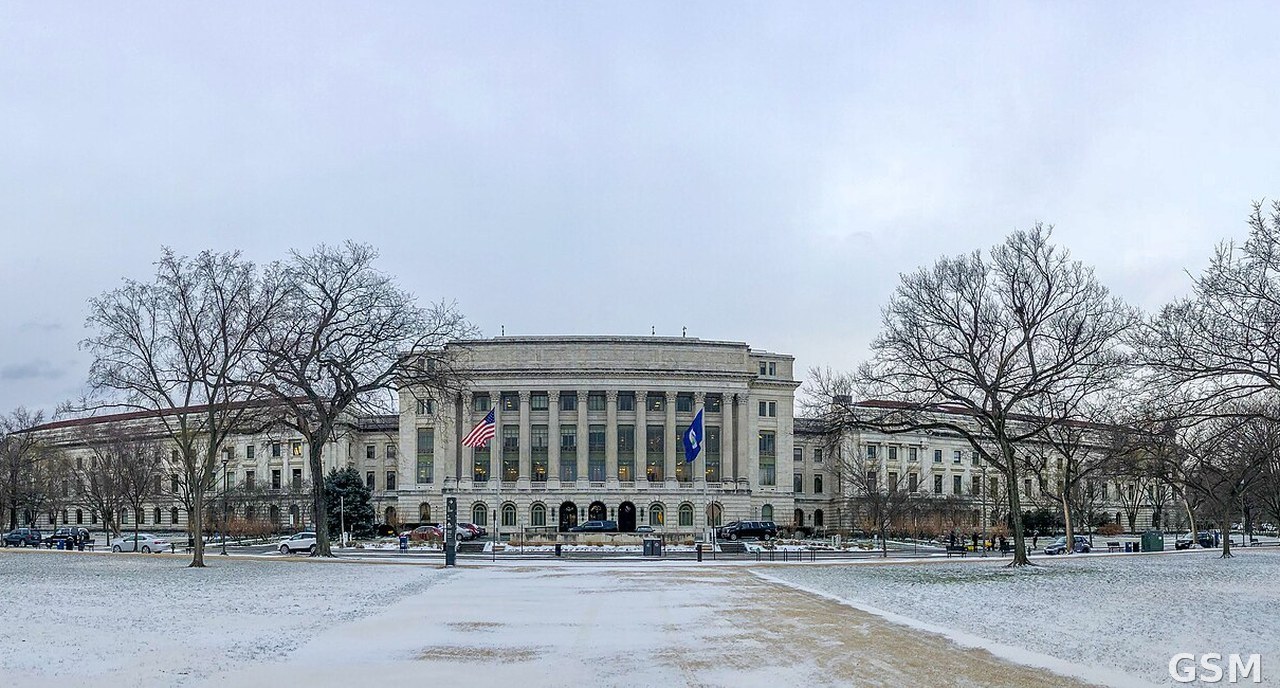
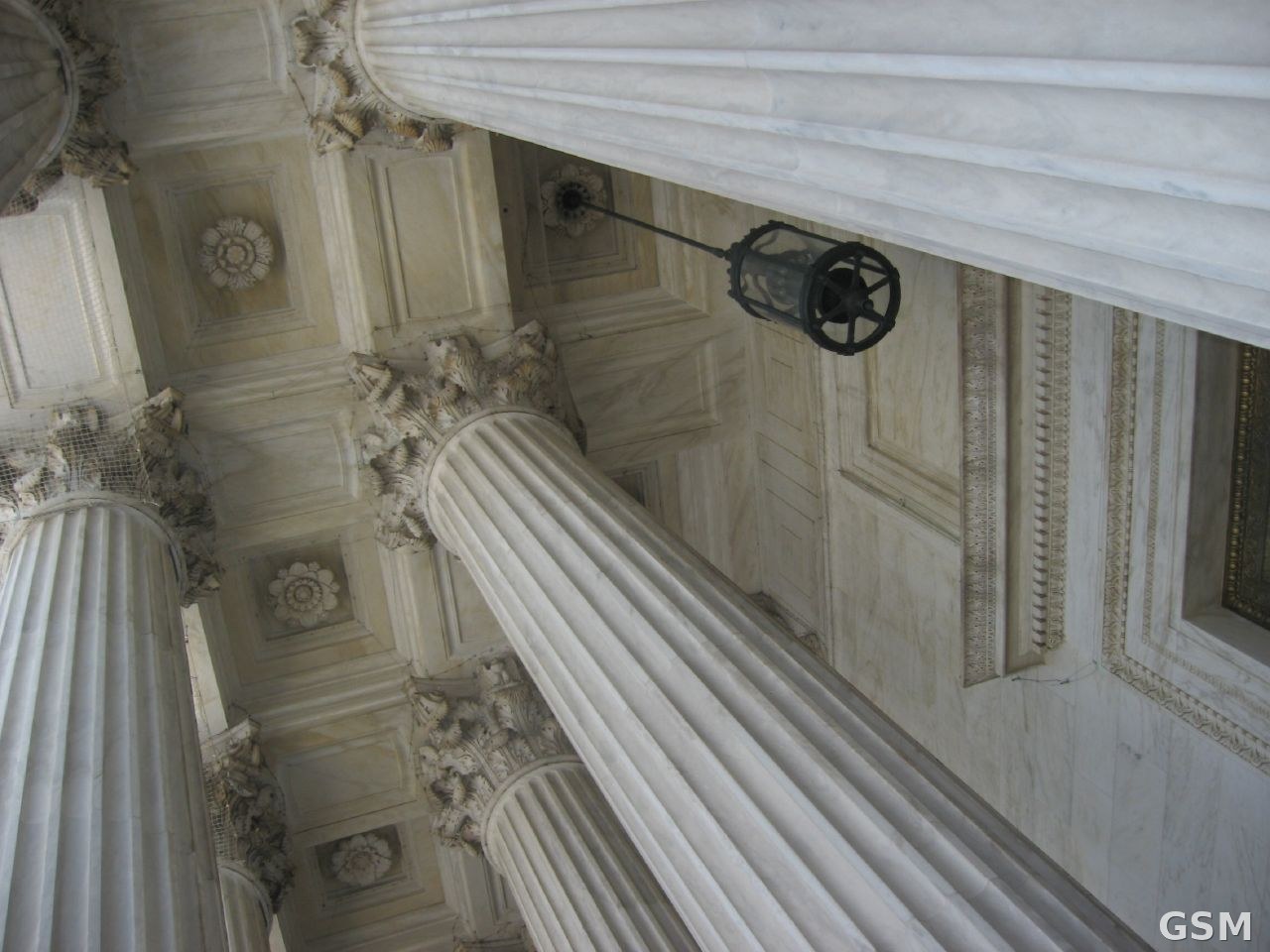
Photo: 图:位于华盛顿的美国最高法院大楼入口(资料图)。照片:Ken Lund,CC BY-SA 2.0,经 Wikimedia Commons。 / The entrance to the U.S. Supreme Court building in Washington, D.C. (file photo). Photo: Ken Lund, CC BY-SA 2.0, via Wikimedia Commons.
- 2026-10-02Federal Judge Rules Parts of New Hampshire Student-ID Voting Law Unconstitutional
- 2026-10-18New Hampshire Asks U.S. Supreme Court to Ban All Consideration of Student IDs for Voting
- 2026-10-22Supreme Court Stays Lower-Court Order: New Hampshire May Fully Enforce Student ID Voting Ban for the MidtermsThis story