FDA Awards Up to $2.2 Million for Wearable Digital Measures in Charcot-Marie-Tooth Disease Type 1A
NEW YORK — BioSensics LLC and CureCMT (the Hereditary Neuropathy Foundation) announced on October 22 a two-year cooperative agreement award of up to $2.2 million from the U.S. Food and Drug Administration (FDA), with $1.1 million awarded for the first year, to develop wearable digital biomarkers of motor function as drug development tools for Charcot-Marie-Tooth disease type 1A (CMT1A), the most common inherited peripheral neuropathy.
The project, grant number 1U01FD009005-01, is funded through the FDA Center for Drug Evaluation and Research (CDER) program on the use of digital health technologies in clinical investigations, and funding officially began on September 25, 2026. As a cooperative agreement, FDA scientists will work collaboratively with the study team throughout the project. The three principal investigators are Ashkan Vaziri, founder and CEO of BioSensics; Mazen Dimachkie, MD, of the University of Kansas Medical Center; and Allison Moore, CEO of CureCMT.
CMT affects an estimated 1 in 2,500 people, and no FDA-approved disease-modifying therapy exists. The disease causes progressive weakness in the feet, legs and hands, and many patients develop foot drop, which makes it hard to lift the front of the foot and leads to frequent tripping and falls. Because CMT progresses slowly, standard clinic assessments often cannot detect meaningful change within the timeframe of a clinical trial, a major barrier to treatment development.
The study, conducted under protocol BioCMT-01, will enroll approximately 120 adults with CMT1A across four U.S. sites: the University of Kansas Medical Center as lead clinical site, Massachusetts General Hospital, Hackensack Meridian School of Medicine, and Scottish Rite for Children. Over 18 months, participants will wear BioSensics PAMSys sensors — a pendant plus wrist- and ankle-worn devices — that continuously track posture, gait and hand activity at home, and will complete periodic finger-tapping and foot-drop tests on a tablet platform. Researchers will compare the digital measures with clinical exams and patient-reported outcomes to determine whether they can serve as sensitive, real-world endpoints for future CMT trials. Moore said people living with CMT notice changes in how they walk, balance and use their hands long before those changes show up on a clinic exam.
Published by GSM · USA (original Chinese edition)
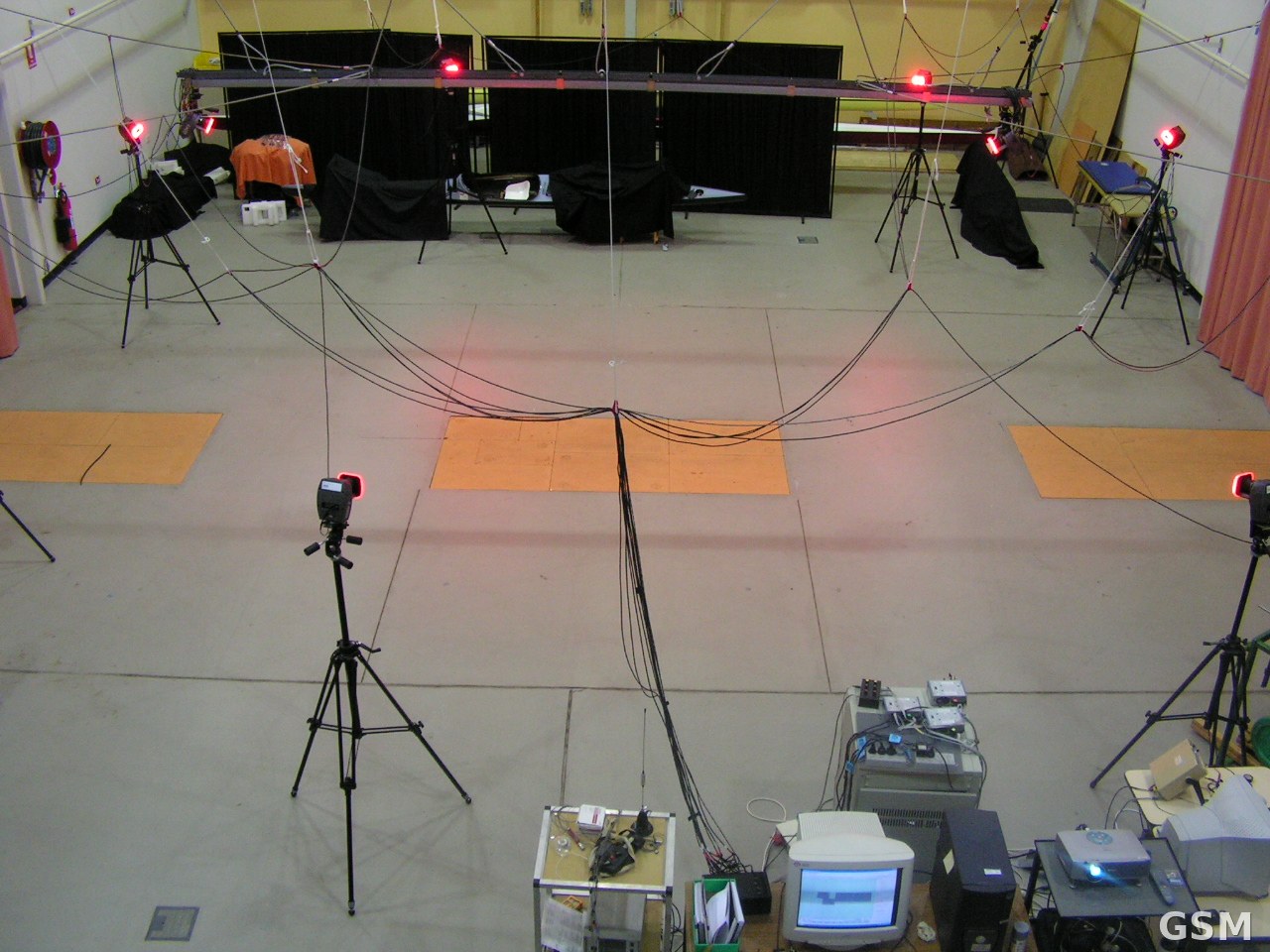
Photo: 图:步态分析实验室内的动作捕捉摄像机与测力台设备(资料图,D. Gordon E. Robertson 摄,Wikimedia Commons,CC BY-SA 3.0)