Trump Further Modifies Tariffs on Canadian Products Under Section 338, Changes Take Effect October 30
Washington — The White House said in a fact sheet on October 23 that President Donald J. Trump signed a proclamation that day under Section 338 of the Tariff Act of 1930 to further refine the scope of tariffs on certain Canadian products, with the product additions and removals taking effect on October 30, 2026.
The action modifies Proclamation 11048, which imposed additional duties to offset Canadian discrimination against U.S. commerce with respect to motor vehicles. Under the revision, certain products — such as plywood sheets, some paper products, certain machinery and refrigeration equipment, and certain packing crates and boxes — are removed from the scope of the Section 338 tariffs, and are replaced with certain valves, carpets, waste products, and others.
The White House said the Section 338 tariffs apply to all covered goods regardless of whether a good qualifies under the U.S.-Mexico-Canada Agreement (USMCA), and apply in addition to tariffs imposed under Section 232 of the Trade Expansion Act of 1962.
On the background, the White House said Canada walked away from a near-final trade deal with the United States this past summer and imposed new retaliatory tariffs on about $20 billion of U.S. exports, after which President Trump signed five proclamations under Section 338 to ban certain products from Canada and modify the scope of the tariffs announced on July 20, 2026; that scope was modified again on September 8, 2026.
The White House said Section 338 authorizes the President to suspend, revoke, supplement, or amend a proclamation under that section whenever he deems the public interest requires it, and that the latest refinement is intended to continue offsetting the burden on U.S. commerce from Canada's discriminatory measures while better serving the public interest and protecting American farmers, manufacturers, and workers. The fact sheet said President Trump has locked in fair and reciprocal trade deals with nearly twenty trading partners, while over the past year and a half only China and Canada have chosen to retaliate against U.S. tariffs rather than negotiate.
According to the White House, the covered Canadian products face 50% additional duties, applied regardless of whether the goods qualify as originating under the USMCA, and the duties stack on top of those imposed under Section 232. Section 338 is a rarely used trade provision authorizing the president to impose additional duties of up to 50% on products of countries that discriminate against U.S. commerce. The move refines two earlier rounds of action taken on July 20 and September 8, 2026. The White House said Canada has retaliated against roughly $20 billion of U.S. exports. Senator Susan Collins of Maine announced that she had secured exemptions for nine product categories important to Maine agriculture.
Source: GSM, United States
Source: GSM · USA (original Chinese edition)
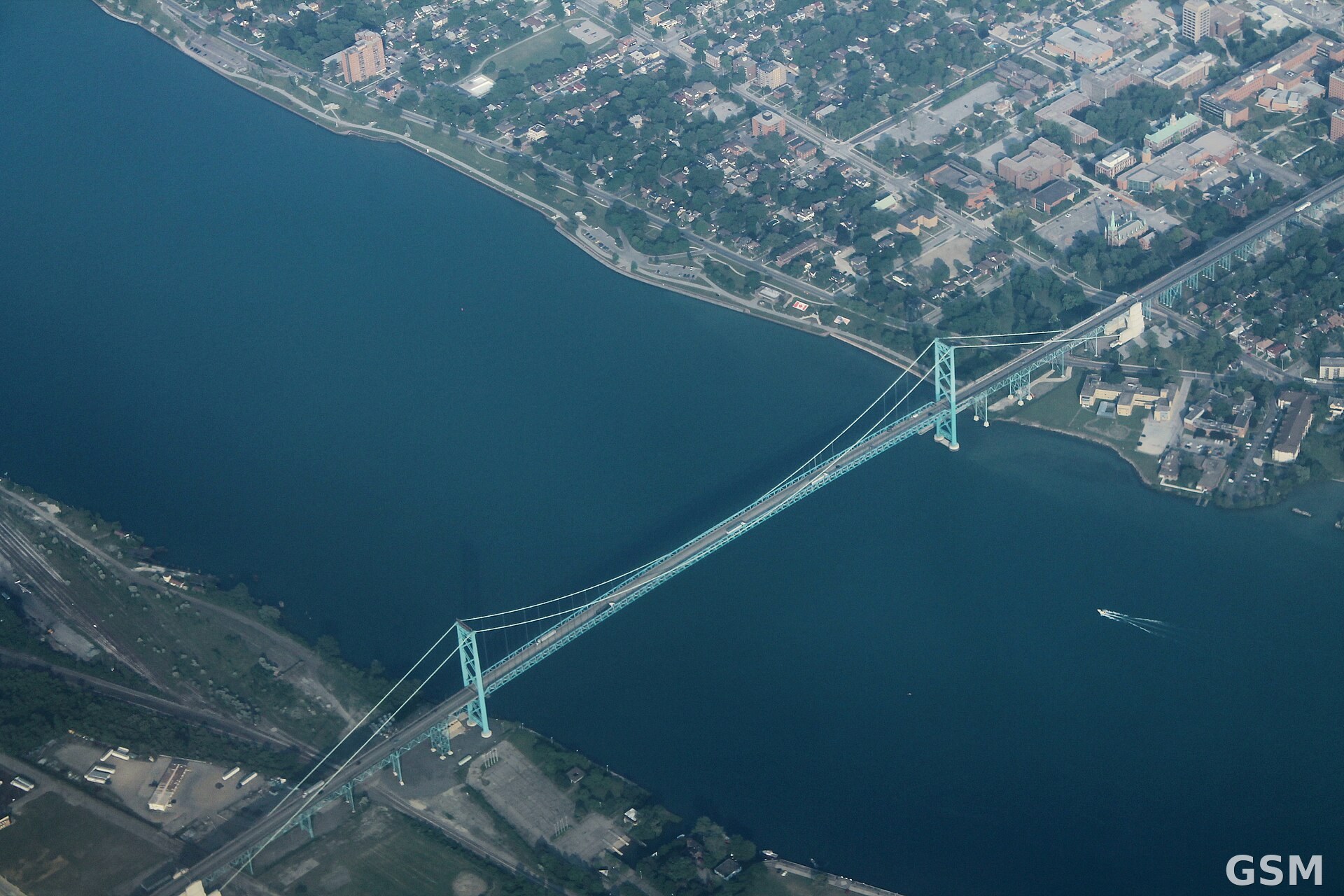
Photo: 图:连接美国 Detroit 与加拿大 Windsor 的 Ambassador Bridge,美加之间最繁忙的边境贸易通道之一。照片:formulanone,CC BY-SA 2.0,经 Wikimedia Commons。 / The Ambassador Bridge connecting Detroit, United States, and Windsor, Canada, one of the busiest U.S.-Canada trade crossings. Photo: formulanone, CC BY-SA 2.0, via Wikimedia Commons.