Oakland's $30 Minimum Wage Initiative Qualifies: City Council to Decide on Adoption, a Vote, or a 30-Day Study
A citizen initiative that would gradually raise the minimum wage in Oakland, a city in Alameda County, California, to $30 an hour has qualified after its signatures were certified. Alameda County elections officials certified that the petition for the Oakland Living Wage for All Act of 2026 had enough valid signatures, East Bay Insiders reported on Thursday. The measure would lift the city's minimum wage in stages to $30 an hour by July 1, 2037, with larger employers required to reach that level sooner.
The City of Oakland's official website lists the current city minimum wage at $17.34 an hour, effective January 1, 2026, with some exceptions for hotel workers. California's statewide minimum is $16.90, and Emeryville's $20.34 is the highest in Alameda County. Under the initiative's official text, employers with 100 or more employees and annual gross revenue over $1 billion would pay $19.90 an hour from July 1, 2027, $23.30 in 2028, $26.70 in 2029, and $30.00 in 2030.
Under California election law, a city council that receives a qualified citizen initiative has limited choices. A supplemental agenda for the council's Rules and Legislation Committee meeting on October 22, citing California Elections Code Section 9215, lays them out: the council can adopt the ordinance without alteration, making the $30 schedule law without a public vote; it can submit the measure to voters at the next general municipal election on November 7, 2028, or at a special election held 88 to 103 days after the council calls it; or it can first order a report under Elections Code Section 9212 on the measure's effects, to be presented within 30 days, a step that delays but does not replace one of the first two choices. The certification and the three alternatives (city legislative files 27-0173 through 27-0176) are slated for the full council's December 1 meeting as non-consent items, according to the agenda; a special election, if chosen, would most likely fall in the first quarter of 2027.
The Oakland campaign follows the same path its organizers took earlier this year in the unincorporated parts of Alameda County, including Ashland, Castro Valley, Cherryland, Fairview, Hayward Acres, San Lorenzo and Sunol. There, the Living Wage for All coalition, a group of more than 100 civil rights, faith and labor organizations that is part of the national One Fair Wage campaign, qualified a nearly identical initiative. The Board of Supervisors voted 3 to 2 in August to commission an economic study rather than act immediately, which kept the measure off the November 2026 ballot, East Bay Insiders reported. On September 15, supervisors placed it on the March 2028 ballot and asked a committee chaired by Supervisor Nate Miley, which includes Supervisor Lena Tam, to explore a competing countermeasure, according to Oakland North.
Under the county version, employers with more than 100 workers would have to pay $30 an hour in 2030, medium-sized employers in 2035 and employers with 25 or fewer workers in 2037. Paul Peninger of BAE Economics, whose firm analyzed the county measure for the supervisors, estimated that it could cost the county government $33 million to $34.3 million a year. He noted that the cost could be partly offset by tax revenue from higher wages and consumer spending, and that the estimate did not account for savings if fewer residents qualified for programs like CalFresh and Medi-Cal. According to the county's study, no city in Alameda County is projected to reach $30 an hour until 2032 under existing law, Oakland North reported.
Supporters say wages in the Bay Area have not kept up with housing and child care costs. John Howard, one of the county petition's coordinators, asked supervisors in September: 'Why do the people who have to work have to be squeezed? If we're going to work, we should have affordable or adequate wages that we're going to work for.' Edward Escobar, founder of the Unincorporated Strategic Coalition, told the board the $30 initiative targeting only unincorporated areas was 'an attack on our communities,' saying childcare centers, restaurants, family-run shops and long-standing employers cannot survive a wage spike while competing directly with neighboring cities operating under normal wage laws: 'We are not a testing ground.' Saru Jayaraman, president of One Fair Wage, has said the coalition is in talks with council members in Berkeley and Emeryville about similar measures; of a possible county countermeasure, she told Oakland North: 'If they put a countermeasure on the ballot that's less than $30, it's going to fail. If it's more, fantastic. I want it to pass.'
The San Francisco Inquirer reported that it sought comment from Council President Kevin Jenkins, Councilmember Carroll Fife, One Fair Wage, Barbara Leslie of the Oakland Metropolitan Chamber of Commerce and the UC Berkeley Labor Center, and that none responded by publication time.
Source: GSM · USA (original Chinese edition)
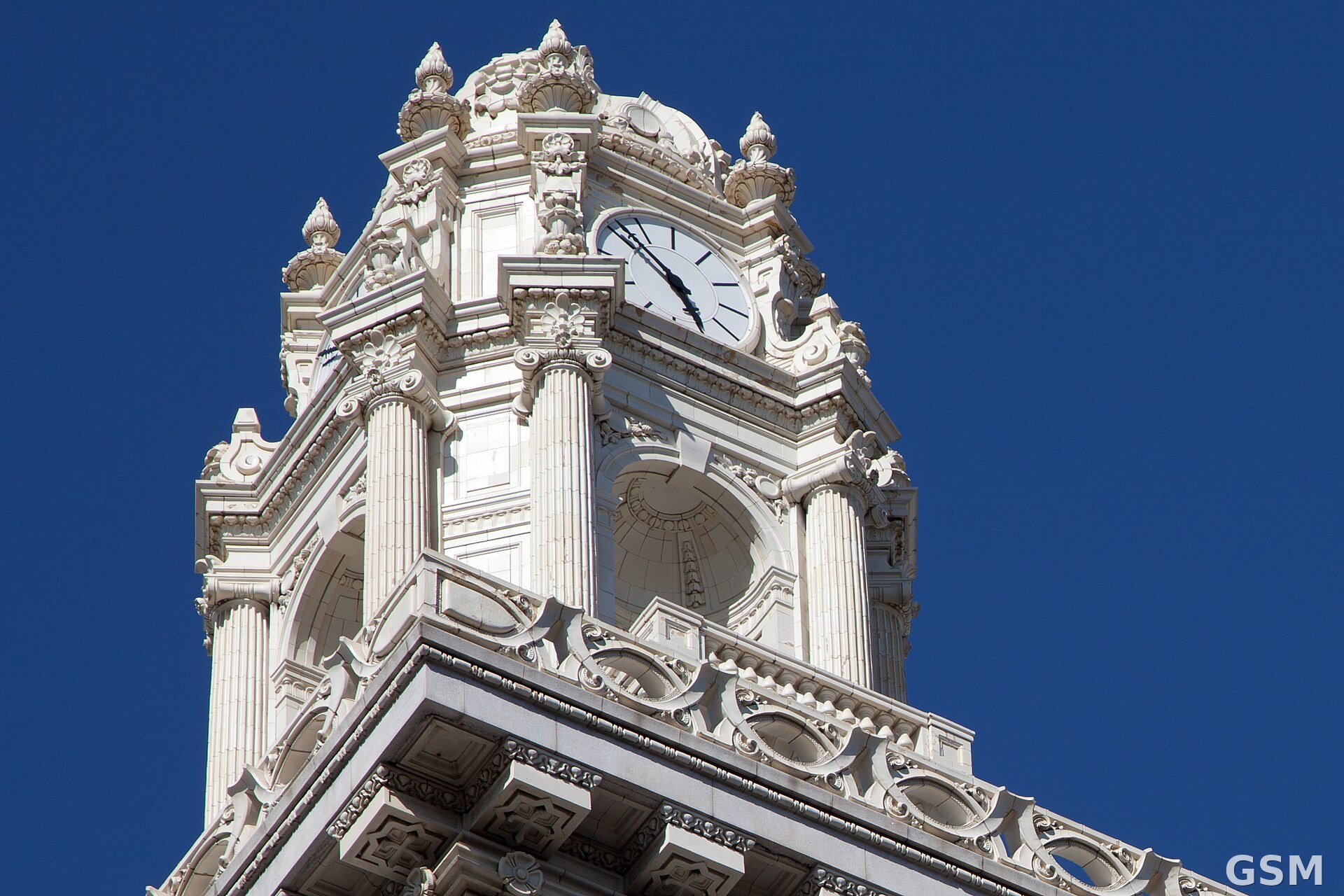
Photo: Oakland市政厅实景(Almonroth 摄,Wikimedia Commons,CC BY-SA 3.0)