White-Nose Syndrome Confirmed in Glacier National Park for the First Time: Little Brown Bat Found Dead in Saint Mary in May, Fungus Also Detected on Park's East Side
GLACIER COUNTY, Montana — The National Park Service (NPS) announced on October 21 that white-nose syndrome has been confirmed in Glacier National Park for the first time. A little brown bat found dead in the park's Saint Mary area in May tested positive for the disease, and samples collected from live bats in June also confirmed Pseudogymnoascus destructans, the fungus that causes white-nose syndrome, in multiple bats on the park's east side. These are the first detections of both the fungus and the disease in Glacier National Park and Glacier County.
White-nose syndrome is caused by a fungus that infects hibernating bats. The disease causes bats to wake during hibernation, depleting the critical fat reserves they need to survive winter and often leading to dehydration, starvation and death. The park said the disease does not infect humans or pets, but people can unintentionally spread the fungus to new areas on clothing, shoes and caving equipment; visitors are urged never to handle or pick up a bat and to decontaminate gear, footwear and clothing after visiting a cave or other bat habitat, following U.S. Fish and Wildlife Service guidance.
Glacier National Park has monitored bat diversity, occupancy and health since 2011 and has documented 10 bat species in the park. All bats in Glacier feed on insects and serve as prey for other wildlife, including raptors and weasels, so significant declines could have far-reaching effects on the park's ecosystems and neighboring landscapes. The park is also taking part in research evaluating a vaccine against white-nose syndrome: between 2024 and 2026, biologists captured and processed 529 bats, of which 265 received the vaccine and 264 a placebo, each fitted with a tag so survival can be tracked as the bats emerge from hibernation each spring.
Since its discovery in New York state in 2006, white-nose syndrome has spread across North America, killing millions of bats, and has now been confirmed in 42 U.S. states and nine Canadian provinces; the fungus can persist in underground environments for many years. The park announced the confirmation on October 21; the bat was found in May and the live-bat samples were collected in June.
Source: GSM · USA (original Chinese edition)
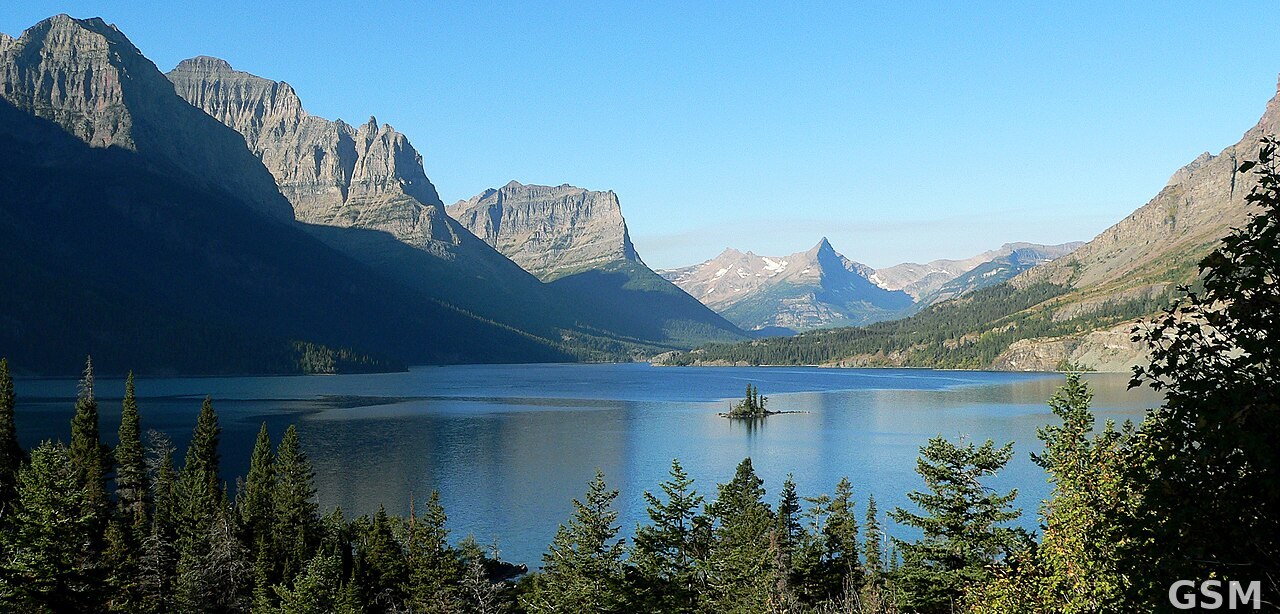
Photo: 图:冰川国家公园东侧的 Saint Mary Lake 与 Wild Goose Island(资料照片),确诊蝙蝠即在 Saint Mary 一带发现。Ken Thomas 摄,公共领域,经 Wikimedia Commons 发布。/ Saint Mary Lake and Wild Goose Island on the east side of Glacier National Park (file photo); the confirmed bat was found in the Saint Mary area. Photo by Ken Thomas, public domain, via Wikimedia Commons.