Thailand: Stock Exchange Pushes Dual-Class Share Reform on October 26, Hoping Family Businesses Dare to List and Market Liquidity Recovers
Kittipong, Chairman of the Stock Exchange of Thailand, publicly stated on October 26 that he is pushing for legal amendments to allow dual-class shares, in order to solve the problems of family businesses being unwilling to list and insufficient market liquidity. Many Thai family businesses meet the conditions for listing but do not list at all, or float only a tiny proportion of shares for public trading, mainly because they fear that after selling shares to outsiders, the control passed down from their ancestors may change hands. In Thailand, family business owners like the owner of a long-established coconut sugar factory in Bangkok's Thonburi district with annual revenue of over 100 million baht are not uncommon; they would rather hold onto cash flow than enter the stock market. Data show that since 2026, Thai companies' initial public offerings have raised only about 700 million baht, equivalent to US$21.6 million, down 95% year on year; at this pace, this year will most likely be the bleakest IPO year since statistics began in 2003. As of July, 705 of the Stock Exchange of Thailand's 843 listed companies are family businesses, with a total market value of 10.93 trillion baht, accounting for about 54% of the whole market; with the mainstay absent, the market naturally lacks water. The dual-class share mechanism separates economic rights from voting rights: founders sell ordinary shares to raise funds while high-voting shares retain decision-making power; this mechanism has already been validated in the US and Hong Kong stock markets. For Thailand, this is not only an IPO reform but also a liquidity reform: the pool of potential listings expands, and existing companies may also issue additional public shares in accordance with regulations. However, ordinary shareholders' voting rights are weaker than founders', so regulators must strike a balance; disclosure requirements and sunset clause design will be key to preventing abuse. Kittipong stressed that the draft amendments are expected to pass parliament this year and be formally introduced in 2027.
Source: GSM · USA (original Chinese edition)
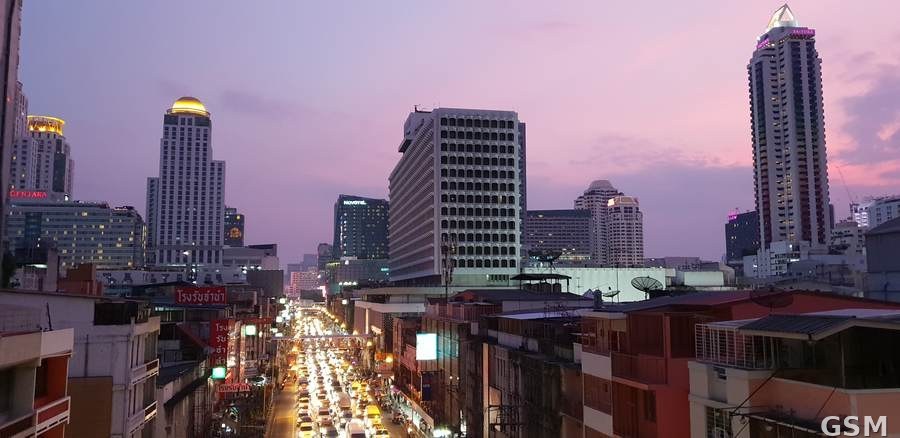
Photo: 曼谷市景(资料图),取自 Wikimedia Commons。Photo: Bangkok cityscape (file photo), via Wikimedia Commons.