Cambodia: Industrial Factories Announced on October 26 to Have Risen to 3,417, with Investment Exceeding US$28.7 Billion
Data released by Cambodia on October 26 show that the number of industrial factories nationwide has risen to 3,417, with total investment exceeding US$28.7 billion, reflecting the continued expansion of manufacturing and processing industries. Other economic data released at the same time were also bright: in the first nine months of 2026, Cambodia's tire exports reached US$1.728 billion, up 77.2% year on year, already exceeding the full-year 2025 scale of about US$1.385 billion; total trade in the first nine months reached US$57.007 billion, up 21.3% year on year, with exports up 21.0% and imports up 21.6%. Special economic zones play a prominent role in attracting investment: in 2025, 243 of Cambodia's approved investment projects were located in special economic zones, accounting for 38% of the national total, and special economic zone exports doubled in four years to US$8 billion, accounting for 26% of national exports. On employment, according to data released by the Ministry of Labour and Vocational Training on June 29, in the first five months of 2026, 650 new enterprises, companies and factories were registered nationwide, bringing the total number of registered enterprises nationwide to 47,299; as the newly added enterprises successively begin production, national employment has exceeded 2.29 million. On wages, Cambodia has started negotiations on the 2027 minimum wage; data from the Ministry of Labour show that the minimum wage in relevant industries has risen from US$40 in 1997 to US$210 in 2026, a cumulative increase of about 425%. The dual growth in factory numbers and investment scale shows that Cambodia's position in regional supply chains is still rising, but it also places higher demands on infrastructure, power supply, worker skills training and labor rights protection. What is worth watching next is whether new investment can be converted into stable employment and exports, and how the outcome of the minimum wage negotiations will balance corporate costs and workers' incomes.
Source: GSM · USA (original Chinese edition)
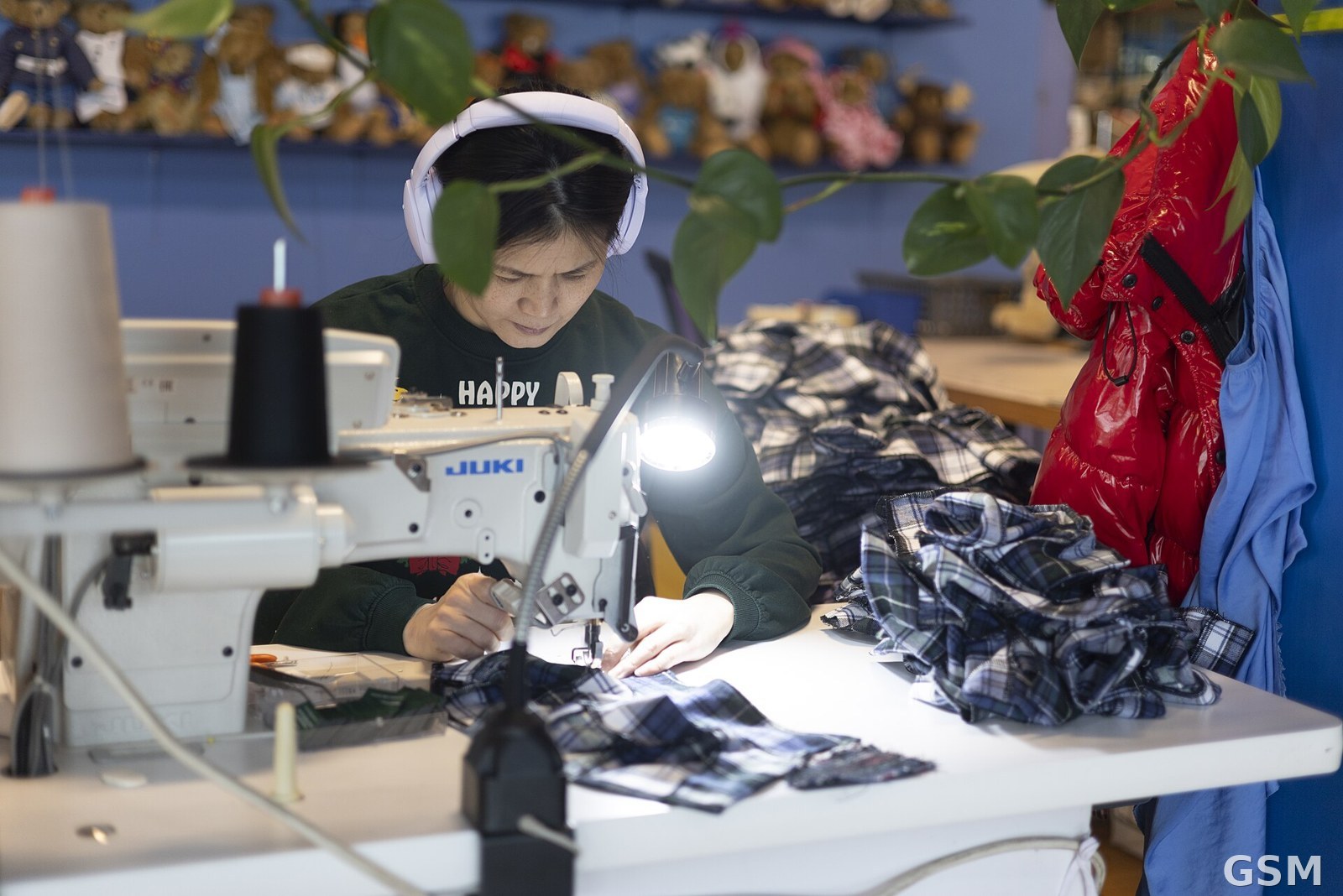
Photo: 服装厂缝纫车间(资料图)(资料图)。摄影:Tessa Bury,CC BY 4.0,取自 Wikimedia Commons。Photo: Garment factory sewing station (file photo) (file photo). Credit: Tessa Bury, CC BY 4.0, via Wikimedia Commons.