U.S. Food Stamp Enrollment Falls to 36.5 Million, Down 5.1 Million in a Year, as Arizona Rolls Drop by Half
Enrollment in the Supplemental Nutrition Assistance Program (SNAP), the federal food stamp program administered by the U.S. Department of Agriculture (USDA), fell to 36.5 million people in June 2026, down 5.1 million, or about 13 percent, from 41.6 million in July 2025, according to the latest USDA data. The decline followed the One Big Beautiful Bill Act, which tightened the rules for keeping benefits: a requirement to work at least 20 hours a week in paid or volunteer work, previously applied to able-bodied adults ages 18 to 54 without a dependent under 18, now covers people ages 18 to 64 without a dependent under 14, and those who do not comply can receive benefits for no more than three months over three years. The Congressional Budget Office has projected that the changes will reduce program spending by about $187 billion over ten years, and starting this October, states must cover 75 percent of SNAP administrative costs, up from half.
The impact has varied sharply by state. An analysis of USDA data by the anti-hunger nonprofit Food Research & Action Center shows participation has fallen in every state except Alaska since the new law took effect: Arizona's rolls dropped by more than half, with about 421,000 people receiving assistance in June; Louisiana's enrollment fell by more than 173,000 (about 22 percent); Illinois dropped by more than 368,000 (about 20 percent); and Kentucky recorded a decrease of about 6 percent. More than 330,000 Americans lost access between May and June 2026 alone. Kentucky Governor Andy Beshear wrote to Agriculture Secretary Brooke Rollins this month warning that the changes were leaving more people hungry, including children and older residents; GSM reported on October 14 that more than 80,000 people in Kentucky, including 24,655 children, had already lost food assistance.
Both sides of the debate are on the record. President Donald Trump and other Republicans say the changes encourage people to find jobs, and Secretary Rollins said in Minnesota in August that moving five million people off food stamps was, for those who value work, "a pretty big win." Elected officials, nonprofit leaders and people experiencing food insecurity counter that the changes simply make it harder for American families to feed themselves. The Food Bank Council of Michigan's helpline, which answers questions about applying for SNAP and accessing local food programs, began receiving more than three times as many calls daily after the changes took effect and temporarily suspended the helpline this week because of the volume. Sheril Kirshenbaum, the council's chief external relations officer, said there was no data suggesting a sudden increase in available jobs; what was known was that fewer people were receiving benefits. "There is always going to be a percentage of our communities who we need to help—we have to accept that—and so, once we accept it, it is easy to just move forward and do the right thing, which is to provide resources to people who need them," said Rhona Kamar, founder and executive director of Feed Louisville, a nonprofit that aims to reduce hunger and food waste.
Source: GSM · USA (original Chinese edition)
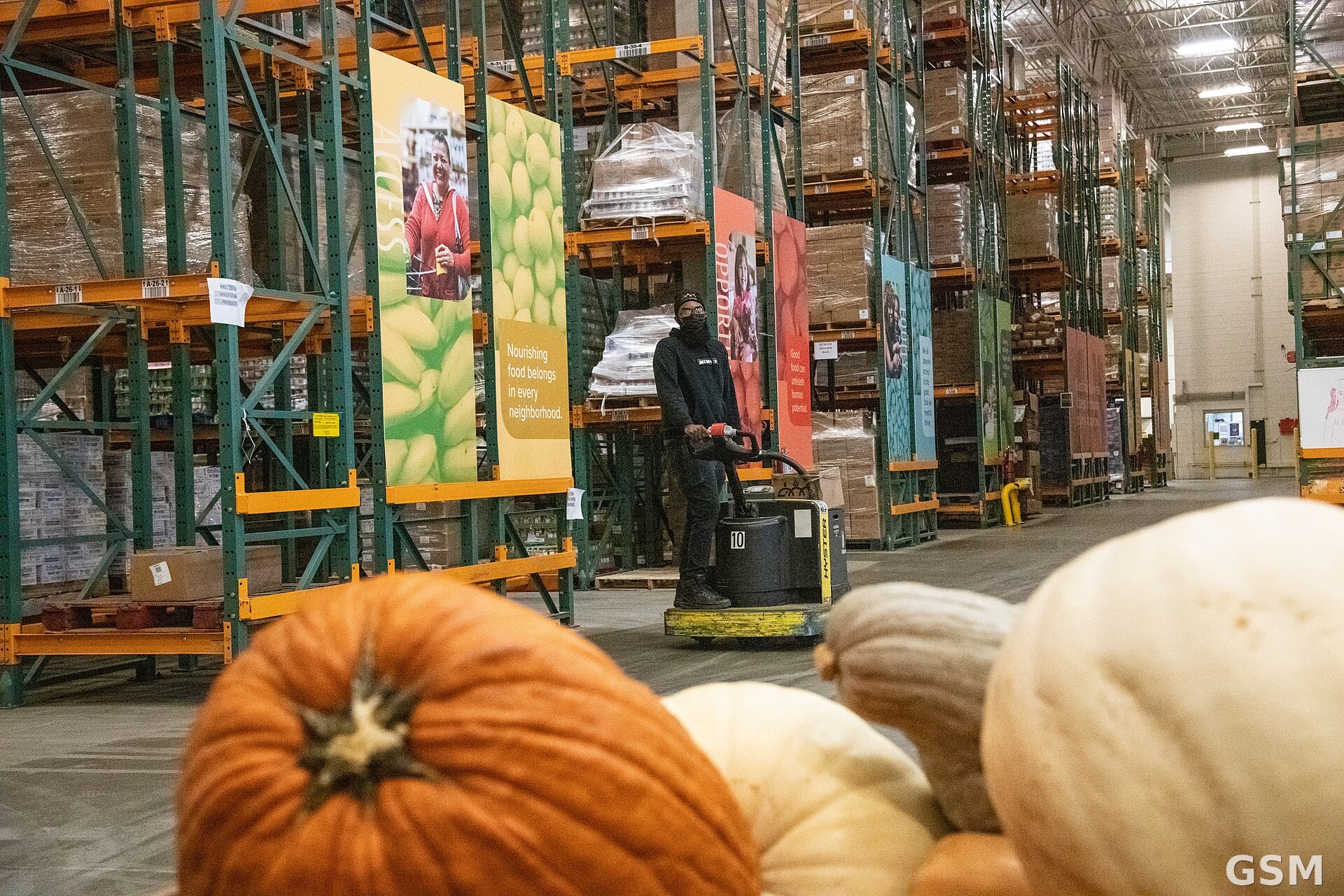
Photo: 图:美国首都地区食物银行(Capital Area Food Bank)仓库内,工作人员在货架间搬运食物物资(资料图)。图片:美国农业部 USDA 摄,公共领域。/ Inside the Capital Area Food Bank warehouse, a worker moves food supplies between stocked shelves (file photo). Photo by the U.S. Department of Agriculture (USDA), public domain, via Wikimedia Commons.