US, EU Commissioner and 30+ Governments Warn of Sudan Famine: 19.5 Million Face Acute Food Insecurity, Aid Access Demanded
The U.S. Department of State said on October 26 that the United States, the European Commissioner for Equality, Preparedness and Crisis Management, and the governments of more than 30 countries, including Australia, Austria, Belgium, Canada, France, Germany, Ireland, Italy, the Netherlands, Norway, Poland, Spain, Sweden, Switzerland and the United Kingdom, issued a joint statement warning that Sudan's food security is deteriorating alarmingly and that the country faces a risk of famine in the coming months. Citing warnings from the Integrated Food Security Phase Classification (IPC), the statement said an estimated 19.5 million people — 41% of Sudan's population — are experiencing high levels of acute food insecurity, including 5 million facing emergency levels.
Without immediate action to reverse the current trajectory, the statement said, the number of children suffering from severe acute malnutrition could exceed the projected 825,000, and the number of food-insecure areas, initially assessed at 14, is expected to double. Conflict is the key driver of Sudan's hunger crisis, the statement said, displacing millions of people, damaging critical infrastructure and disrupting healthcare provision, food production, supply chains and markets, while systematic obstruction of aid and the effects of El Niño, which have reduced rainfall and increased drought across over half of Sudan, are exacerbating the situation.
The parties to the conflict bear primary responsibility for alleviating the suffering of the Sudanese people, the statement said, urging them to lift all impediments on humanitarian assistance, allow and facilitate full, safe, rapid and unimpeded humanitarian access, and protect humanitarian personnel. Left unchecked, the statement warned, these impediments will hamper the ability of the humanitarian response to address famine risk.
In practice, the statement called on the parties to authorise humanitarian operations through all crossline and cross-border routes, including air access into Darfur, to allow rapid deployment of aid operations and timely medical evacuations of aid workers; to sustain the presence and protection of humanitarian personnel throughout Sudan, including by reducing delays for visas and customs clearance, increasing the duration of visas and travel permits, and removing additional permits, taxation and other bureaucratic requirements slowing aid delivery; to refrain from strikes on civilian infrastructure, including agriculture and food systems; and to strengthen civil-military coordination to ensure the safety of humanitarians and humanitarian sites.
The statement also called on all members of the international community to urgently scale up funding in response to increased needs and to support efforts to ensure assistance reaches those most in need, and encouraged development and financial institutions to adapt their ongoing programmes to the food security situation and focus on the areas of greatest need. Together, the governments said, the world must act without delay to avert famine by supporting the winter cropping season and strengthening locally led responses, adding that they stand with the people of Sudan and the humanitarian organisations working tirelessly under extremely challenging conditions to provide life-saving assistance.
Source: GSM · USA (original Chinese edition)
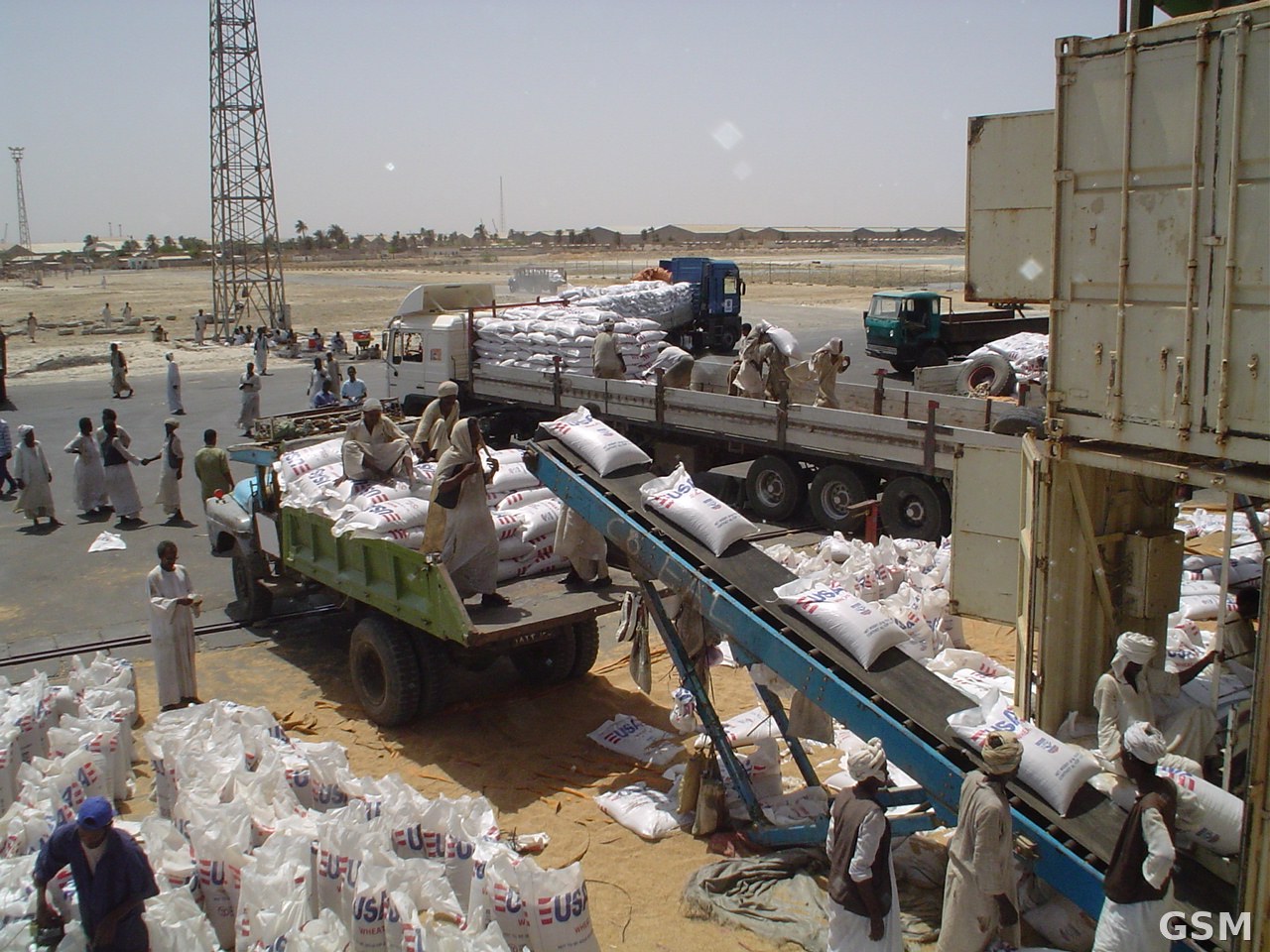
Photo: 苏丹港装运粮食援助物资(资料图),美国国际开发署(USAID),公共领域,来源 Wikimedia Commons