FDA Approves Tucatinib Maintenance Regimen for HER2-Positive Breast Cancer; Median Progression-Free Survival 24.9 Months
The US Food and Drug Administration on October 7 approved tucatinib (Tukysa, made by Seagen, a Pfizer subsidiary) in combination with trastuzumab and pertuzumab for the maintenance treatment of adults with unresectable locally advanced or metastatic HER2-positive breast cancer following induction treatment.
The approval is based on HER2CLIMB-05, a randomized, double-blind, placebo-controlled trial of 654 patients who, after induction therapy, received tucatinib 300 mg orally twice daily or placebo, each combined with trastuzumab and pertuzumab given intravenously or as a fixed-dose subcutaneous combination. Median progression-free survival was 24.9 months (95% CI 21.3–not reached) with tucatinib versus 16.3 months (95% CI 12.6–18.7) with placebo, a hazard ratio of 0.64 (95% CI 0.51–0.80; p<0.0001) — a 36% reduction in the risk of progression or death. Overall survival data were not mature at the time of the analysis.
Tucatinib carries a boxed warning for hepatotoxicity, along with warnings for diarrhea, embryo-fetal toxicity and increases in serum creatinine that do not reflect impaired renal function. HER2-positive disease is an aggressive breast cancer subtype, and the oral small molecule gives patients a new maintenance option after induction; eligibility is a decision for the treating oncologist.
Source: GSM · USA (original Chinese edition)
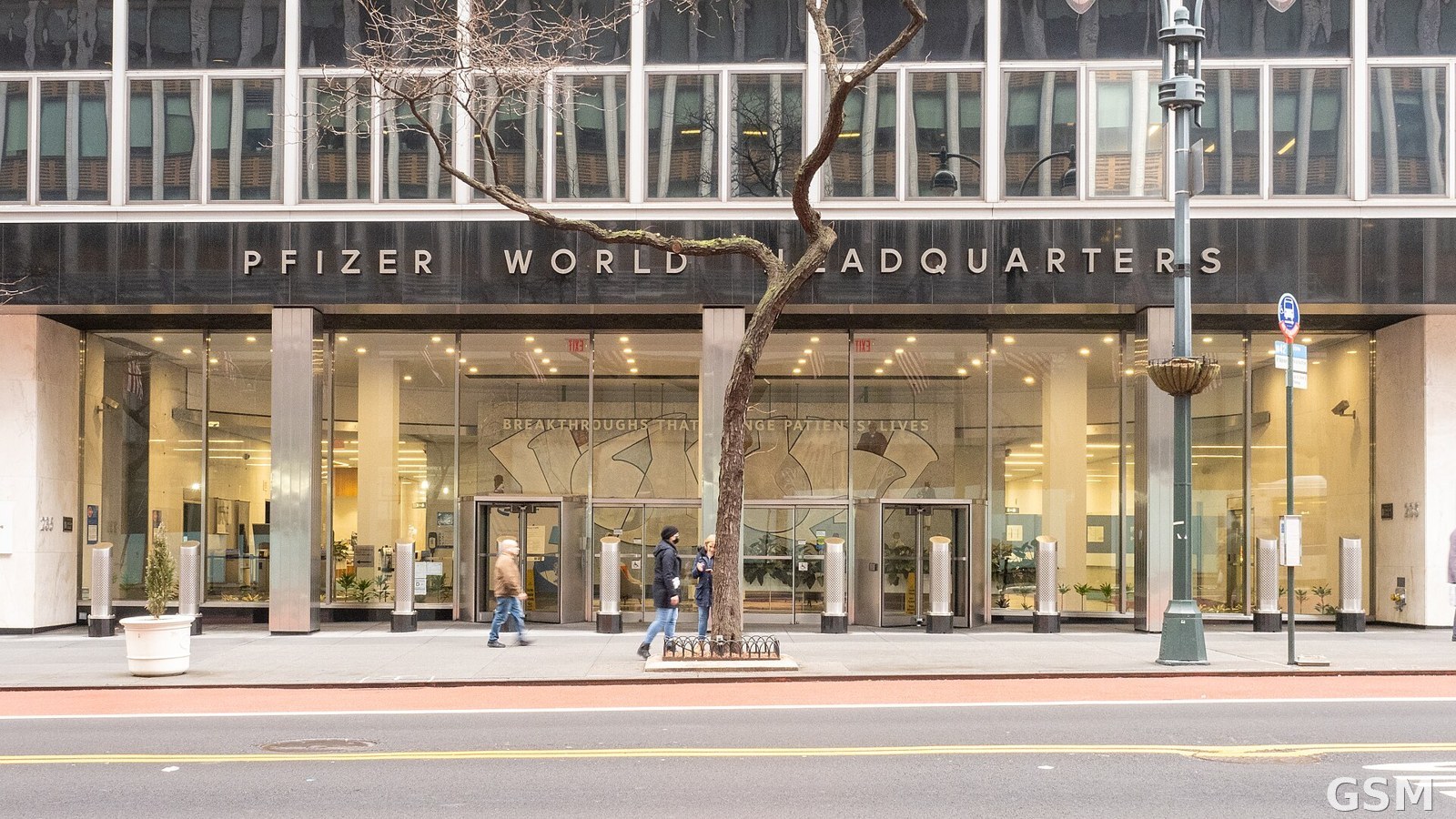
Photo: 辉瑞公司全球总部(图卡替尼生产商Seagen为辉瑞子公司)。Photo: ajay_suresh, CC BY 2.0, via Wikimedia Commons