France Pledges to Replace Parcoursup Admissions Platform in 2028: Class Cap of 28, 836 Post Cuts Cancelled, 15,000 New Places
France's government announced a package of education concessions in Paris on October 26 to quell weeks of student protests: the national university admissions platform Parcoursup will be substantially reformed in 2027 and replaced outright by a new system in 2028. Higher Education Minister Philippe Baptiste announced the timetable at a news conference, saying that from 2027 institutions will have to publish more detailed selection criteria and explain rejections when applicants ask; he noted that replacing the platform requires legislation. Baptiste and Education Minister Édouard Geffray presented the package after Prime Minister Sébastien Lecornu met representatives of high school and university students.
The package also caps classes in the first lycée year (seconde) at 28 pupils from the 2027 school year in the most disadvantaged schools, extending to all lycées in 2028; cancels 836 teaching-post cuts planned in the 2027 budget and creates 500 additional teaching posts in public lycées; commits five billion euros to renovating school and university buildings, with four billion euros for collèges and lycées delivered as low-interest loans to regions and local authorities; adds 15,000 higher education places from 2027, mostly in BTS and IUT programmes; and indexes student scholarships to inflation. Geffray told the news conference that none of the decisions taken to respond to the high school crisis was an empty promise.
The protest movement began five weeks earlier at the Lycée Saint-Exupéry in Créteil, near Paris, and spread across the capital region and the country, driven by complaints about Parcoursup's unclear selection criteria, unequal access to preferred courses, overcrowded classrooms, run-down buildings and rising living costs. On October 17 France saw its worst unrest in years: demonstrations descended into fires, stormed public buildings including Marseille's City Hall, looted shops and clashes with police, with about 2,400 people arrested over that weekend. A further round of nationwide demonstrations on Saturday, October 24, was less violent; authorities estimated turnout at more than 400,000, while organizers put it at nearly 800,000. President Emmanuel Macron, visiting Marseille on October 26, said he had asked the government to address the legitimate demands at the root of the protest movement.
Student groups did not call off the movement. Two high school student groups welcomed some concessions but vowed to keep protesting after meeting Lecornu; Louis Letoublon, one of the student representatives, said not all demands had been met and that they would go on for as long as it takes. Further demonstrations are planned for October 31, ahead of nationwide strikes and protests called by labor unions for November 5.
Source: GSM · USA (original Chinese edition)
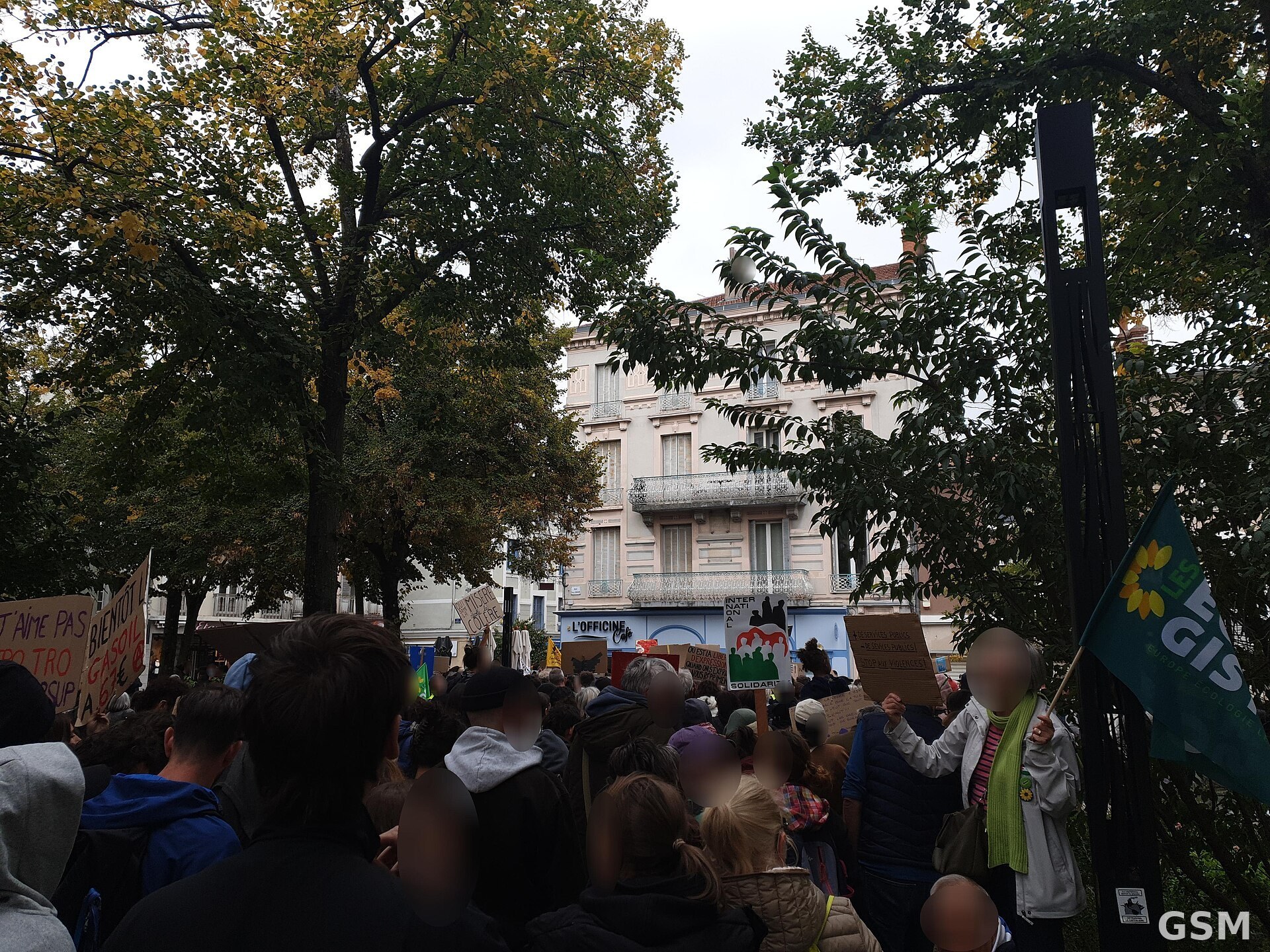
Photo: 图:2026 年 10 月 17 日法国抗议活动期间的游行人群(资料图,摄于本轮学生抗议浪潮期间)。图片:Maxlath 摄,CC BY-SA 4.0(Wikimedia Commons)。Photo: Protesters march during the October 17, 2026 demonstrations in France (file photo). Credit: Maxlath, CC BY-SA 4.0, via Wikimedia Commons.