First Permit Under Malaysia's Eased Rare-Earth Rules Goes to U.S.-Majority-Owned DTEC: Up to 700 Tons of Rare-Earth Carbonate to Ship to the U.S. for Research
A U.S.-majority-owned startup has received permission to export rare-earth material from Malaysia to the United States for research, in what its chief executive said was the first approval issued under Malaysia's newly eased export rules, Reuters reported on October 27. The permit allows DTEC Mineral and Metal Technology to export up to 700 metric tons of rare-earth carbonate from Perak state, with an initial shipment of about 30 tons expected this weekend, CEO Milan Perlly said in an interview.
Perlly said the material will be sent to U.S. companies and research institutions to test technologies for separating and refining rare-earth elements from Malaysia's ionic clay deposits. DTEC is registered in Malaysia, with 51% owned by U.S. citizens, including Malaysian-born Perlly. Malaysia's natural resources ministry did not respond to a request for comment. Bloomberg reported last week that the ministry had granted a single export application under the new rules, but did not name the company.
Malaysia imposed a ban on the export of raw rare earths in 2024 to protect domestic resources, but has allowed some shipments to China, the largest producer of the critical minerals, as part of a pilot mining project in Perak. This month, Malaysia eased restrictions further, releasing guidelines on the conditional export of raw rare earths for research or processing purposes, in a bid to develop local refining capabilities and capitalise on growing demand from Western nations seeking to reduce reliance on China.
Perlly said DTEC aims to build a processing plant in Malaysia within the next three years. 'Our purpose is to really develop Malaysian talent, know-how and an ecosystem of industries supporting rare earths expansion in the country,' he said. The firm has received an expression of support from the Export-Import Bank of the United States for potential financing of up to $650 million for the proposed Malaysian refinery, he said. The bank and the U.S. embassy in Kuala Lumpur did not immediately respond to requests for comment. The embassy said on October 14 that more than a dozen U.S. companies were exploring potential upstream and midstream processing projects in Malaysia.
The Southeast Asian country has some 16.1 million metric tons of rare-earth deposits, according to government estimates, but lacks the technology to mine and process them. The cooperation comes as Washington races to develop newer and cleaner technologies in rare-earth refining in a bid to break China's dominance in the sector, while Malaysia actively seeks foreign investment in rare earths.
Source: GSM · USA (original Chinese edition)
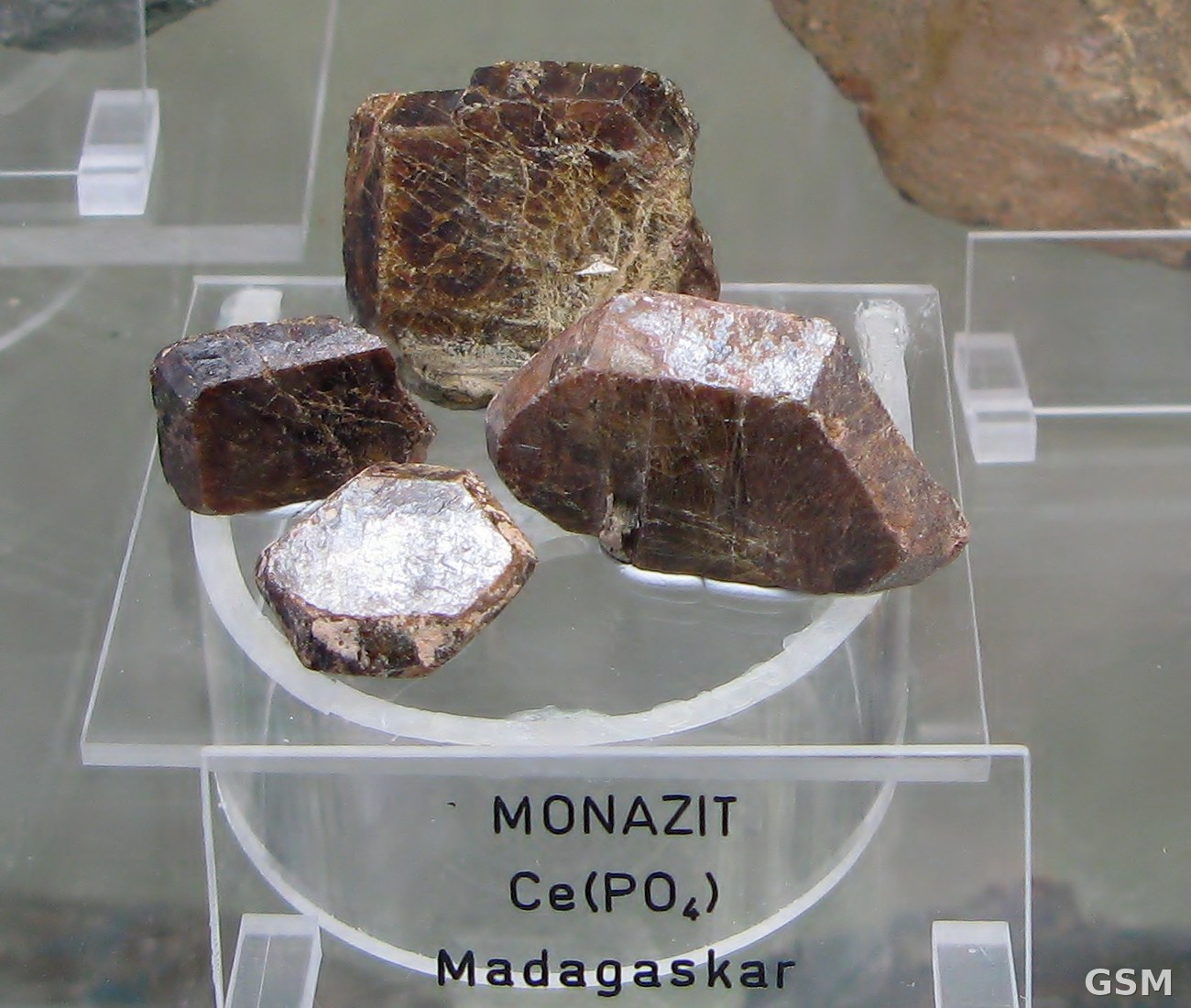
Photo: 图:独居石(Monazite)矿物标本——独居石是稀土元素的重要矿石来源(资料图,标本藏于德国波恩矿物学博物馆)。图片:Ra'ike 摄,CC BY-SA 3.0(Wikimedia Commons)。Photo: A monazite specimen; monazite is an important ore of rare-earth elements (file photo; specimen at the Mineralogical Museum, Bonn, Germany). Credit: Ra'ike, CC BY-SA 3.0, via Wikimedia Commons.