Stanford KIPAC Colloquium on October 29: Harvard Astrophysicist Patrick Slane on the Chandra X-ray Observatory's High-Definition X-ray Sky, Free and Open
The Kavli Institute for Particle Astrophysics and Cosmology (KIPAC) at Stanford University, in Santa Clara County, California, will host an astrophysics colloquium titled "The X-ray Sky in High Definition: The Continuing Astrophysics Legacy of the Chandra X-ray Observatory" on Thursday, October 29, from 11:00 a.m. to 12:00 p.m., in Rooms 102/103 of the Physics & Astrophysics Building (PAB) on the Stanford campus. The speaker is Patrick Slane of the Center for Astrophysics | Harvard & Smithsonian. The talk is part of the KIPAC Astrophysics Colloquium series; it is publicly listed and free to attend, and the Stanford events calendar lists no advance registration requirement.
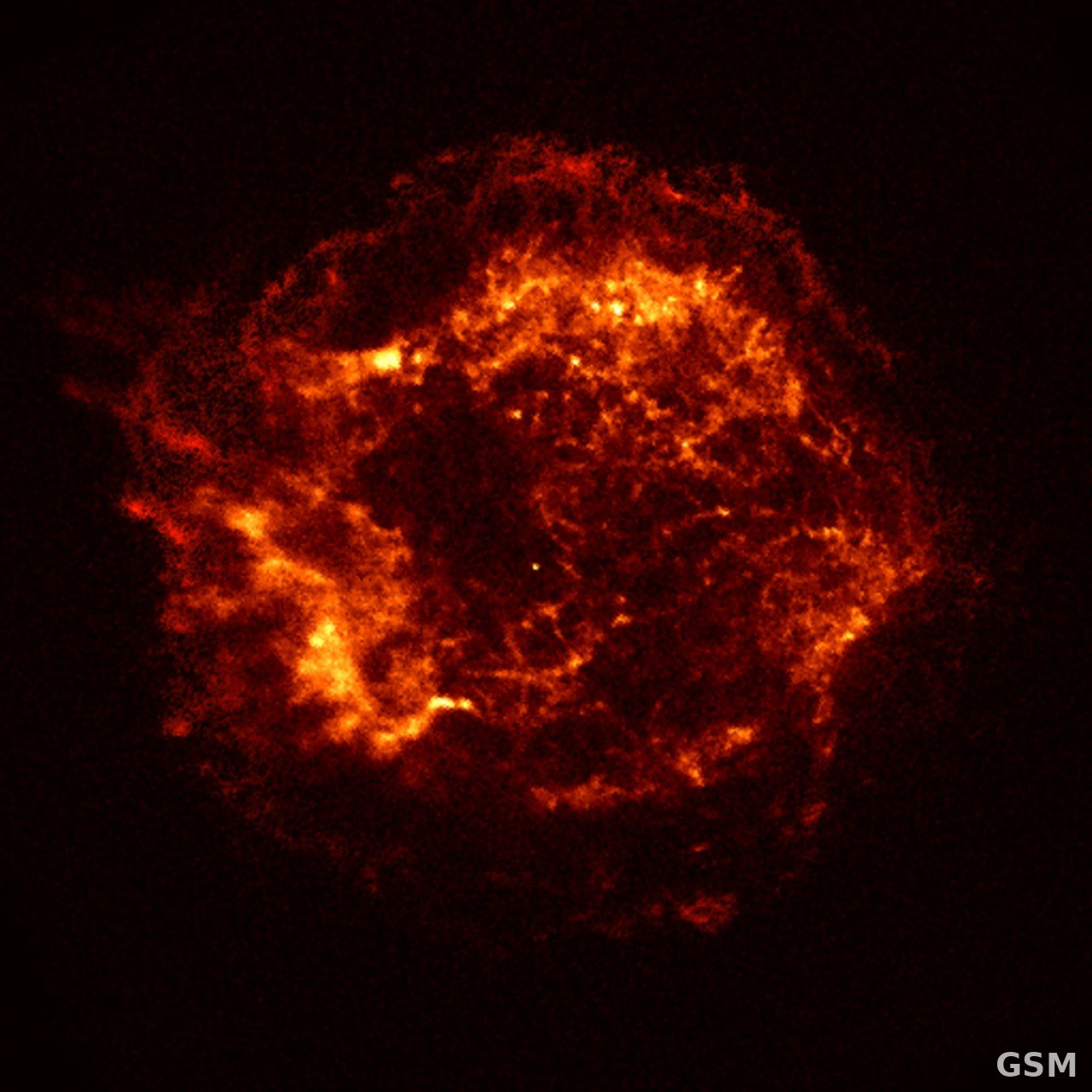
The Chandra X-ray Observatory is one of NASA's great space observatories. Launched aboard the Space Shuttle Columbia in July 1999, it released its "first light" image — the Cassiopeia A supernova remnant — that August. With mirrors polished to sub-arcsecond precision (about 0.5 arcseconds), Chandra images the X-ray sky more sharply than any X-ray telescope before it, letting astronomers resolve shock waves and jets in supernova remnants, the multimillion-degree gas in galaxy clusters, and structures around black holes; its observations of the Bullet Cluster provided direct evidence for dark matter. Designed for a five-year mission, Chandra has now operated for 26 years and remains a cornerstone of X-ray astronomy.
Speaker Patrick Slane is a senior astrophysicist at the Center for Astrophysics | Harvard & Smithsonian whose research focuses on the X-ray study of supernova remnants and pulsar wind nebulae, and who has long been a core member of the Chandra science community. His talk will review the observatory's major discoveries over a quarter century and discuss how its continuing output has reshaped our view of the high-energy universe.
How to attend: The colloquium is free and open, with no registration requirement listed; check the Stanford events calendar and the KIPAC website to confirm the time and room before going. The talk is held in person, with no livestream listed.
Source: GSM · USA (original Chinese edition)
Photo: 图:钱德拉X射线天文台1999年发布的「第一缕光」图像——超新星遗迹仙后座A(Cassiopeia A),中心的亮点可能是爆炸后留下的中子星或黑洞。公共领域图片,来源:NASA/钱德拉X射线中心(NASA/CXC/SAO)。Photo: Chandra X-ray Observatory's 1999 "first light" image of the Cassiopeia A supernova remnant. Public domain, NASA/CXC/SAO.